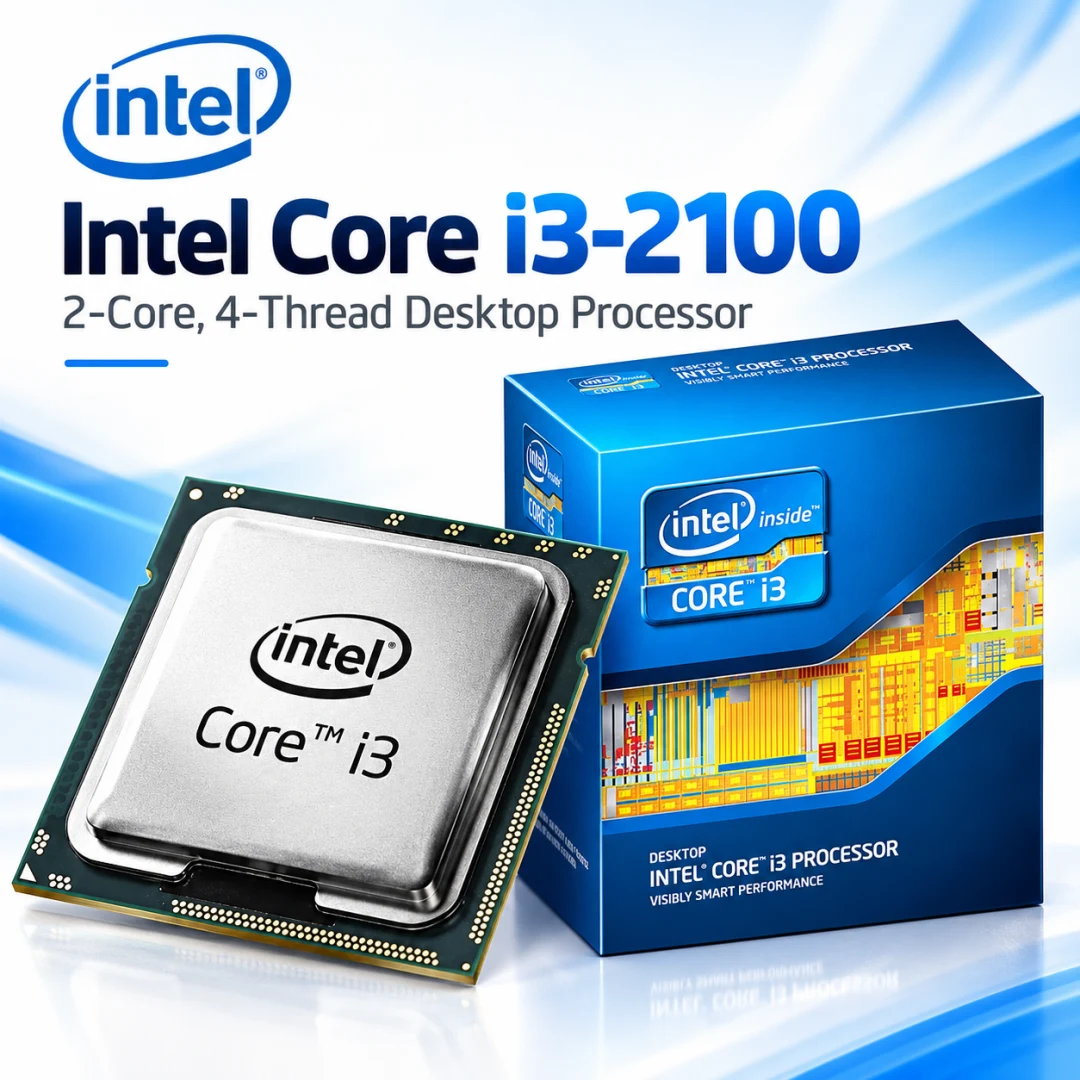
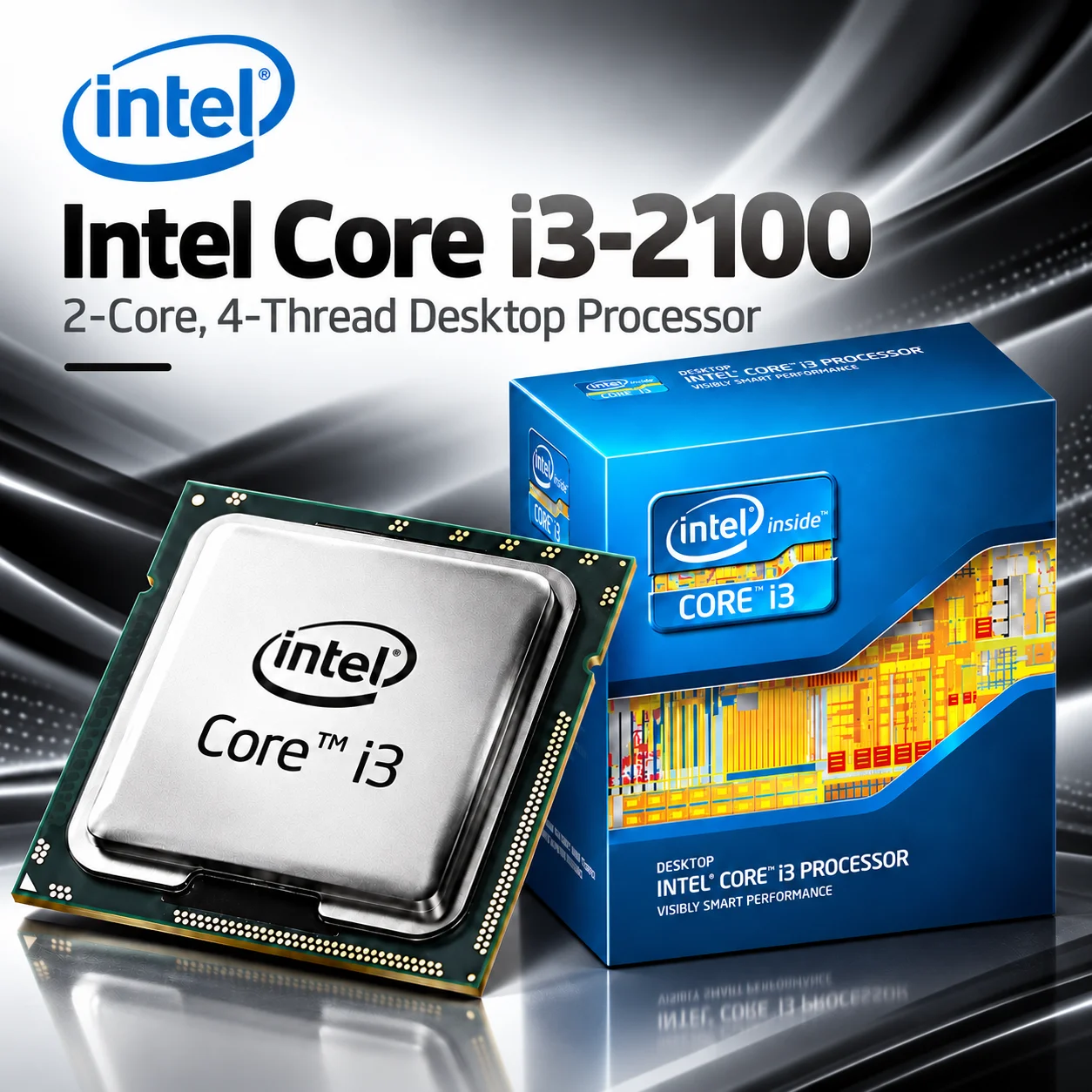
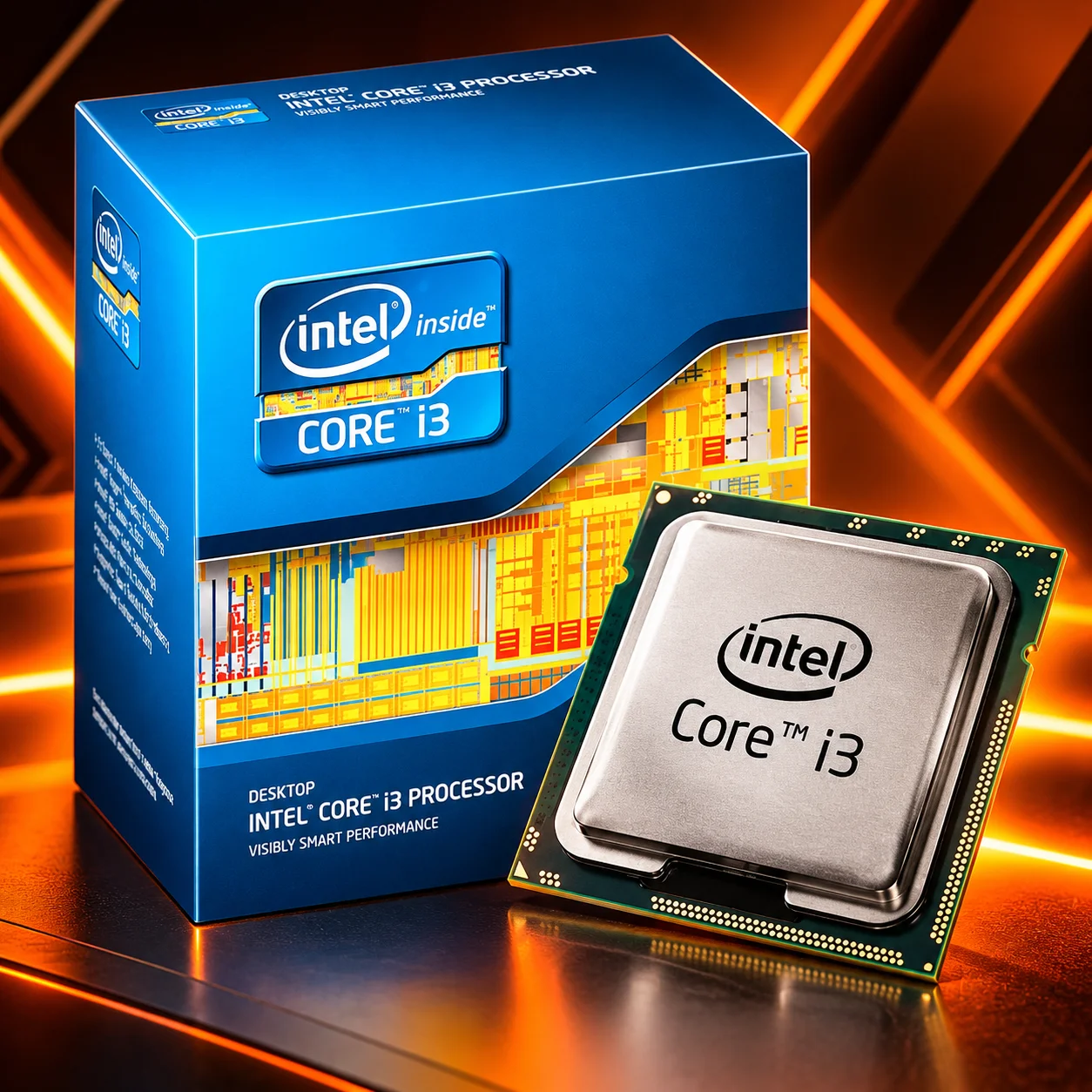
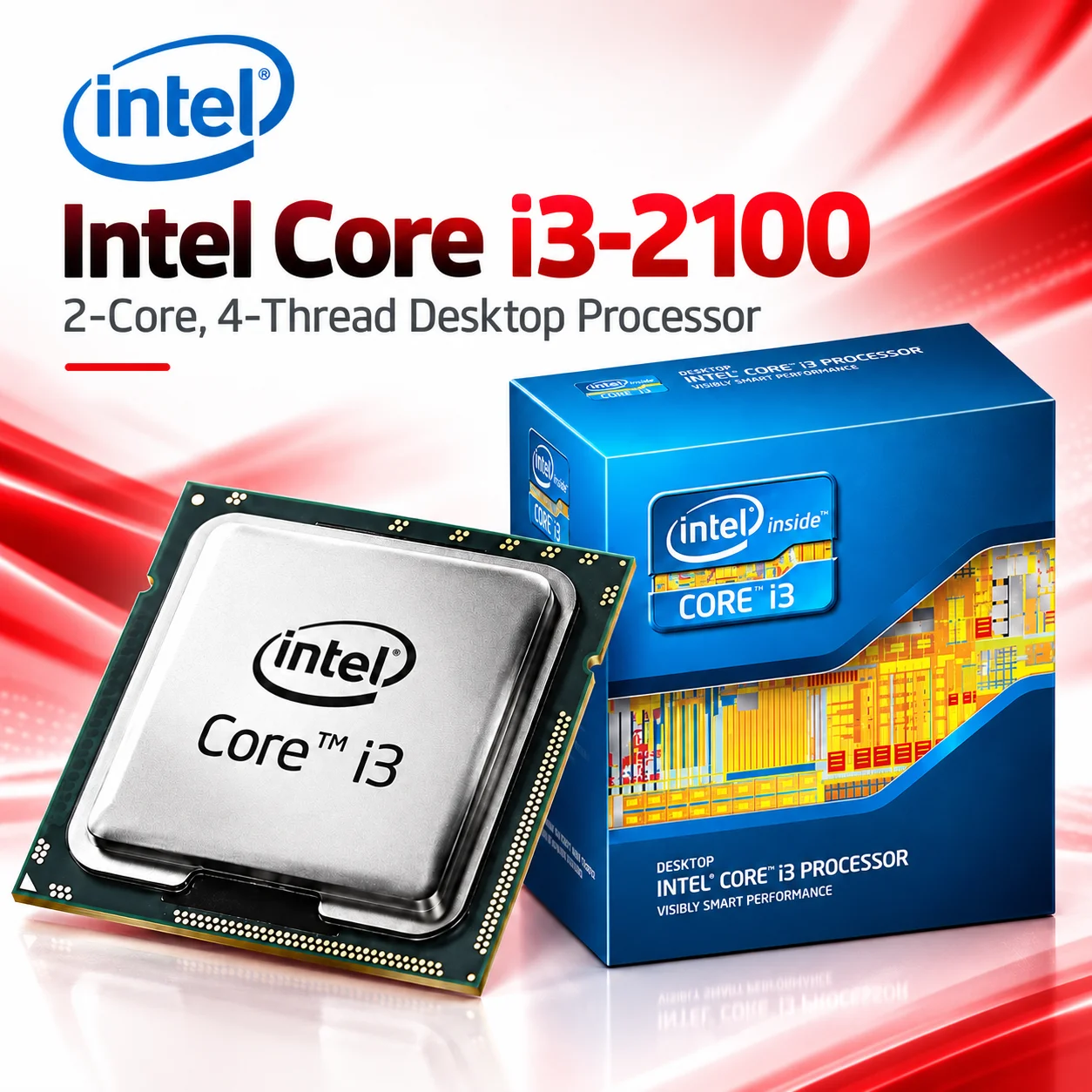
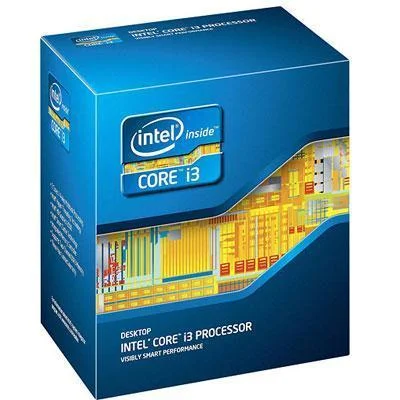
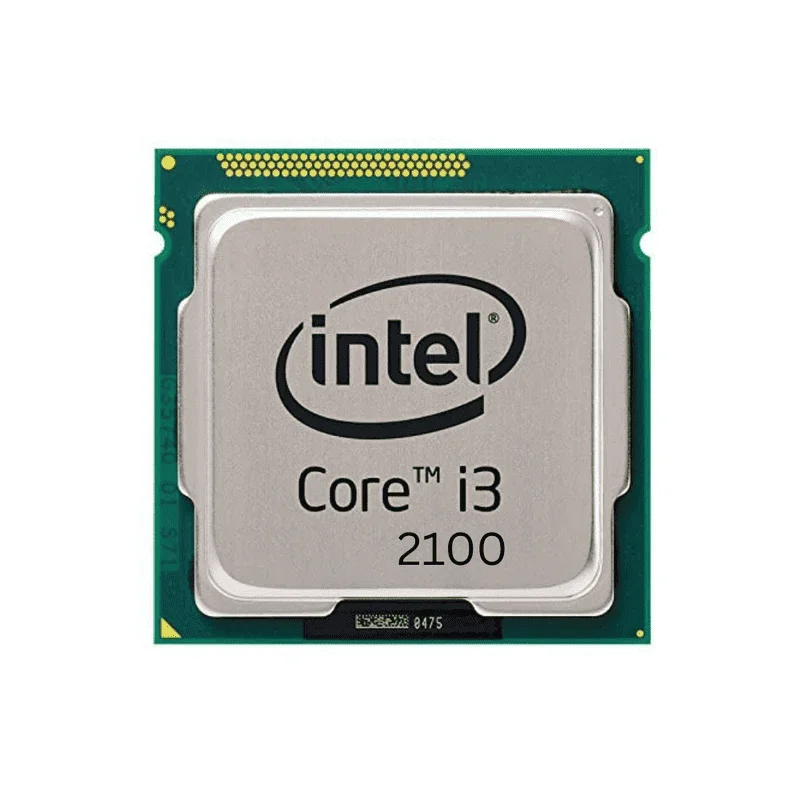
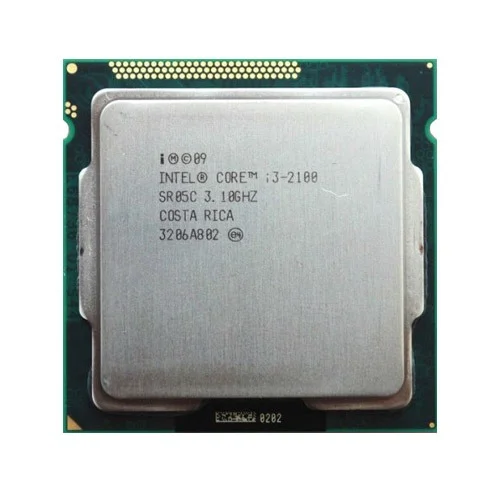
Intel Core i3-2100 2-Core, 4-Thread Desktop Processor
- 2 cores and 4 threads with Intel Hyper-Threading Technology
- 3.10 GHz base processor frequency
- 3 MB Intel Smart Cache
- Integrated Intel HD Graphics 2000
*Approximate regional retail guide prices. Pixahunt is an informational catalog.
CPU Benchmark Scores & Performance Analysis
TESTEDCinebench R23, Geekbench 6, PassMark CPU Mark scores & real-world gaming/office suitability tests.
Technical Specifications
Comprehensive hardware architecture and specifications
General
| Series |
Core i3
Selected Variant
|
| Model |
i3-2100
Selected Variant
|
| Cpu Cooler |
E97379-001
Selected Variant
|
| Code-Name |
Sandy Bridge
Selected Variant
|
| Generation |
2nd Gen
Selected Variant
|
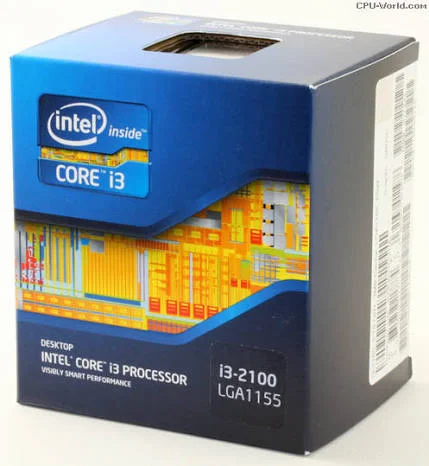
| Sockets Supported |
FCLGA1155
Selected Variant
|
| Release Date |
February 20, 2011
Selected Variant
|
Performance
| Base Frequency |
3.10 GHz
Selected Variant
|
| Turbo Frequency Max. |
N/A
Selected Variant
|
| Core |
2
Selected Variant
|
| Threads |
4
Selected Variant
|
| CPU Cache |
3 MB Intel Smart Cache
Selected Variant
|
| L1 Cache |
128 KB
Selected Variant
|
| L2 Cache |
512 KB
Selected Variant
|
| L3 Cache |
3 MB
Selected Variant
|
| TDP |
65 W
Selected Variant
|
| Lithography |
32 nm
Selected Variant
|
| Multiplier |
31.0x
Selected Variant
|
| Multiplier Unlocked |
No
Selected Variant
|
| Processor Type. |
Desktop Processor (2 Cores, 4 Threads)
Best for: Everyday Computing, Office Productivity & HD Video Selected Variant |
Memory Support
| Memory Max. |
32 GB
Selected Variant
|
| Memory Type |
DDR3 1066/1333
Selected Variant
|
| Memory Speed |
1333 MT/s
Selected Variant
|
| Memory Channel |
2
Selected Variant
|
| Max Memory Bandwidth |
21 GB/s
Selected Variant
|
| ECC Memory Supported |
No
Selected Variant
|
Graphics
| Built-in GPU |
Yes
Selected Variant
|
| Processor Graphics |
Intel HD Graphics 2000
Selected Variant
|
| Graphics Base Frequency |
850 MHz
Selected Variant
|
| Graphics Dynamic Frequency |
1.10 GHz
Selected Variant
|
| Graphics Core Count |
N/A
Selected Variant
|
| Max Video Memory |
N/A
Selected Variant
|
| Max Resolution |
N/A
Selected Variant
|
Technical Info
| DirectX Support |
N/A
Selected Variant
|
| OpenGL Support |
N/A
Selected Variant
|
| Approx. Power Consumption |
65 W
Selected Variant
|
| Compatible Products / Chipsets |
Z77, Z75, Q77, H77, Q75, B75, Z68, P67, H67, Q67, B65, H61
Selected Variant
|
| PCI Express Version |
2.0
Selected Variant
|
| PCI Express Lanes |
16
Selected Variant
|
| Thermal Solution (MPK / Box) |
E97379-001
Selected Variant
|
| Max. Operating Temperature (Tjmax) |
69.1°C
Selected Variant
|
Warranty
| Manufacturing Warranty |
N/A
Selected Variant
|
Additional Info
| Specialty |
Intel Hyper-Threading Technology, Intel Virtualization Technology (VT-x)
Selected Variant
|
| Others |
Discontinued Product
Selected Variant
|
| Country Of Origin |
N/A
Selected Variant
|
| Made in/ Assemble |
N/A
Selected Variant
|
Editorial Overview & Review
In-depth insights, architecture summary, and performance evaluation
Introduction & Overview
Stepping back into the annals of consumer computing, few processors defined the quintessential budget-to-midrange desktop experience quite like the Intel Core i3-2100. Released as part of Intel's legendary 2nd Generation "Sandy Bridge" lineup, this desktop processor was architected to target everyday users, students, and light office administrators who needed reliable, responsive computing without breaking the bank. Slotting into the widely adopted FCLGA1155 socket, the i3-2100 quickly became a staple for value-conscious system builders looking to harness the architectural leap of Sandy Bridge. While formally retired and listed as a discontinued product today, looking back at the i3-2100 reveals a masterclass in mainstream silicon efficiency that fundamentally shifted what consumers could expect from an entry-level CPU.
Architecture, Performance & Key Technologies
At its core, the Intel Core i3-2100 is built on a mature 32nm lithography process, bringing significant instructions-per-clock (IPC) improvements over its Nehalem predecessors. It features 2 physical cores paired with 4 threads, courtesy of Intel Hyper-Threading Technology—a massive boon for multitasking responsiveness in an entry-level part. Operating at a fixed base frequency of 3.10 GHz (lacking Intel Turbo Boost technology, with a locked multiplier of 31.0x), the processor maintains a predictable and thermally efficient performance envelope.
- Cache Architecture: Equipped with 3 MB of Intel Smart Cache (functioning as shared L3 cache), alongside 512 KB of L2 and 128 KB of L1 cache, minimizing latency for frequently accessed data.
- Memory Subsystem: Supports up to 32 GB of dual-channel DDR3 memory running at speeds of 1066 or 1333 MT/s, delivering a healthy maximum memory bandwidth of 21 GB/s.
- Integrated Graphics: Features Intel HD Graphics 2000, operating at a base frequency of 850 MHz with a dynamic frequency scaling up to 1.10 GHz, capable of handling basic display outputs and media playback without a dedicated GPU.
- Platform Versatility: Fully compatible with a vast array of motherboard chipsets ranging from the budget-friendly H61 up to enthusiast-grade Z68 and later 7-series boards (Z77, B75, etc.), communicating via PCI Express 2.0 with 16 available lanes.
Operating at a modest 65W TDP and designed to stay well within a maximum operating temperature (Tjmax) of 69.1°C, the processor typically ships with the modest yet effective E97379-001 thermal solution, making complete system cooling straightforward and whisper-quiet.
Real-World Use Cases
In its heyday—and even as a legacy/budget office machine today—the i3-2100 excels at daily productivity tasks. Web browsing with multiple tabs open, document creation in Microsoft Office, streaming 1080p video, and managing emails are handled with seamless fluidity, largely thanks to the inclusion of Hyper-Threading which helps the operating system juggle background processes efficiently.
When it comes to gaming, the i3-2100 serves as a capable entry-level companion for older or lighter esports titles (such as Counter-Strike: Source, League of Legends, or Minecraft) when paired with a modest discrete graphics card of its era. However, the lack of Turbo Boost, combined with only two physical cores, means modern AAA gaming and heavy content creation tasks—like 4K video rendering or complex 3D modeling—will quickly bottleneck the processor.
Strengths & Potential Considerations
Even retro hardware has distinct boundaries that define its value proposition. Here is how the i3-2100 shakes out:
- Strengths: Highly energy efficient with a low 65W TDP; robust multi-threaded responsiveness for basic tasks via Hyper-Threading; incredible platform longevity and chipset compatibility (ranging from H61 to Z77); low cost of entry on the secondhand market.
- Considerations: Discontinued product with no modern manufacturer warranty; lack of a Turbo Boost feature limits burst performance; graphics capability is strictly legacy (Intel HD 2000 lacks modern API support); unsuitable for modern high-end gaming or heavy multi-threaded workstation loads.
Final Buying Verdict
The Intel Core i3-2100 is a nostalgic powerhouse that proved entry-level computing didn't have to feel sluggish. For anyone tinkering with vintage hardware, building an ultra-budget retro Windows 7 gaming rig, or putting together a basic file server/word processing station using dirt-cheap secondhand parts, the i3-2100 remains a charming and reliable piece of silicon. However, for anyone looking at modern productivity, current-generation operating system demands, or contemporary gaming, this legacy processor has long been eclipsed by modern multi-core architectures. It is a legendary workhorse of the past, best reserved for retro enthusiasts and ultra-low-budget salvage builds.
OUR RATING CONSENSUS
The overall rating is based on review by our experts & industry benchmark suites
Quick Snapshot
- Overall Rating
- 4.8 / 10
- Brand
- Intel
- Category
- Processor
- Catalog Model
- i3-2100
- Status
- Published
- Release Date
- February 20, 2011
Pixahunt Tech Community
Connect with hardware enthusiasts, compare benchmarks, and explore real user setups.
Explore Full Newsfeed →Related Gadgets
- 3.20 GHz Dual-Core Clock Speed for Reliable Everyday Computing
- Intel Hyper-Threading Technology Enabling 4 Parallel Threads
- Built-in Intel HD Graphics for Integrated Display Support
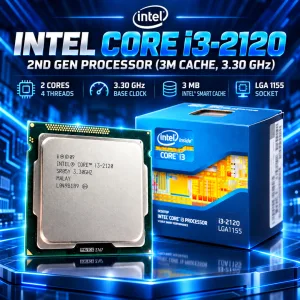
- 2 Cores and 4 Threads with Intel Hyper-Threading Technology
- 3.30 GHz Base Clock Frequency with 3 MB Intel Smart Cache
- Includes Intel HD Graphics 2000 integrated graphics
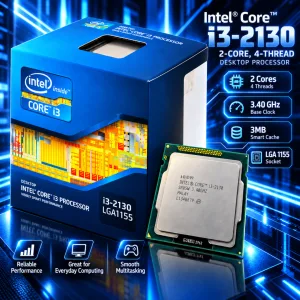
- 2 cores and 4 threads with Intel Hyper-Threading Technology
- 3.40 GHz processor base frequency with 3 MB Intel Smart Cache
- Integrated Intel HD Graphics 2000
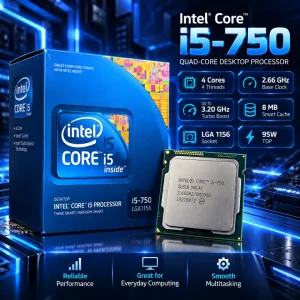
- 4 cores and 4 threads for solid multi-tasking performance
- 2.66 GHz base frequency with Intel Turbo Boost up to 3.20 GHz
- 8 MB Intel Smart Cache for rapid data access
Compare i3-2100 with Similar Processor
Real-world benchmark differences, TDP energy consumption, pros & cons, and market pricing in Bangladesh.