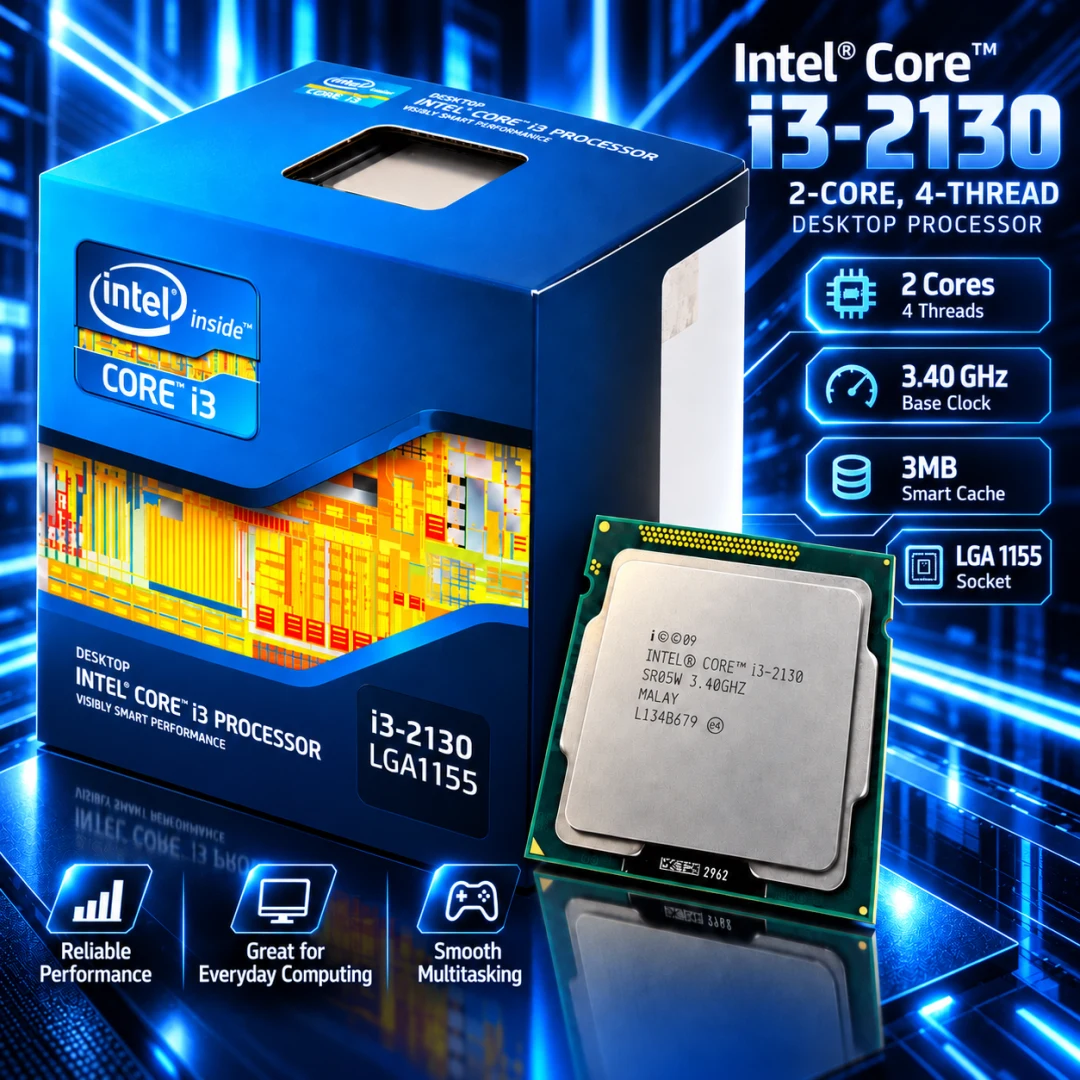
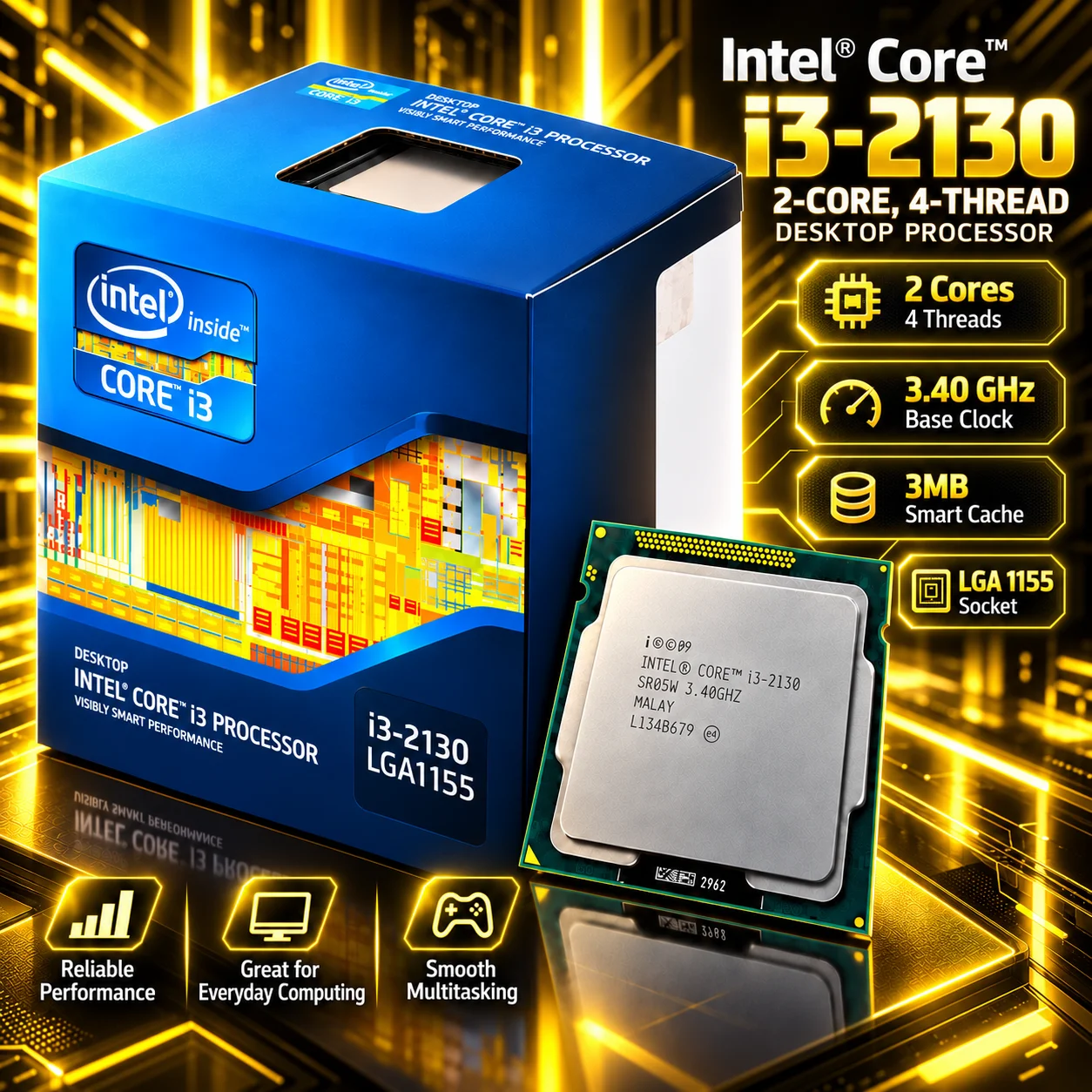
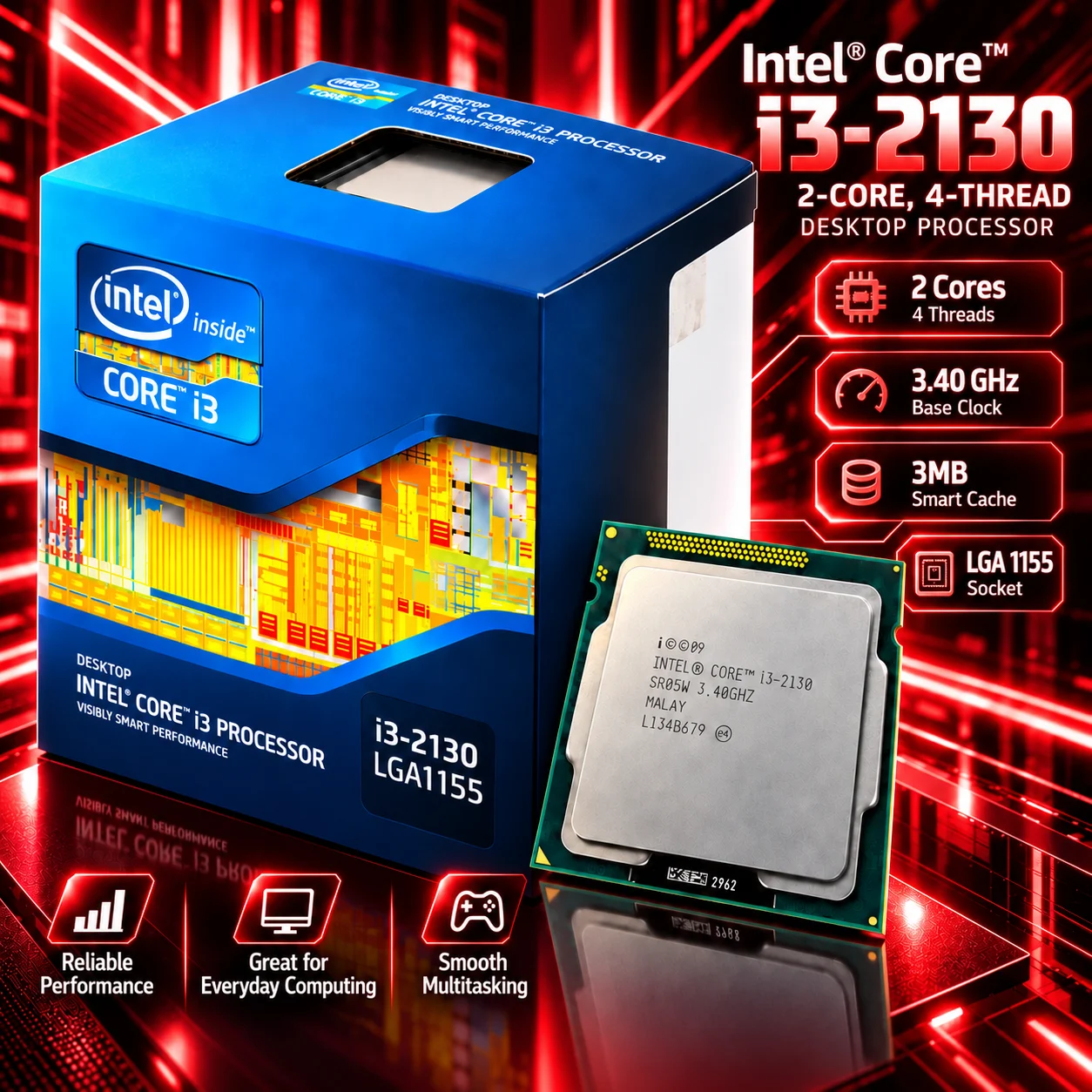
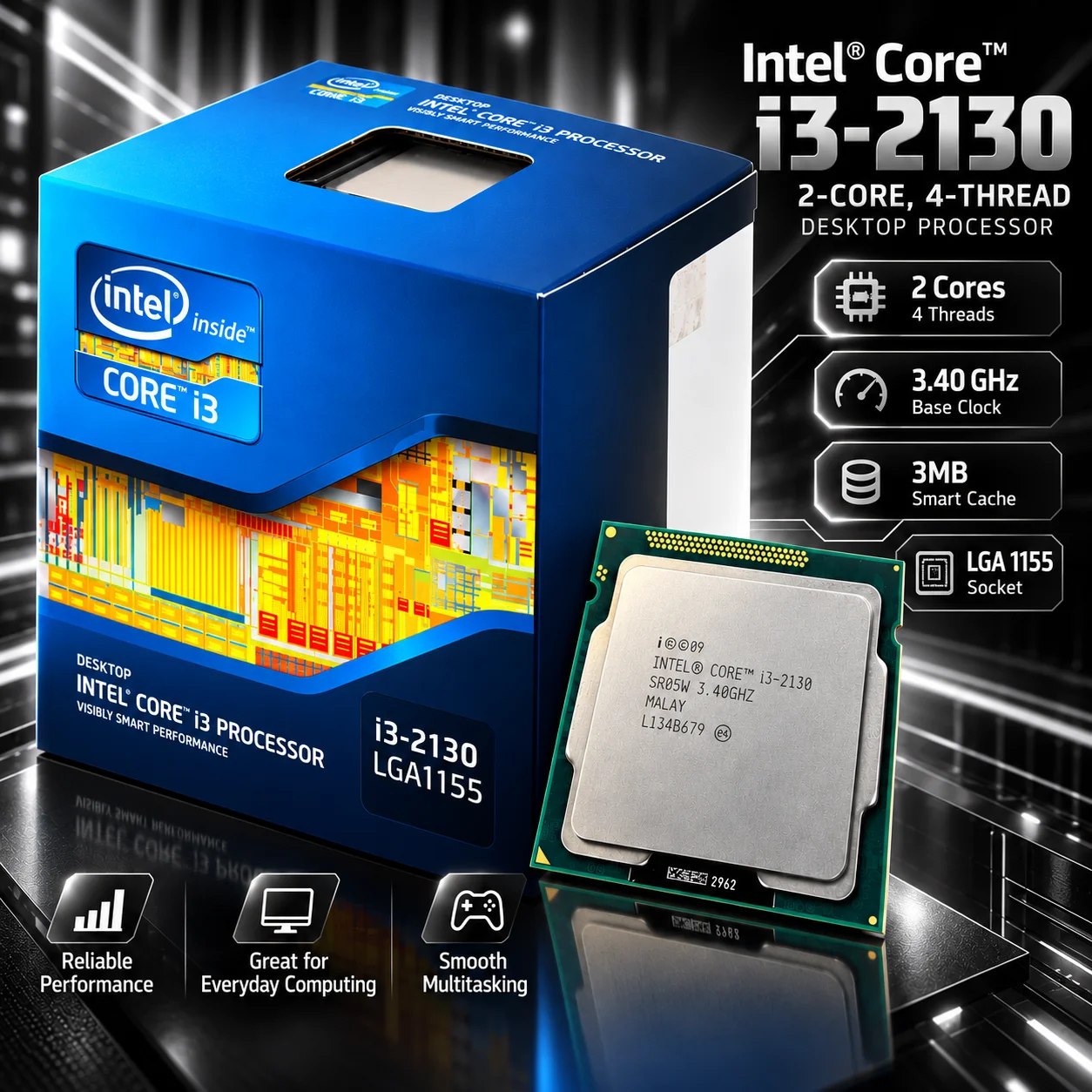
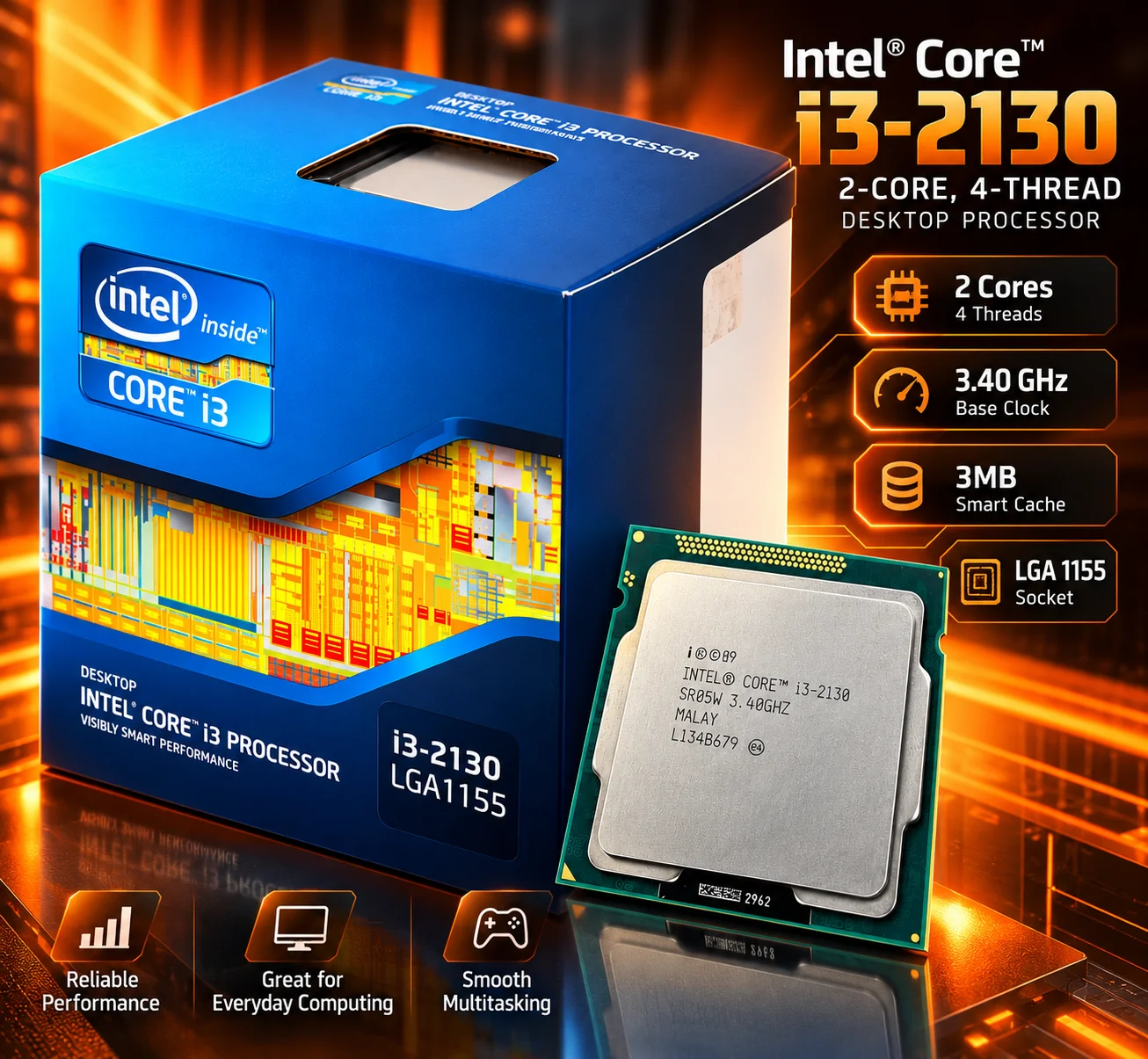
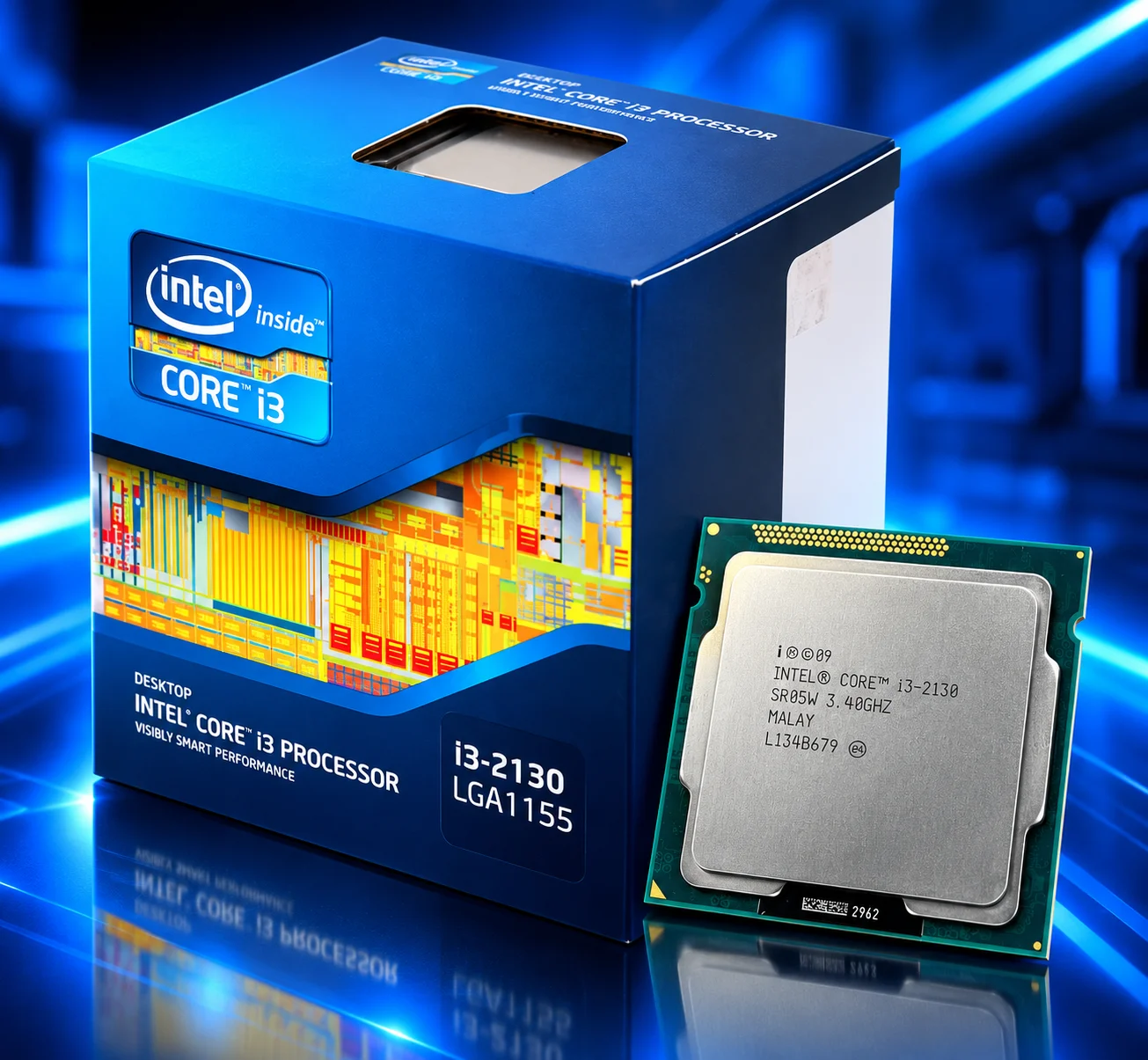
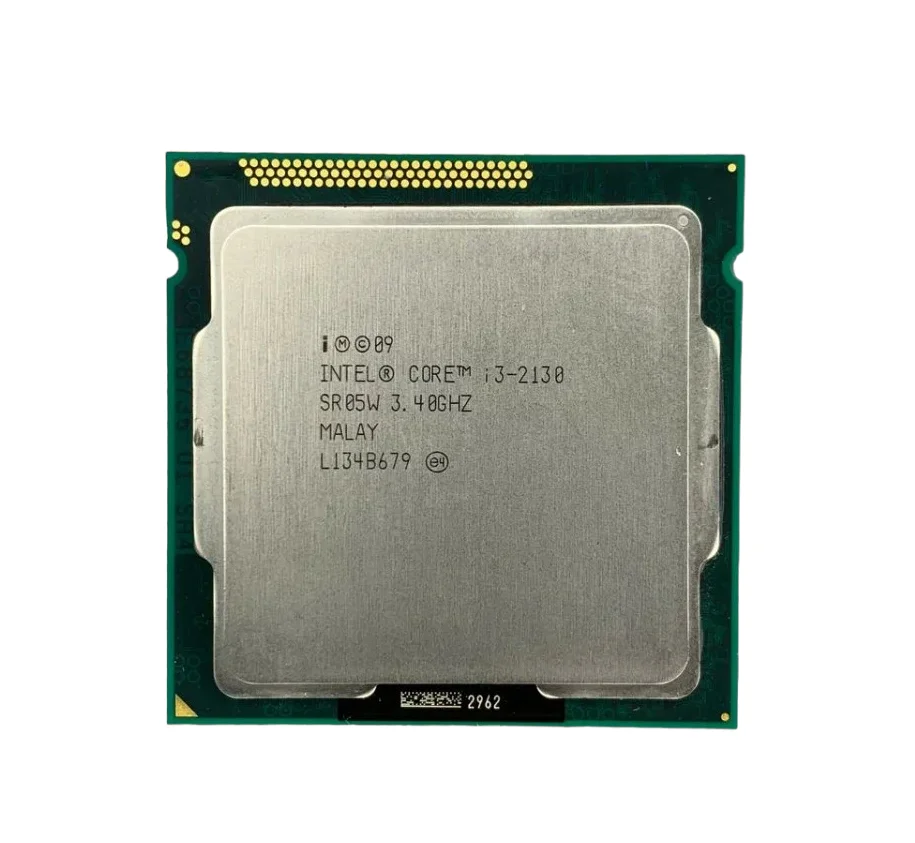
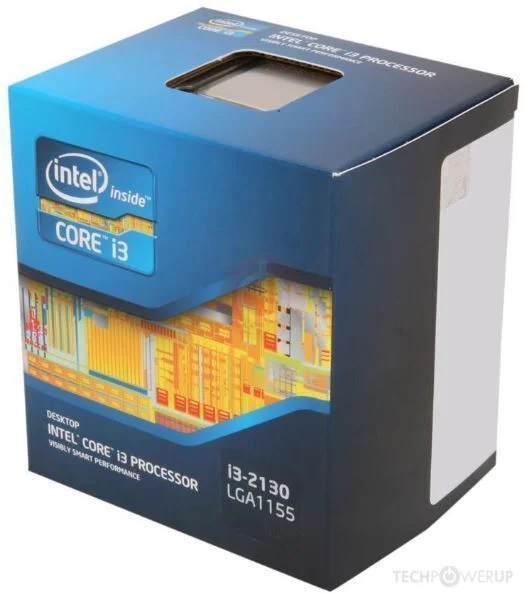
Intel Core i3-2130 2-Core, 4-Thread Desktop Processor
- 2 cores and 4 threads with Intel Hyper-Threading Technology
- 3.40 GHz processor base frequency with 3 MB Intel Smart Cache
- Integrated Intel HD Graphics 2000
- 65W TDP designed for desktop systems using LGA1155 socket
*Approximate regional retail guide prices. Pixahunt is an informational catalog.
CPU Benchmark Scores & Performance Analysis
TESTEDCinebench R23, Geekbench 6, PassMark CPU Mark scores & real-world gaming/office suitability tests.
Technical Specifications
Comprehensive hardware architecture and specifications
General
| Series |
Core i3
Selected Variant
|
| Model |
i3-2130
Selected Variant
|
| Cpu Cooler |
Included (E97379-001)
Selected Variant
|
| Code-Name |
Sandy Bridge
Selected Variant
|
| Generation |
2nd Gen
Selected Variant
|
| Sockets Supported |
FCLGA1155
Selected Variant
|
| Release Date |
September 4, 2011
Selected Variant
|
Performance
| Base Frequency |
3.40 GHz
Selected Variant
|
| Turbo Frequency Max. |
N/A
Selected Variant
|
| Core |
2
Selected Variant
|
| Threads |
4
Selected Variant
|
| CPU Cache |
3 MB Intel Smart Cache
Selected Variant
|
| L1 Cache |
64 KB per core
Selected Variant
|
| L2 Cache |
256 KB per core
Selected Variant
|
| L3 Cache |
3 MB shared
Selected Variant
|
| TDP |
65 W
Selected Variant
|
| Lithography |
32 nm
Selected Variant
|
| Multiplier |
34.0x
Selected Variant
|
| Multiplier Unlocked |
No
Selected Variant
|
| Processor Type. |
Desktop Processor (2 Cores, 4 Threads)
Best for: Entry-Level Desktop Computing, Student Tasks & Office Apps Selected Variant |
Memory Support
| Memory Max. |
32 GB
Selected Variant
|
| Memory Type |
DDR3 1066/1333
Selected Variant
|
| Memory Speed |
Up to 1333 MT/s
Selected Variant
|
| Memory Channel |
2
Selected Variant
|
| Max Memory Bandwidth |
21 GB/s
Selected Variant
|
| ECC Memory Supported |
No
Selected Variant
|
Graphics
| Built-in GPU |
Yes
Selected Variant
|
| Processor Graphics |
Intel HD Graphics 2000
Selected Variant
|
| Graphics Base Frequency |
850 MHz
Selected Variant
|
| Graphics Dynamic Frequency |
1.10 GHz
Selected Variant
|
| Graphics Core Count |
N/A
Selected Variant
|
| Max Video Memory |
Shared / 32 GB
Selected Variant
|
| Max Resolution |
N/A
Selected Variant
|
Technical Info
| DirectX Support |
N/A
Selected Variant
|
| OpenGL Support |
N/A
Selected Variant
|
| Approx. Power Consumption |
65 W
Selected Variant
|
| Compatible Products / Chipsets |
Z77, Z75, Q77, H77, Q75, B75, Z68, P67, H67, Q67, B65, H61
Selected Variant
|
| PCI Express Version |
2.0
Selected Variant
|
| PCI Express Lanes |
16
Selected Variant
|
| Thermal Solution (MPK / Box) |
E97379-001
Selected Variant
|
| Max. Operating Temperature (Tjmax) |
69.1°C
Selected Variant
|
Warranty
| Manufacturing Warranty |
3 Years Limited
Selected Variant
|
Additional Info
| Specialty |
Intel Hyper-Threading Technology, Intel Virtualization Technology (VT-x)
Selected Variant
|
| Others |
Discontinued Product
Selected Variant
|
| Country Of Origin |
USA
Selected Variant
|
| Made in/ Assemble |
China / Malaysia
Selected Variant
|
Editorial Overview & Review
In-depth insights, architecture summary, and performance evaluation
1. Introduction & Overview
The Intel Core i3-2130 belongs to Intel's legendary 2nd Generation processor family, codenamed Sandy Bridge. Built for the popular FCLGA1155 socket, this dual-core processor was designed to target budget-conscious consumers, home office setups, and enterprise desktop deployments looking for high single-threaded clock efficiency without breaking the bank. Bundled with the standard Intel E97379-001 thermal solution, the i3-2130 delivered a plug-and-play solution for mainstream computing needs.
While currently classified as a discontinued legacy product, the Core i3-2130 holds a notable place in CPU history as one of the higher-clocked entry options in the Sandy Bridge lineup. It offered a middle ground between basic Pentium/Celeron chips and the pricier quad-core Core i5 models, bringing hyper-threaded dual-core power to lower-tier desktops.
2. Architecture, Performance & Key Technologies
At the heart of the Core i3-2130 lies Intel's revolutionary 32 nm Sandy Bridge architecture, which integrated the memory controller and graphics core directly onto the same die as the CPU cores. Operating at a static base frequency of 3.40 GHz with a locked 34.0x multiplier, this chip does not feature Intel Turbo Boost, meaning performance relies directly on its raw high-clock execution power.
Despite being a physical dual-core CPU, the inclusion of Intel Hyper-Threading Technology allows the processor to handle 4 threads simultaneously. Cache layout includes 64 KB of L1 cache per core, 256 KB of L2 cache per core, and a shared 3 MB Intel Smart Cache. Key engineering highlights include:
- Thermal & Power Envelope: Rated at a manageable 65 W TDP, operating with a maximum temperature ceiling (Tjmax) of 69.1°C.
- Memory System: Dual-channel memory controller supporting up to 32 GB of DDR3 memory at speeds up to 1333 MT/s, pushing a maximum memory bandwidth of 21 GB/s.
- Integrated Graphics: Equipped with Intel HD Graphics 2000, featuring an 850 MHz base frequency dynamic boost up to 1.10 GHz, utilizing up to 32 GB of shared system memory.
- Platform & Expansion: Features 16 PCI Express 2.0 lanes and supports a massive range of motherboards across both 6-series and 7-series chipsets (including H61, B75, H67, P67, Z68, and Z77).
- Virtualization: Full support for Intel Virtualization Technology (VT-x) for light hardware virtualization setups.
3. Real-World Use Cases
In daily computing, the Intel Core i3-2130 delivers responsive performance for essential tasks. Its high 3.40 GHz base clock ensures web browsers, office documents, standard media playback, and lightweight multitasking execute briskly. Hyper-Threading provides just enough overhead to prevent system stuttering when running background updates alongside active productivity software.
For gaming and heavy content creation, the i3-2130 demonstrates its limitations. The integrated Intel HD Graphics 2000 is suited primarily for basic display driving and standard definition media, lacking the muscle for modern 3D gaming or advanced API rendering. Pair it with a discrete PCI Express graphics card, and it can run legacy games or light eSports titles, but heavy video editing, 3D modeling, or modern multi-threaded AAA games will quickly saturate its two physical cores.
4. Strengths & Potential Considerations
Evaluating the Core i3-2130 highlights a clear set of advantages alongside predictable architecture limits:
- Pros:
- High 3.40 GHz base clock delivers strong single-threaded performance for everyday tasks.
- Intel Hyper-Threading efficiently turns 2 physical cores into 4 logical threads.
- Efficient 65 W thermal output keeps power draw and fan noise low.
- Extensive chipset compatibility across standard LGA1155 motherboards (H61 to Z77).
- Includes stock thermal solution (E97379-001) in retail packaging.
- Cons:
- Locked multiplier limits any potential overclocking flexibility.
- No Turbo Boost capability to push clocks higher under heavy single-thread loads.
- Basic Intel HD Graphics 2000 offers very limited graphical performance.
- Restricted to DDR3-1333 memory speeds and PCI Express 2.0 standard.
- Discontinued product status; relevant today mainly for replacement or legacy builds.
5. Final Buying Verdict
The Intel Core i3-2130 remains a testament to the longevity of the Sandy Bridge generation. While no longer suitable for modern high-performance computing or gaming rigs, it remains a reliable option for specific budget-focused scenarios. If you are building a low-cost secondary PC, repairing an existing LGA1155 office machine, or setting up a dedicated light server or media endpoint, the i3-2130 offers dependable dual-core performance at minimal power consumption.
OUR RATING CONSENSUS
The overall rating is based on review by our experts & industry benchmark suites
Quick Snapshot
- Overall Rating
- 4.8 / 10
- Brand
- Intel
- Category
- Processor
- Catalog Model
- i3-2130
- Status
- Published
- Release Date
- September 4, 2011
Pixahunt Tech Community
Connect with hardware enthusiasts, compare benchmarks, and explore real user setups.
Explore Full Newsfeed →Related Gadgets
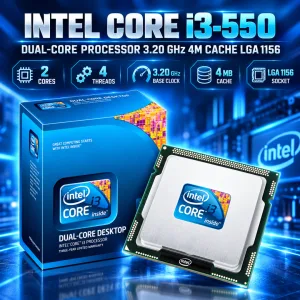
- 3.20 GHz Dual-Core Clock Speed for Reliable Everyday Computing
- Intel Hyper-Threading Technology Enabling 4 Parallel Threads
- Built-in Intel HD Graphics for Integrated Display Support
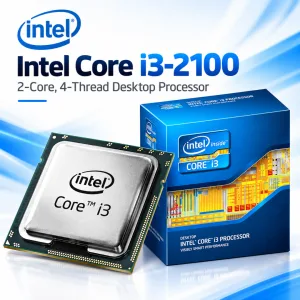
- 2 cores and 4 threads with Intel Hyper-Threading Technology
- 3.10 GHz base processor frequency
- 3 MB Intel Smart Cache
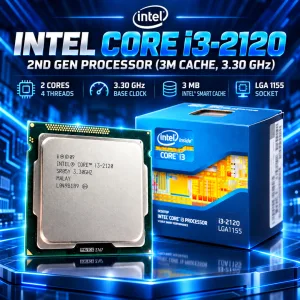
- 2 Cores and 4 Threads with Intel Hyper-Threading Technology
- 3.30 GHz Base Clock Frequency with 3 MB Intel Smart Cache
- Includes Intel HD Graphics 2000 integrated graphics
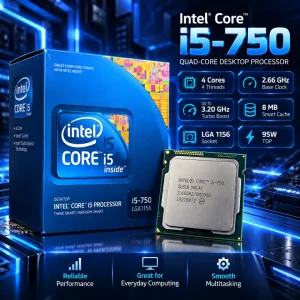
- 4 cores and 4 threads for solid multi-tasking performance
- 2.66 GHz base frequency with Intel Turbo Boost up to 3.20 GHz
- 8 MB Intel Smart Cache for rapid data access
Compare i3-2130 with Similar Processor
Real-world benchmark differences, TDP energy consumption, pros & cons, and market pricing in Bangladesh.