

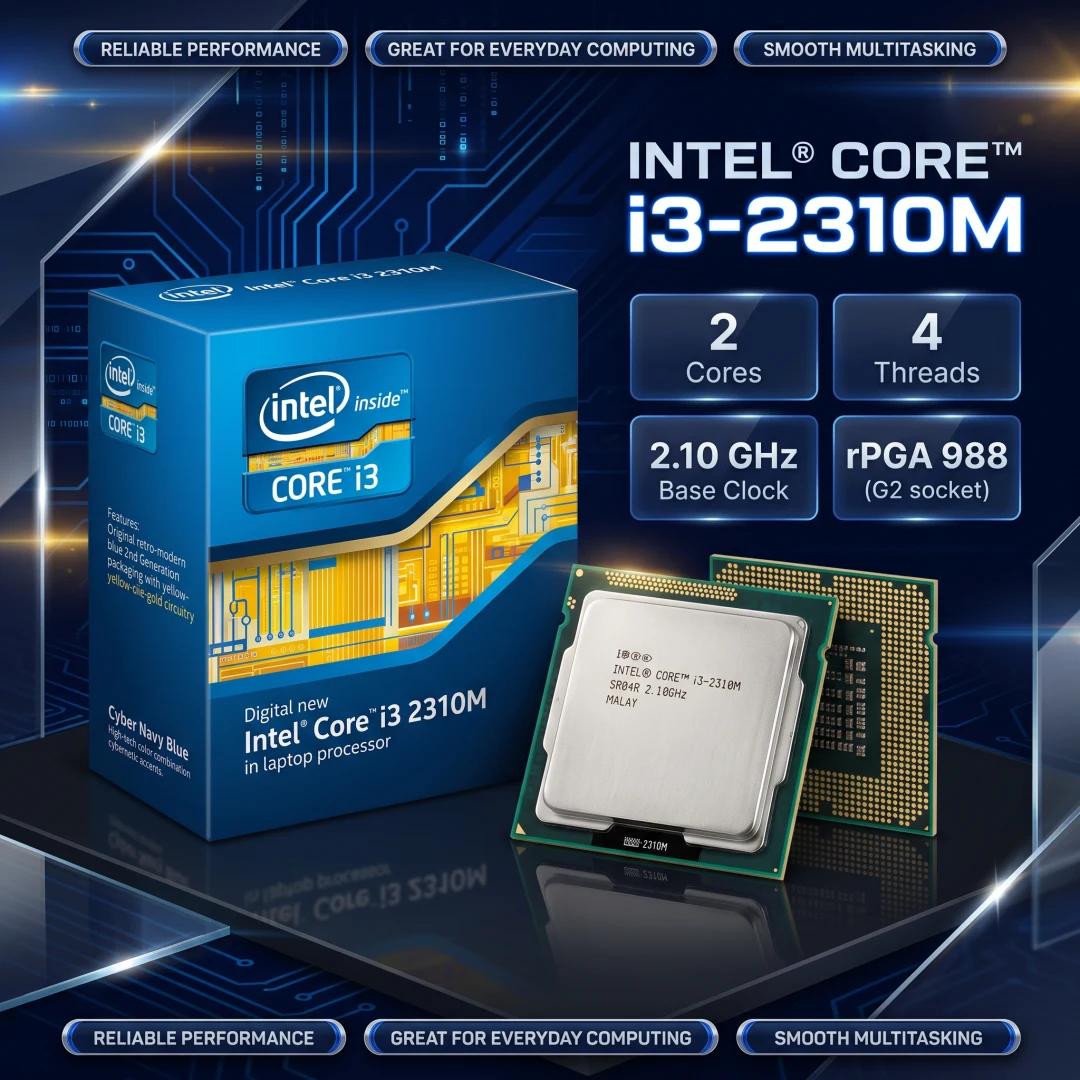
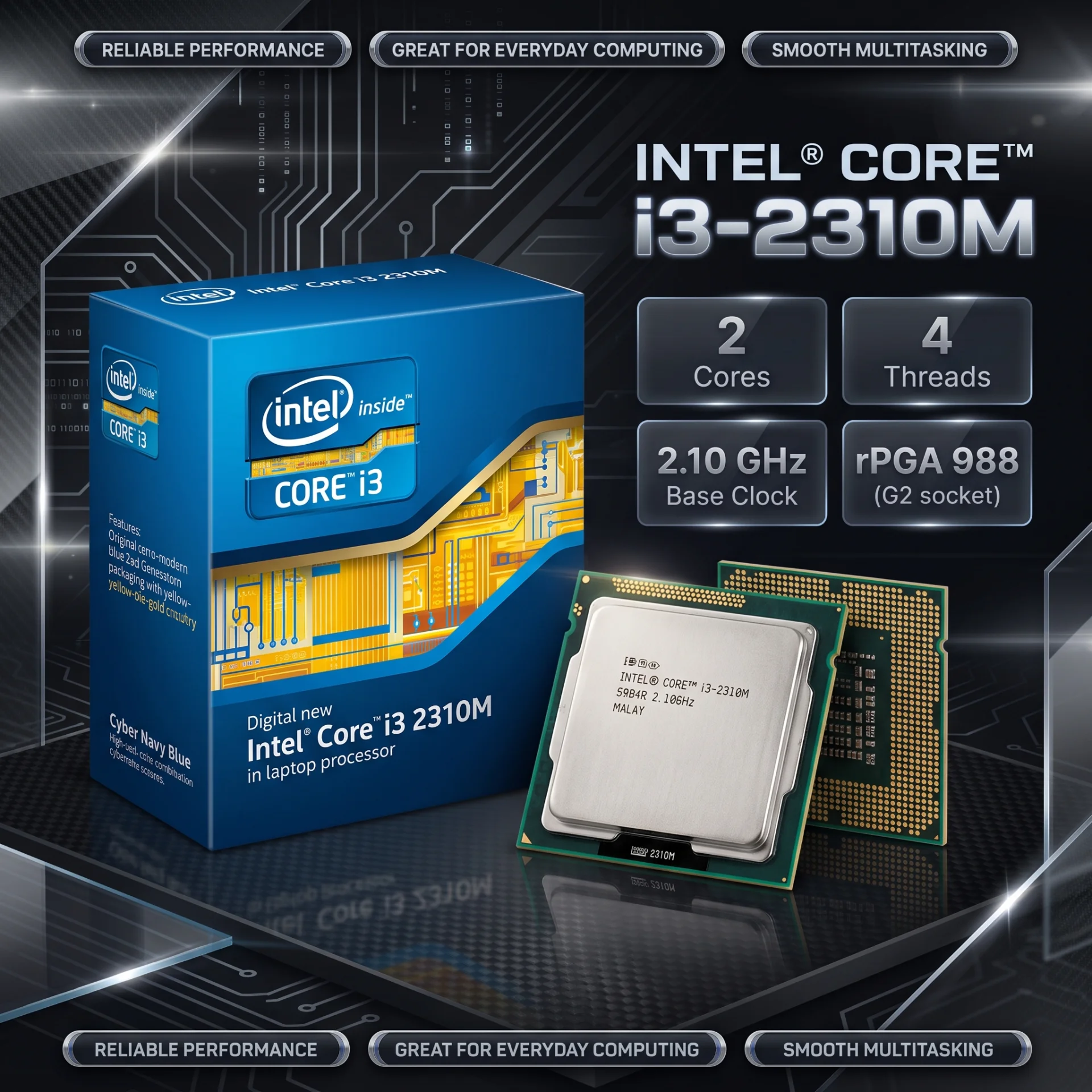
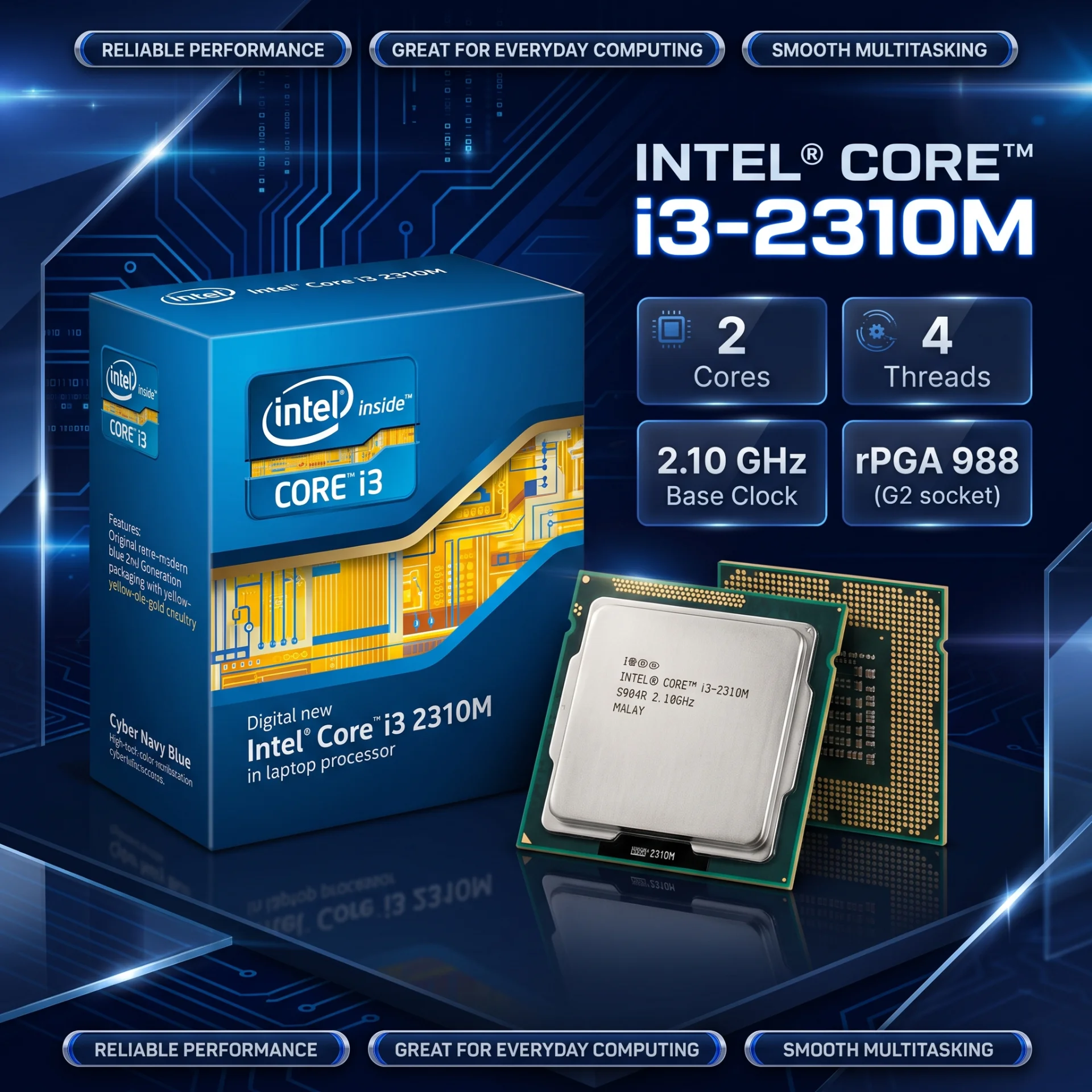
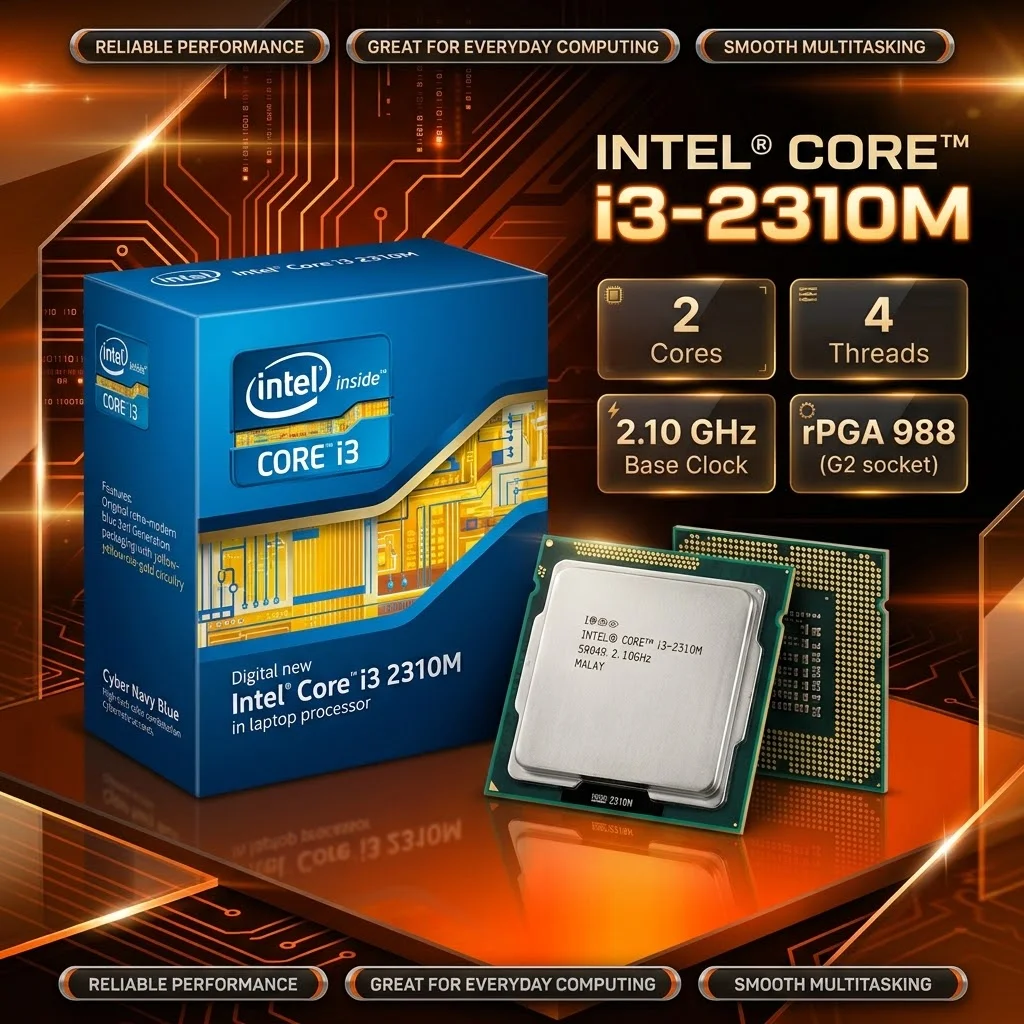
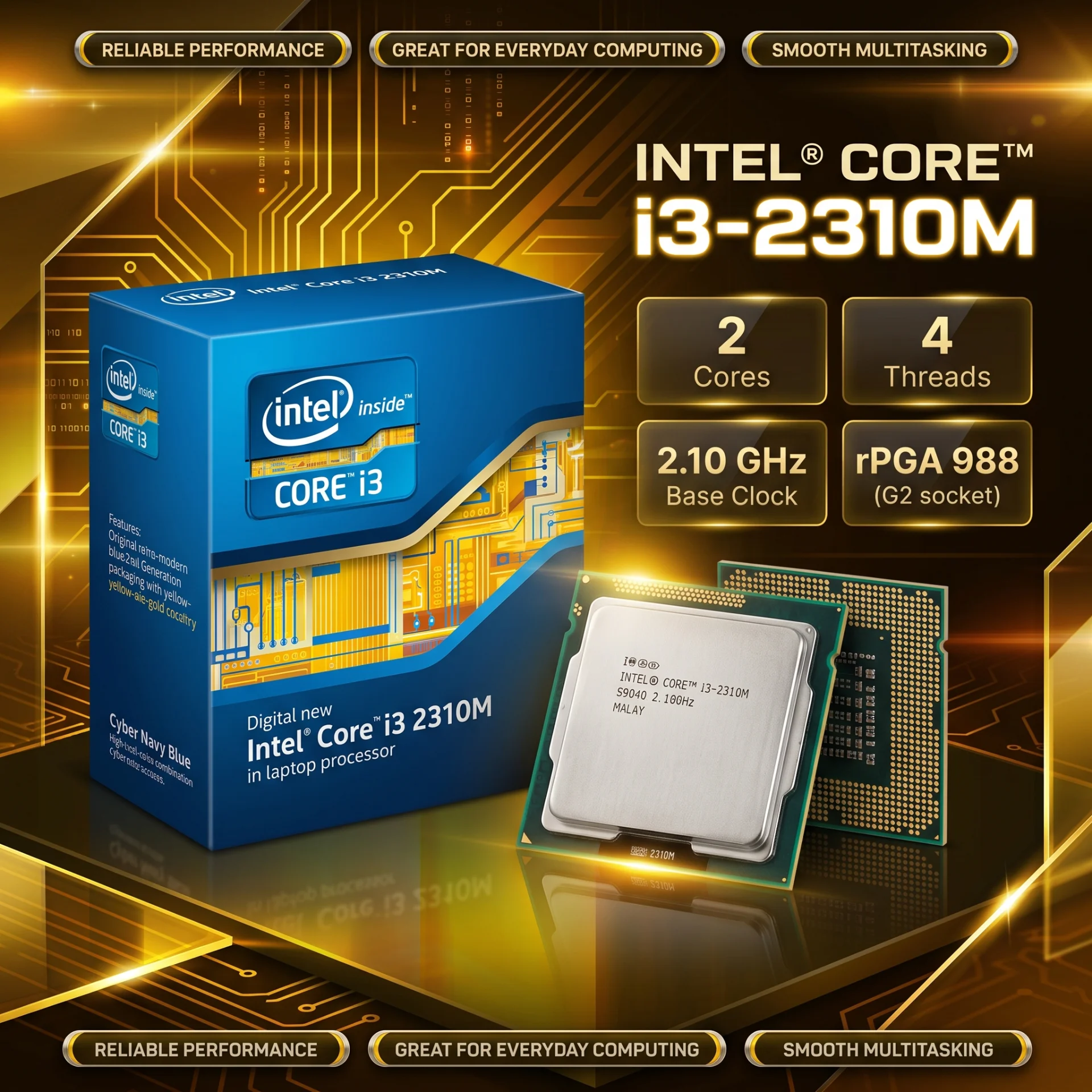
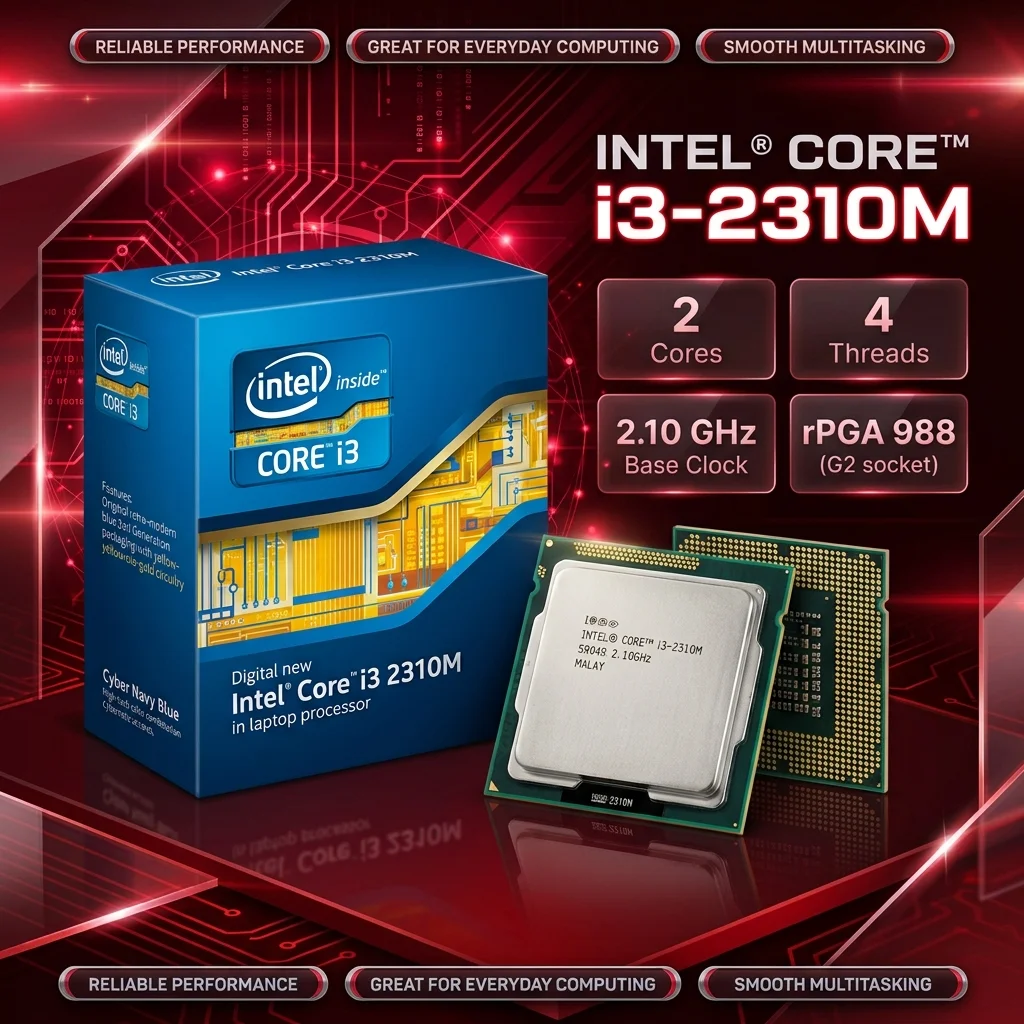
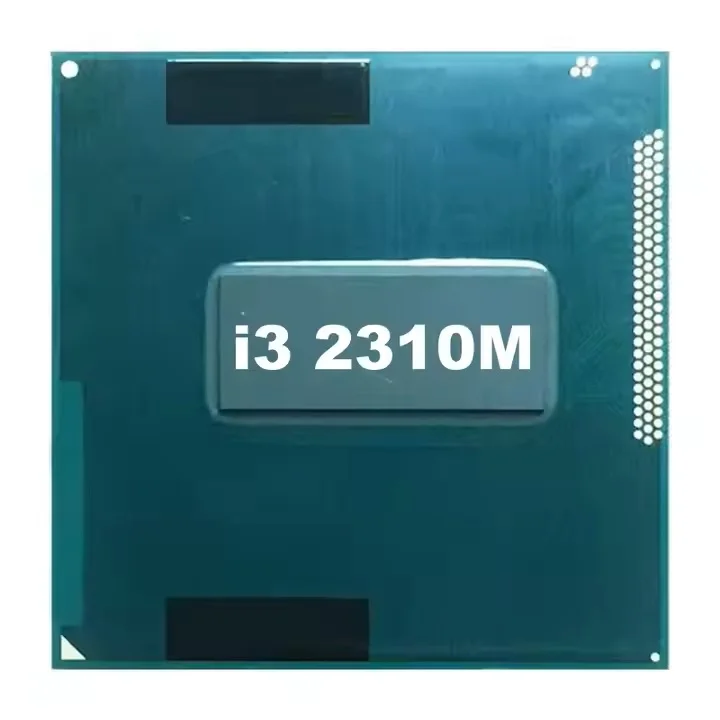
Intel Core i3-2310M 2-Core, 4-Thread 2.10 GHz Mobile Processor
- 2 Cores & 4 Threads (Intel Hyper-Threading Technology)
- 2.10 GHz Clock Speed (Fixed Base Frequency)
- 3 MB Intel Smart Cache
- Integrated Intel HD Graphics 3000
*Approximate regional retail guide prices. Pixahunt is an informational catalog.
CPU Benchmark Scores & Performance Analysis
TESTEDCinebench R23, Geekbench 6, PassMark CPU Mark scores & real-world gaming/office suitability tests.
Technical Specifications
Comprehensive hardware architecture and specifications
General
| Series | Core i3 (2nd Gen) |
| Model | Intel Core i3-2310M |
| Cpu Cooler | Not Included |
| Code-Name | Sandy Bridge |
| Generation | 2nd Gen |
| Sockets Supported | FCBGA1023, PPGA988 |
Performance
| Base Frequency | 2.10 GHz |
| Turbo Frequency Max. | N/A |
| Core | 2 |
| Threads | 4 |
| CPU Cache | 3 MB Intel Smart Cache |
| L1 Cache | 128 KB |
| L2 Cache | 512 KB |
| L3 Cache | 3 MB |
| TDP | 35W |
| Lithography | 32nm |
| Multiplier | 21x |
| Multiplier Unlocked | No |
| Processor Type | Core i3 |
Memory Support
| Memory Max. | 16 GB |
| Memory Type | DDR3 |
| Memory Speed | DDR3 1066/1333 |
| Memory Channel | 2 |
| Max Memory Bandwidth | 21.3 GB/s |
| ECC Memory Supported | No |
Graphics
| Built-in GPU | Yes |
| Processor Graphics | Intel HD Graphics 3000 |
| Graphics Base Frequency | 650 MHz |
| Graphics Dynamic Frequency | 1.10 GHz |
| Graphics Core Count | 12 Execution Units |
| Max Video Memory | Shared |
| Max Resolution | 2560x1600 @ 60Hz |
Technical Info
| DirectX Support | 10.1 |
| OpenGL Support | 3.1 |
| Approx. Power Consumption | 35W |
| Compatible Products / Chipsets | Intel HM65, HM67, QM67, QS67 Express Chipsets |
| PCI Express Version | PCIe 2.0 |
| PCI Express Lanes | 16 Lanes |
| Thermal Solution (MPK / Box) | N/A |
| Max. Operating Temperature (Tjmax) | 85°C (PGA) / 100°C (BGA) |
Warranty
| Manufacturing Warranty | Discontinued |
Additional Info
| Specialty | Intel Hyper-Threading Technology, Intel Virtualization Technology (VT-x), Intel Quick Sync Video, Intel AVX Instruction Set |
| Others | Intel 64-bit, Enhanced Intel SpeedStep Technology, Idle States, Thermal Monitoring Technologies |
| Country Of Origin | USA |
| Made in/ Assemble | Malaysia / Costa Rica / China |
Editorial Overview & Review
In-depth insights, architecture summary, and performance evaluation
Introduction & Overview: The Workhorse of an Era
When Intel launched its 2nd Generation Core processor family—famously codenamed Sandy Bridge—it fundamentally shifted what consumers could expect from mainstream mobile computing. At the heart of this lineup sat the Intel Core i3-2310M, a mobile processor engineered specifically to bring dependable performance, impressive power efficiency, and modern multimedia capabilities to everyday laptops.
Positioned as an entry-to-mid-range solution for the mobile market, the i3-2310M was designed for students, home users, and mobile professionals who needed a reliable machine for day-to-day computing without breaking the bank. Compatible with standard mobile chipsets like the Intel HM65, HM67, QM67, and QS67 Express, this 35W processor quickly became a staple in laptops ranging from budget-friendly multimedia systems to sturdy corporate workhorses.
Architecture, Performance & Key Technologies
Built on a mature 32nm lithography process, the Core i3-2310M packs a serious punch for its class. It features 2 physical cores and 4 threads, leveraging Intel Hyper-Threading Technology to handle concurrent tasks with greater fluidity. Operating at a fixed base frequency of 2.10 GHz (with a 21x multiplier, though strictly locked for overclocking enthusiasts), it skips Turbo Boost technology, relying instead on its stable clock speed and 3 MB of Intel Smart Cache to maintain consistent performance.
Memory handling is robust for its generation, supporting up to 16 GB of DDR3 memory across dual channels at speeds of 1066 or 1333 MHz, delivering a maximum memory bandwidth of 21.3 GB/s. On the graphics front, the processor integrates Intel HD Graphics 3000. Operating at a base frequency of 650 MHz and scaling up to a dynamic frequency of 1.10 GHz across 12 execution units, it delivers capable hardware acceleration for daily visuals and media playback.
Where Sandy Bridge truly shined was in its instruction set and feature support. The i3-2310M includes:
- Intel AVX Instruction Set: Enhances floating-point performance for scientific, financial, and media applications.
- Intel Quick Sync Video: A hardware-accelerated video encoding and decoding engine that made transcoding video files remarkably fast.
- Intel Virtualization Technology (VT-x): Streamlines virtual machine environments for developers and IT administrators.
- Enhanced Intel SpeedStep & Thermal Monitoring: Keeps power consumption in check and protects the silicon under load.
Real-World Use Cases: How Does It Hold Up?
In practice, the Intel Core i3-2310M excels at what it was built for: productivity. For daily office tasks, web browsing with dozens of tabs open, streaming 1080p video, and working in Microsoft Office suites, the quad-thread capability ensures that the system rarely stutters. Thanks to Intel Quick Sync, video transcoding tasks that used to choke older dual-core processors are handled with surprising efficiency.
When it comes to gaming and heavy content creation, expectations need to be managed. The integrated Intel HD Graphics 3000 is DirectX 10.1 and OpenGL 3.1 compatible, meaning it can easily handle older PC titles, casual games, and light eSports games (like *League of Legends* or *Minecraft*) at modest settings and resolutions. However, modern AAA gaming or heavy 3D rendering will require a dedicated discrete GPU, which many laptops paired with this chip occasionally offered.
Strengths & Potential Considerations
Every piece of hardware has its trade-offs, particularly as technology evolves. Here is how the i3-2310M stacks up:
- Strengths (Pros):
- Reliable 4-thread multitasking performance via Hyper-Threading.
- Incredible hardware acceleration for video tasks via Quick Sync Video.
- Efficient 35W TDP ensures balanced heat and battery management.
- Robust support for up to 16GB of DDR3 memory.
- Mature, highly stable architecture with broad chipset compatibility.
- Considerations (Cons):
- No Intel Turbo Boost technology—locked at a 2.10 GHz base clock.
- Integrated HD 3000 graphics are heavily outdated for modern gaming and GPU-accelerated workflows.
- Officially discontinued by Intel, meaning modern software and operating systems may push its architectural limits.
- PCIe limited to version 2.0 speeds.
Final Buying Verdict
The Intel Core i3-2310M stands out in tech history as a dependable, well-engineered building block of the Sandy Bridge generation. While it is now a legacy product—having long since been superseded by successive generations of Intel Core mobile processors—it remains a fascinating piece of silicon that defined mainstream mobile computing for years.
For everyday users, students, or hobbyists looking to resurrect an older laptop for basic web browsing, text processing, or media consumption, a machine powered by the i3-2310M (especially when paired with an SSD) can still offer a surprisingly snappy experience. While it is no longer suited for modern gaming or heavy professional workloads, its legacy as a reliable, efficient mobile workhorse remains entirely secure.
OUR RATING CONSENSUS
The overall rating is based on review by our experts & industry benchmark suites
Quick Snapshot
- Overall Rating
- 5.0 / 10
- Brand
- Intel
- Category
- Processor
- Catalog Model
- i3-2310M
- Status
- Published
- Release Date
- Oct 10, 2026
Pixahunt Tech Community
Connect with hardware enthusiasts, compare benchmarks, and explore real user setups.
Explore Full Newsfeed →Related Gadgets
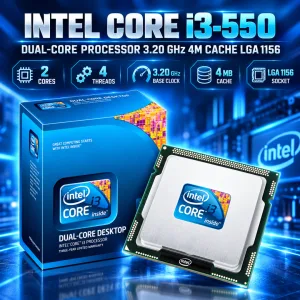
- 3.20 GHz Dual-Core Clock Speed for Reliable Everyday Computing
- Intel Hyper-Threading Technology Enabling 4 Parallel Threads
- Built-in Intel HD Graphics for Integrated Display Support
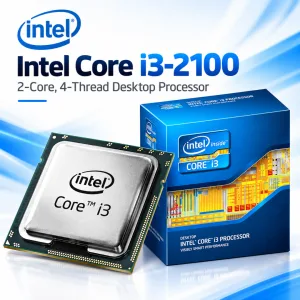
- 2 cores and 4 threads with Intel Hyper-Threading Technology
- 3.10 GHz base processor frequency
- 3 MB Intel Smart Cache
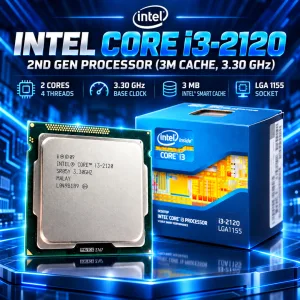
- 2 Cores and 4 Threads with Intel Hyper-Threading Technology
- 3.30 GHz Base Clock Frequency with 3 MB Intel Smart Cache
- Includes Intel HD Graphics 2000 integrated graphics
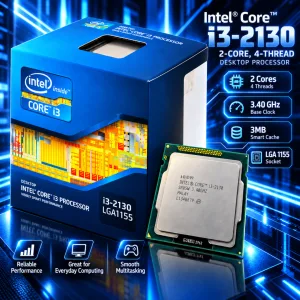
- 2 cores and 4 threads with Intel Hyper-Threading Technology
- 3.40 GHz processor base frequency with 3 MB Intel Smart Cache
- Integrated Intel HD Graphics 2000