

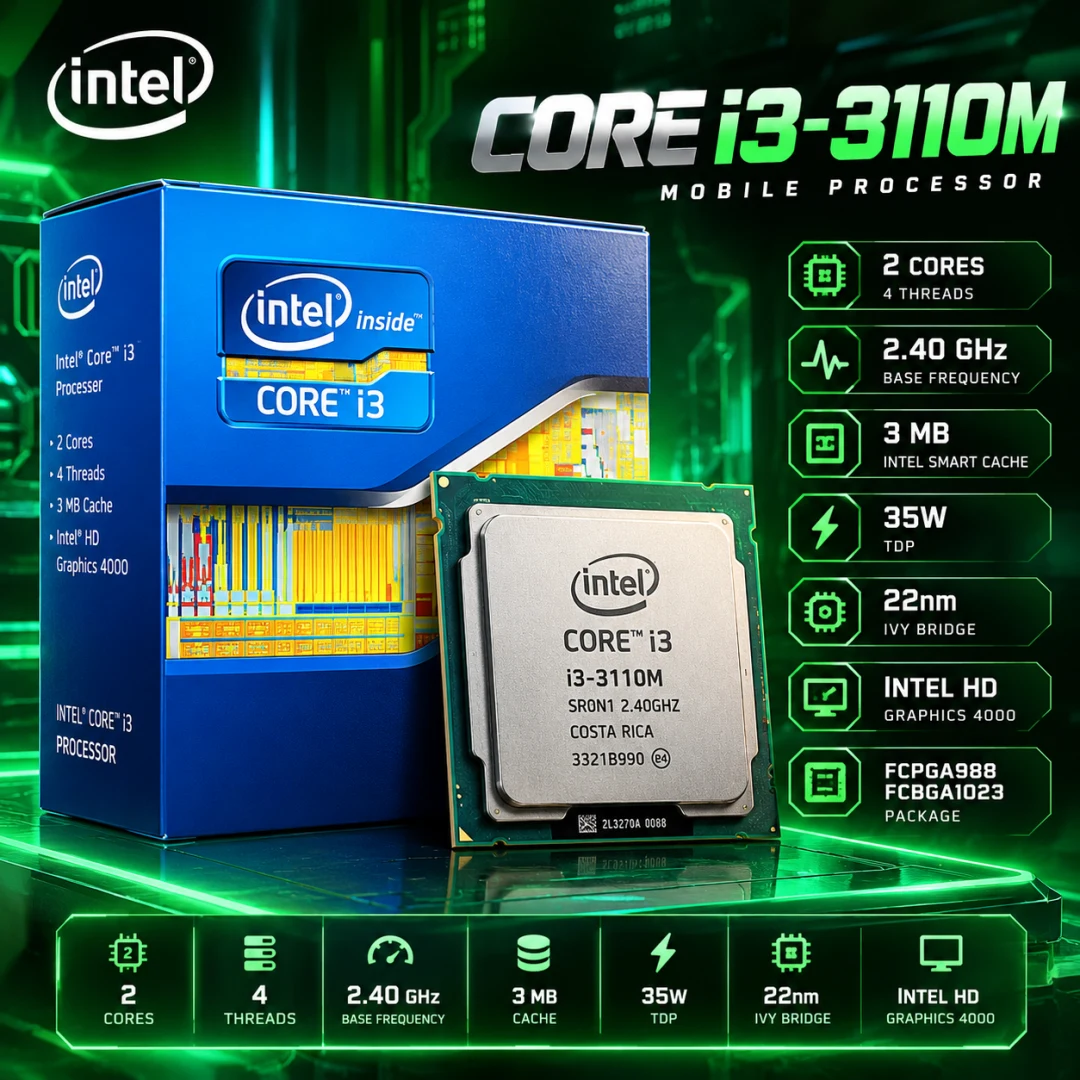
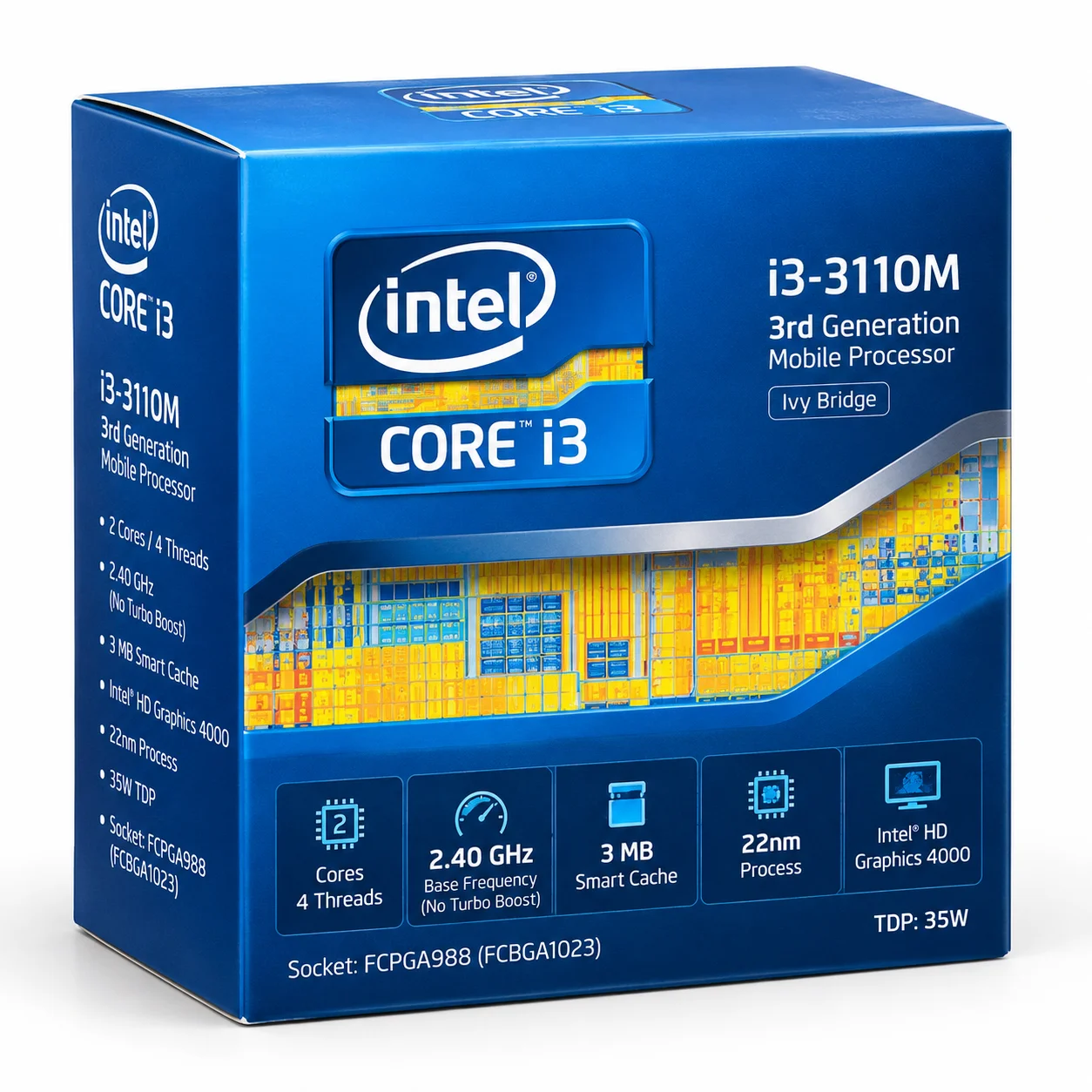
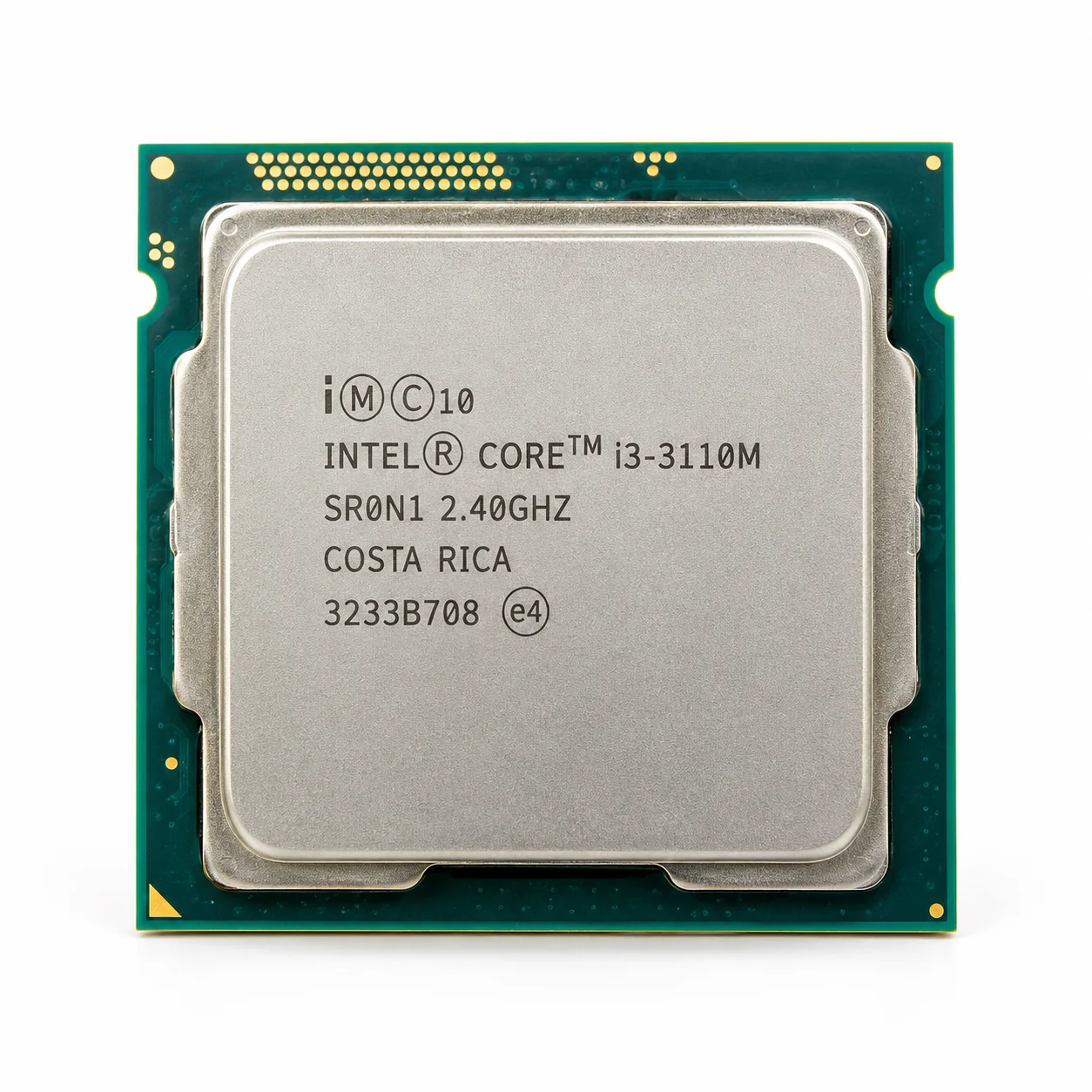
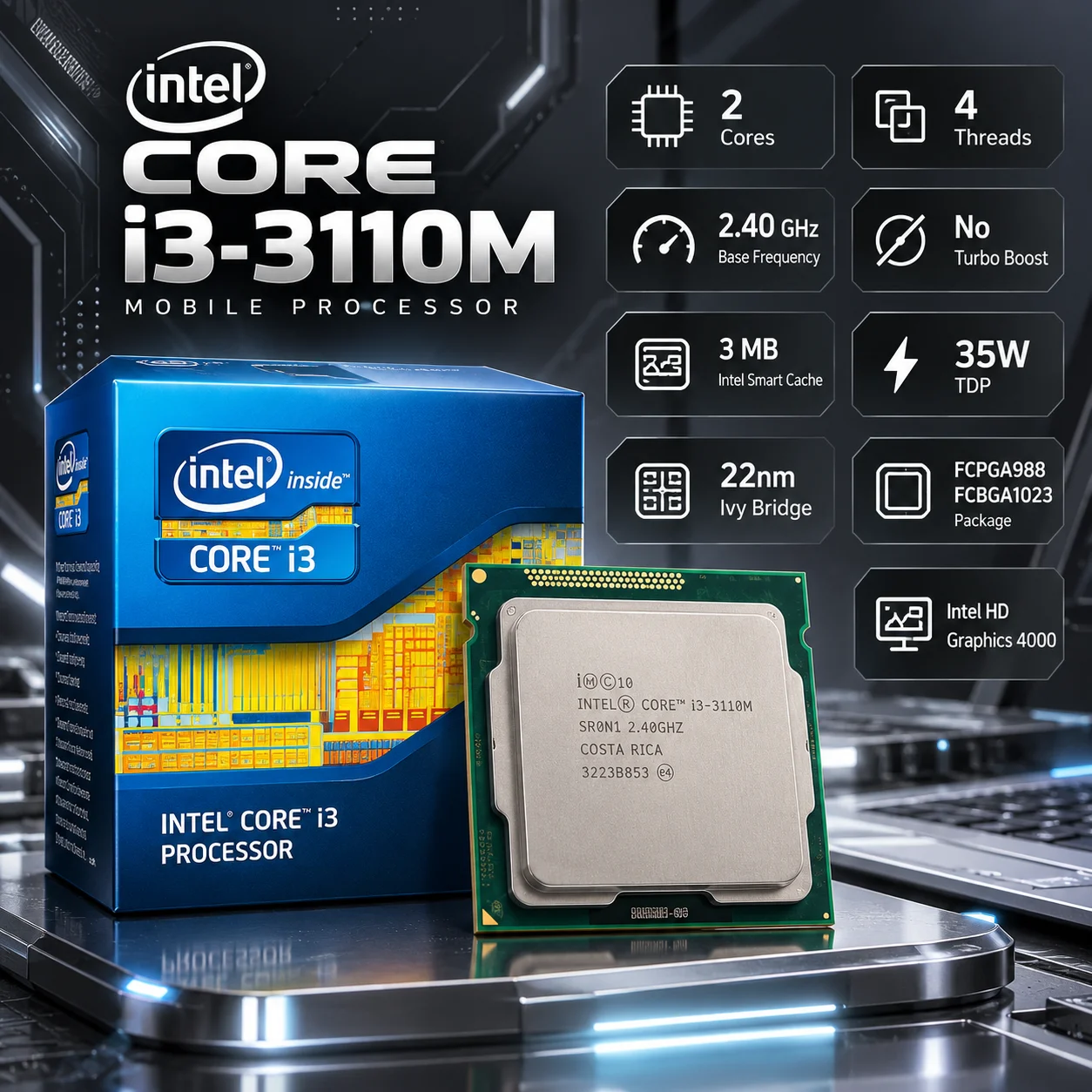
Intel Core i3-3110M Mobile Processor (3M Cache, 2.40 GHz)
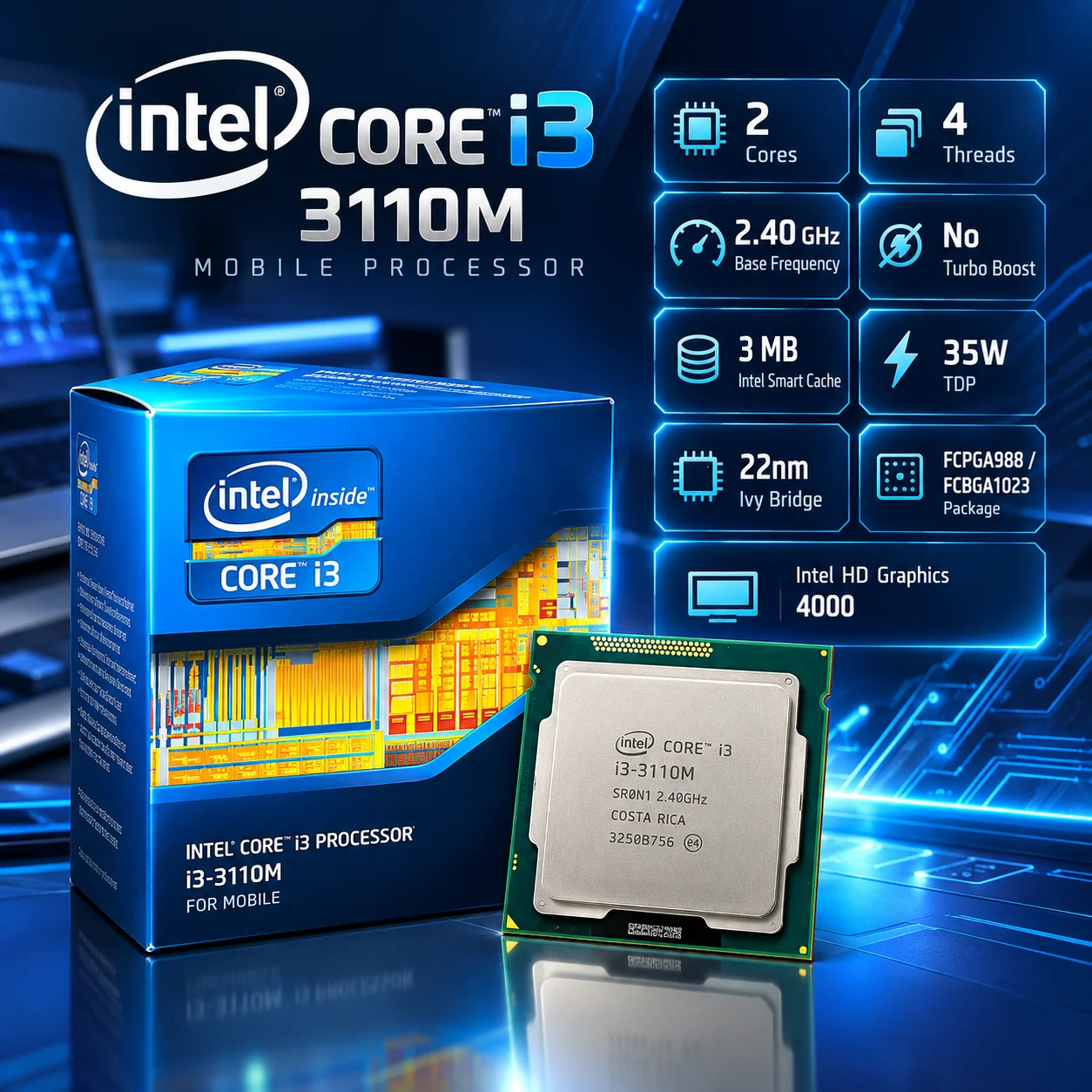
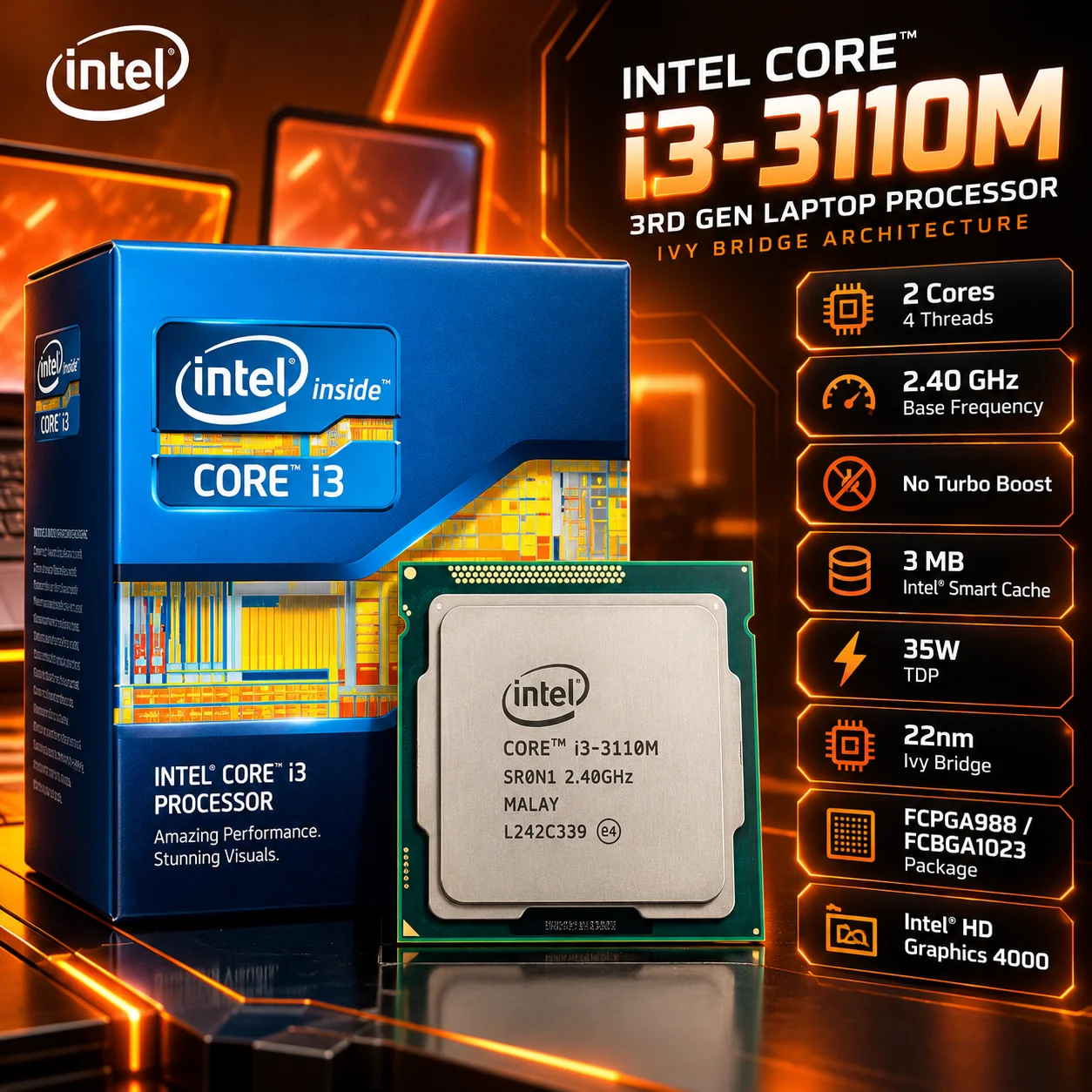
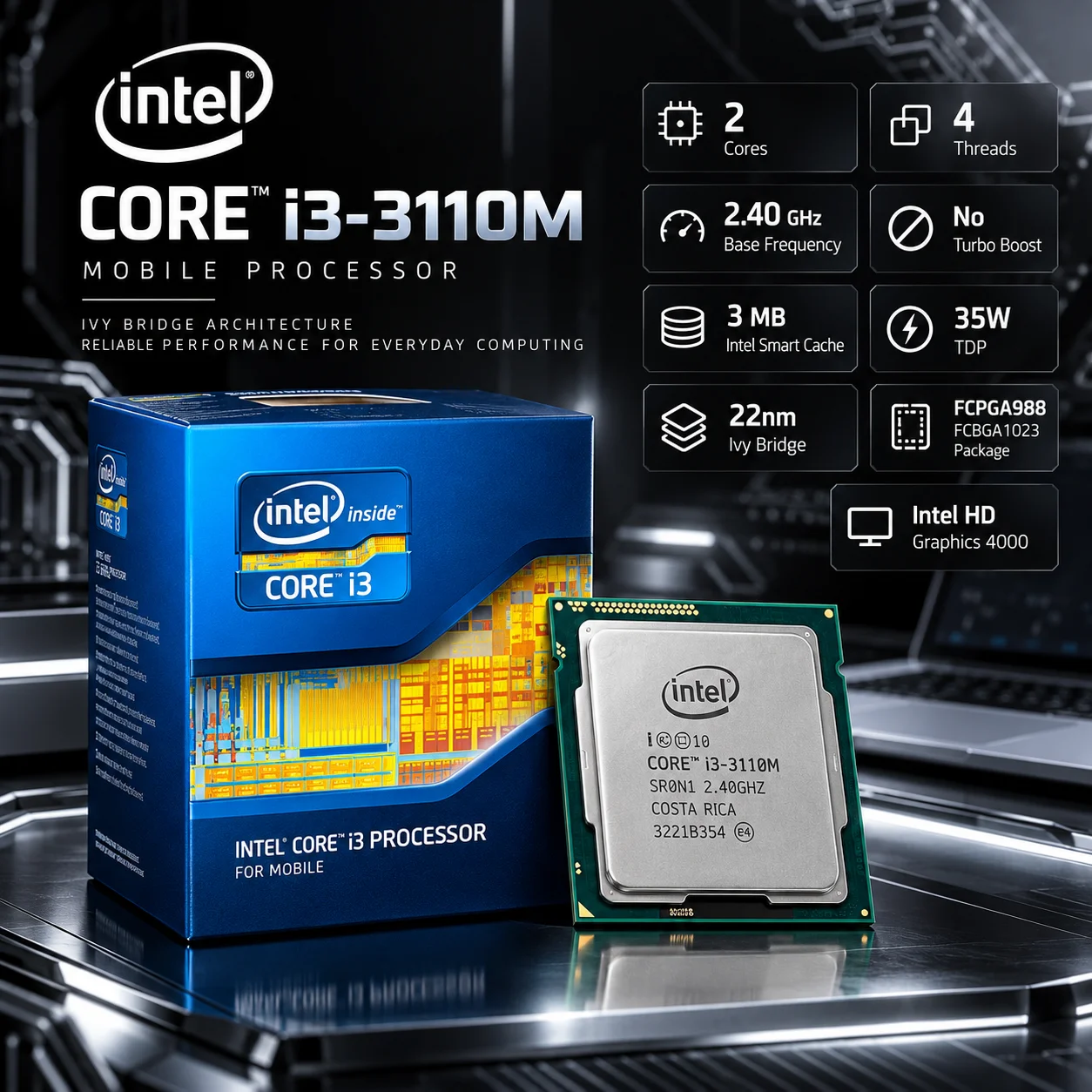
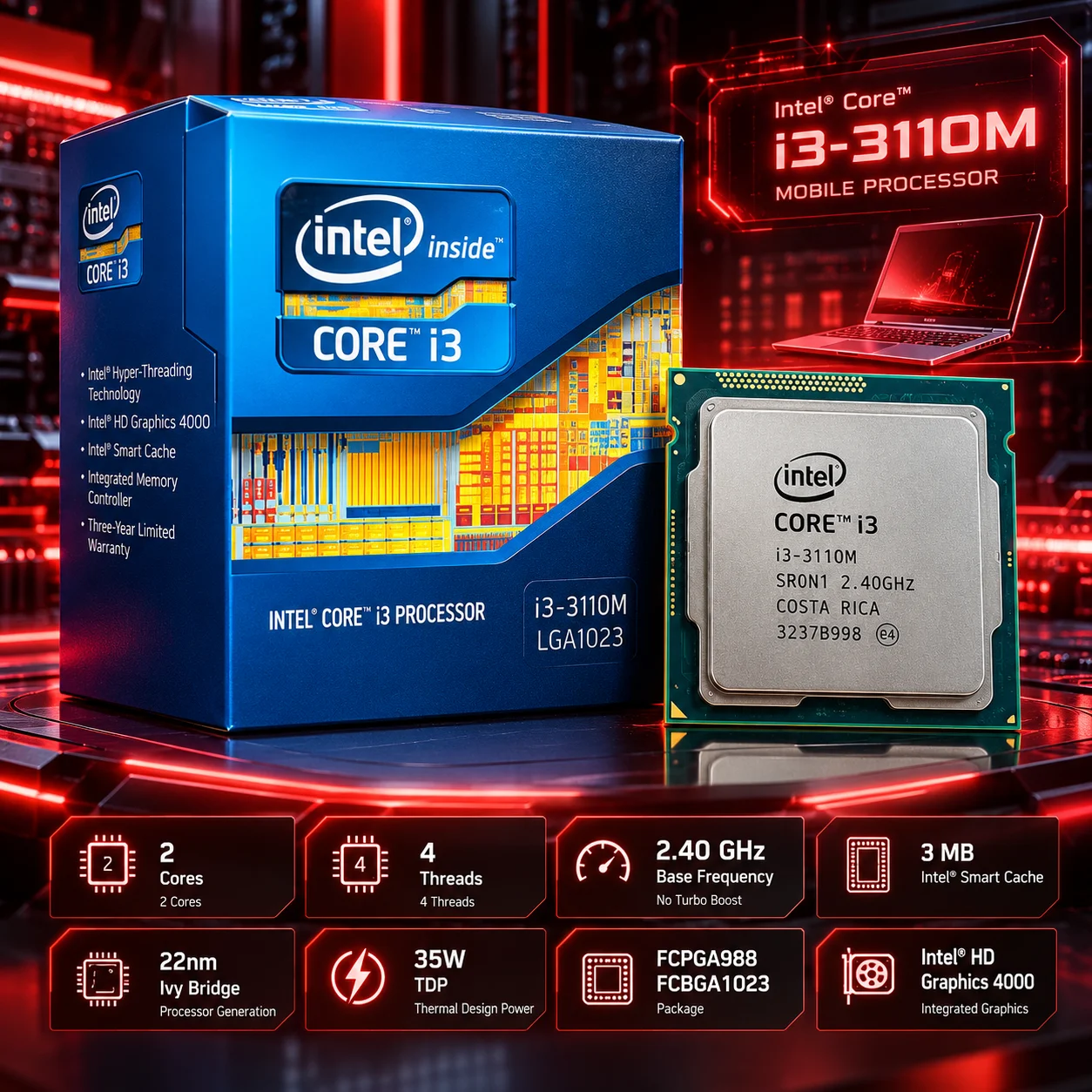
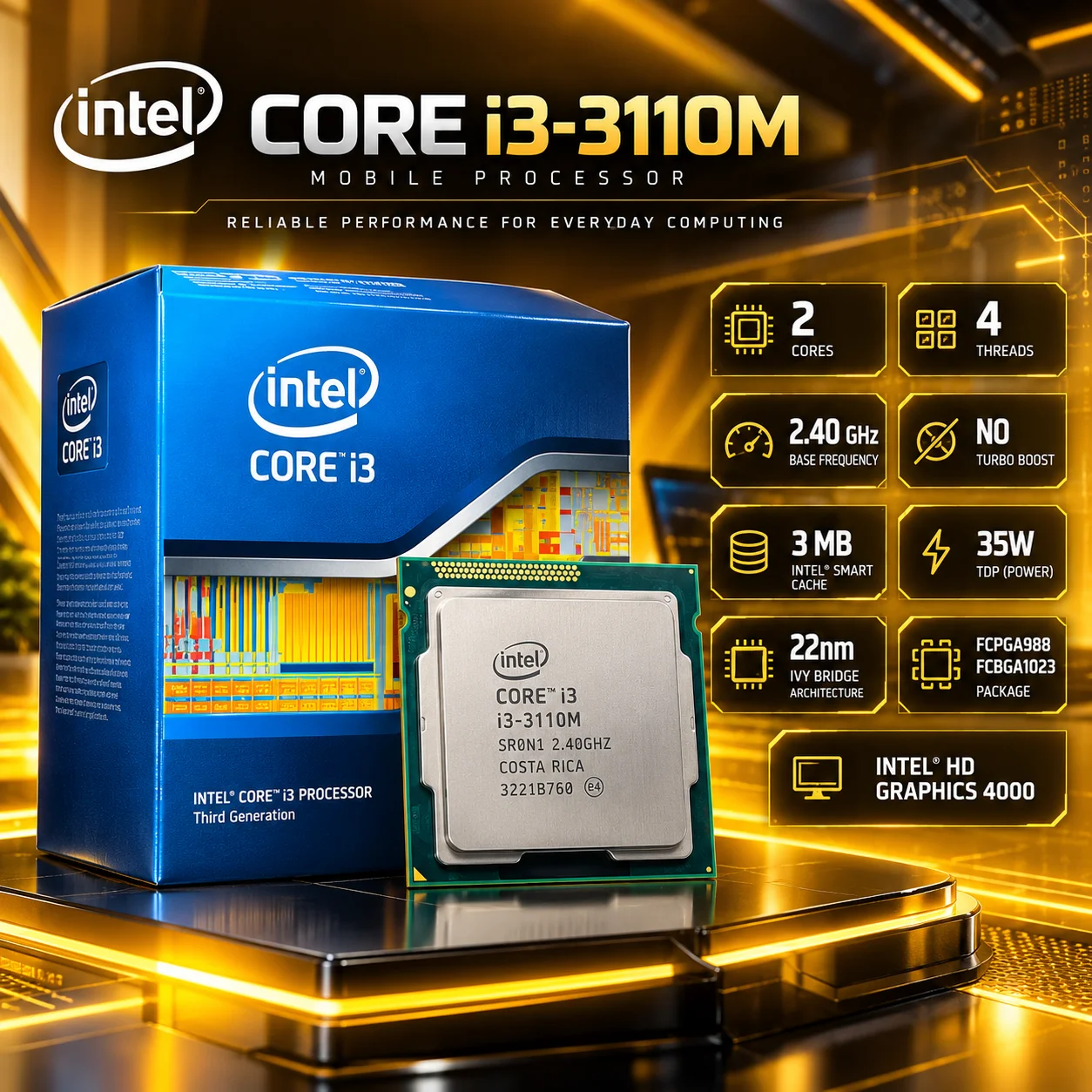
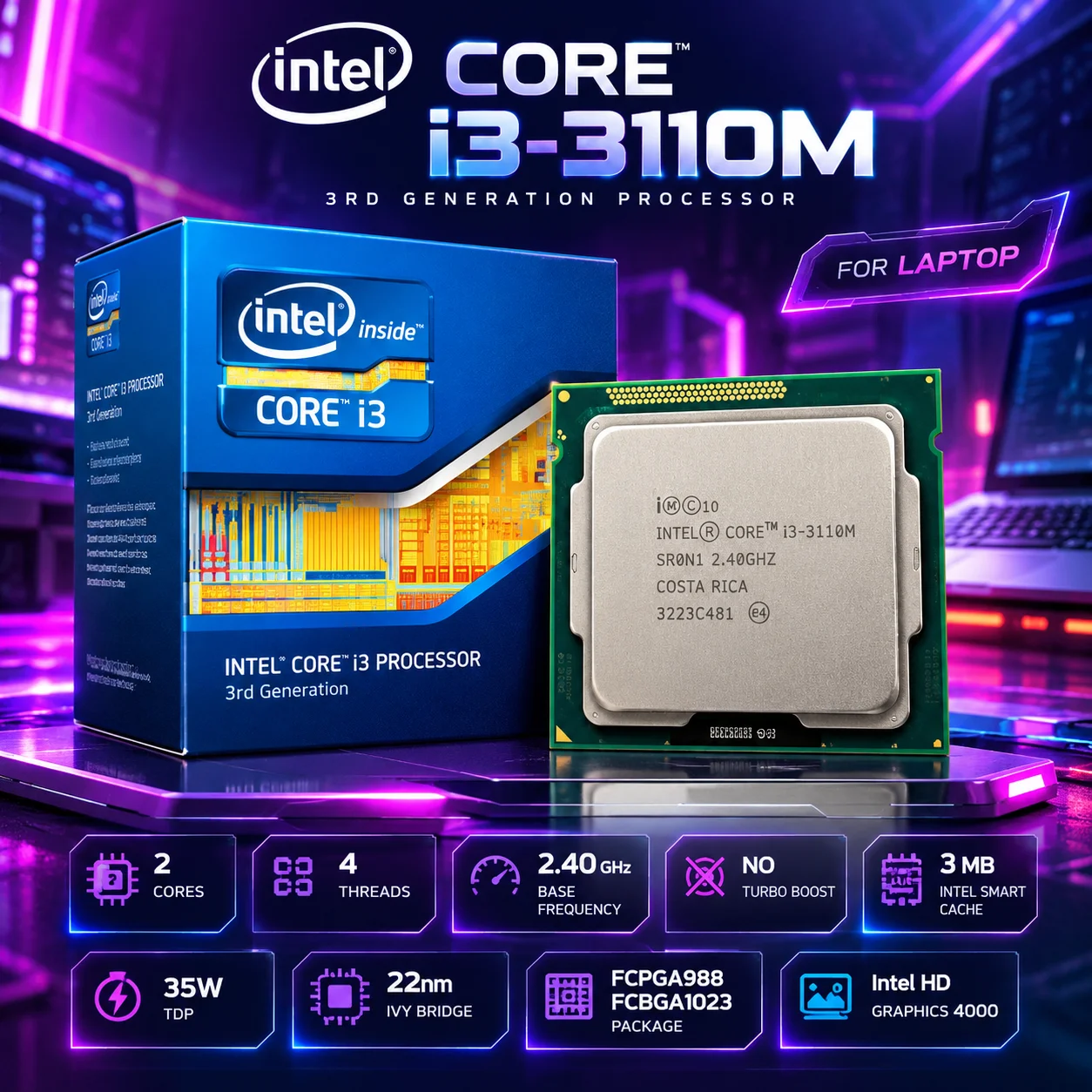
- 2 cores and 4 threads with Intel Hyper-Threading Technology
- 2.40 GHz base frequency with 3 MB L3 cache
- Integrated Intel HD Graphics 4000
- 35W TDP optimized for mainstream notebook power consumption
*Approximate regional retail guide prices. Pixahunt is an informational catalog.
CPU Benchmark Scores & Performance Analysis
TESTEDCinebench R23, Geekbench 6, PassMark CPU Mark scores & real-world gaming/office suitability tests.
Technical Specifications
Comprehensive hardware architecture and specifications
General
| Series | Core i3 |
| Model | i3-3110M |
| Cpu Cooler | Not Included |
| Code-Name | Ivy Bridge |
| Generation | 3rd Gen |
| Sockets Supported | FCBGA1023, FCPGA988 |
Performance
| Base Frequency | 2.40 GHz |
| Turbo Frequency Max. | N/A |
| Core | 2 |
| Threads | 4 |
| CPU Cache | 3 MB L3 Cache |
| L1 Cache | 64 KB per core |
| L2 Cache | 256 KB per core |
| L3 Cache | 3 MB shared |
| TDP | 35 W |
| Lithography | 22 nm |
| Multiplier | 24.0x |
| Multiplier Unlocked | No |
| Processor Type | Core i3 |
Memory Support
| Memory Max. | 32 GB |
| Memory Type | DDR3/L/-RS 1333/1600 |
| Memory Speed | 1333/1600 MT/s |
| Memory Channel | 2 |
| Max Memory Bandwidth | 25.6 GB/s |
| ECC Memory Supported | No |
Graphics
| Built-in GPU | Yes |
| Processor Graphics | Intel HD Graphics 4000 |
| Graphics Base Frequency | 650 MHz |
| Graphics Dynamic Frequency | 1.00 GHz |
| Graphics Core Count | N/A |
| Max Video Memory | Shared / System Memory |
| Max Resolution | eDP/DP/HDMI/SDVO/CRT |
Technical Info
| DirectX Support | 11 |
| OpenGL Support | 4.0 |
| Approx. Power Consumption | 35 W |
| Compatible Products / Chipsets | Intel 7 Series Chipset Family |
| PCI Express Version | 2.0 |
| PCI Express Lanes | 16 |
| Thermal Solution (MPK / Box) | Not Included |
| Max. Operating Temperature (Tjmax) | 90°C (PGA); 105°C (BGA) |
Warranty
| Manufacturing Warranty | Discontinued Product (Legacy) |
Additional Info
| Specialty | Intel Hyper-Threading Technology, Intel Virtualization Technology (VT-x) |
| Others | OS Support: Windows, Linux |
| Country Of Origin | USA |
| Made in/ Assemble | China / Malaysia |
Editorial Overview & Review
In-depth insights, architecture summary, and performance evaluation
Introduction & Overview
Step back in time to the era of dependable, bread-and-butter mobile computing—an era defined by the tireless workhorses of the 3rd generation of Intel Core processors. Released in 2012 as part of Intel's "Ivy Bridge" microarchitecture lineup, the Intel Core i3-3110M carved out a distinct and highly successful niche in the mainstream laptop market. Positioned firmly as an entry-to-mid-range dual-core mobile processor, it was designed primarily for everyday consumers, students, and enterprise environments that demanded reliable performance without the premium price tag of a Core i5 or i7 machine.
While the modern tech landscape is dominated by multi-core silicon, ultra-fast neural processing units, and integrated 5G modems, the i3-3110M represents a foundational chapter in x86 mobile efficiency. It democratized high-definition multimedia playback and snappy multitasking for budget-conscious buyers, making it one of the most ubiquitous laptop CPUs of its generation.
Architecture, Performance & Key Technologies
At its core, the Intel Core i3-3110M is built on a 22-nanometer (nm) manufacturing process—a massive leap forward at the time, utilizing Intel's groundbreaking 3D Tri-Gate transistor technology. This transition allowed for significantly better power efficiency and density compared to its 32nm Sandy Bridge predecessors.
- Cores and Threads: The processor features 2 physical cores and 4 threads, utilizing Intel Hyper-Threading Technology to handle multi-threaded workloads more efficiently.
- Clock Speed: Operating at a fixed base frequency of 2.4 GHz, it lacks Intel Turbo Boost Technology (a feature reserved for its Core i5 and i7 siblings), meaning it relies on its architectural IPC (Instructions Per Cycle) improvements to maintain consistent performance.
- Cache: Equipped with 3 MB of Intel Smart Cache, enabling rapid access to frequently used data across both cores.
- Graphics Integration: It features Intel HD Graphics 4000, supporting DirectX 11, OpenGL 4.0, and capable of driving multiple displays, including smooth 1080p video decoding and casual gaming.
- Memory Support: Officially supports up to 32 GB of DDR3/L memory at speeds of 1333/1600 MHz over a dual-channel memory interface, ensuring respectable bandwidth for daily tasks.
Real-World Use Cases
How does a dual-core processor from over a decade ago translate to practical utility? In its prime, and even as a resilient secondhand or legacy machine today, the i3-3110M shines in specific scenarios:
- Daily Productivity & Office Work: Handling heavy Microsoft Office workloads, managing hundreds of browser tabs, compiling spreadsheets, and typing documents are absolute breezes for this chip.
- Media Consumption & Streaming: Thanks to the hardware-accelerated video decoding capabilities of the HD 4000 graphics, streaming 1080p video on YouTube or Netflix is smooth and uninterrupted.
- Light Multitasking: While heavy rendering will bog it down, switching between email clients, music streaming apps, and web browsers feels fluid and responsive, particularly when paired with a solid-state drive (SSD).
- Legacy and Casual Gaming: Don't expect to run modern AAA titles natively, but older eSports classics (like League of Legends or Counter-Strike: Source) and retro emulators run reasonably well at reduced settings.
Strengths & Potential Considerations
Every piece of hardware has its trade-offs, especially when viewed through a modern lens. Here is how the i3-3110M stacks up:
- Pros:
- Rock-solid build longevity and thermal resilience in traditional laptop chassis.
- Incredible value for basic computing needs on the used/refurbished market.
- Decent legacy driver support and compatibility with older operating systems.
- Low thermal design power (TDP) of 35W, ensuring reasonable battery life on standard laptop cells.
- Cons:
- Absence of Intel Turbo Boost means clock speeds cannot scale dynamically under sudden workloads.
- Dual-core configuration struggles heavily with modern heavy multitasking, 4K video editing, or modern gaming.
- Lacks native instruction sets required by some modern operating systems and security protocols.
Final Buying Verdict
The Intel Core i3-3110M is a masterclass in durable, entry-level silicon engineering. While it is no longer suited for cutting-edge productivity or modern gaming, it remains an iconic piece of hardware. Who is it for today? It is the ideal heart for a budget-friendly, ultra-reliable Linux or lightweight Windows machine dedicated to word processing, web browsing, and retro computing. If you find a well-maintained laptop powered by this chip for a nominal price, it serves as an exceptionally capable tool for basic, distraction-free productivity.
OUR RATING CONSENSUS
The overall rating is based on review by our experts & industry benchmark suites
Quick Snapshot
- Overall Rating
- 4.5 / 10
- Brand
- Intel
- Category
- Processor
- Catalog Model
- i3-3110M
- Status
- Published
- Release Date
- Oct 10, 2026
Pixahunt Tech Community
Connect with hardware enthusiasts, compare benchmarks, and explore real user setups.
Explore Full Newsfeed →Related Gadgets
- 3.20 GHz Dual-Core Clock Speed for Reliable Everyday Computing
- Intel Hyper-Threading Technology Enabling 4 Parallel Threads
- Built-in Intel HD Graphics for Integrated Display Support
- 2 cores and 4 threads with Intel Hyper-Threading Technology
- 3.10 GHz base processor frequency
- 3 MB Intel Smart Cache
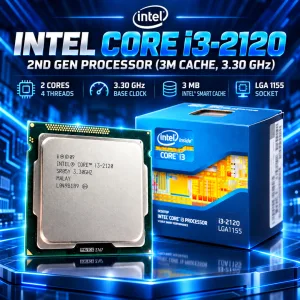
- 2 Cores and 4 Threads with Intel Hyper-Threading Technology
- 3.30 GHz Base Clock Frequency with 3 MB Intel Smart Cache
- Includes Intel HD Graphics 2000 integrated graphics
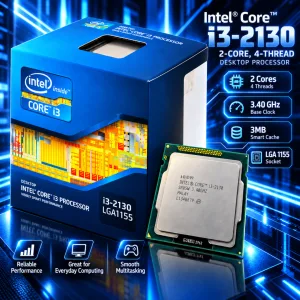
- 2 cores and 4 threads with Intel Hyper-Threading Technology
- 3.40 GHz processor base frequency with 3 MB Intel Smart Cache
- Integrated Intel HD Graphics 2000