

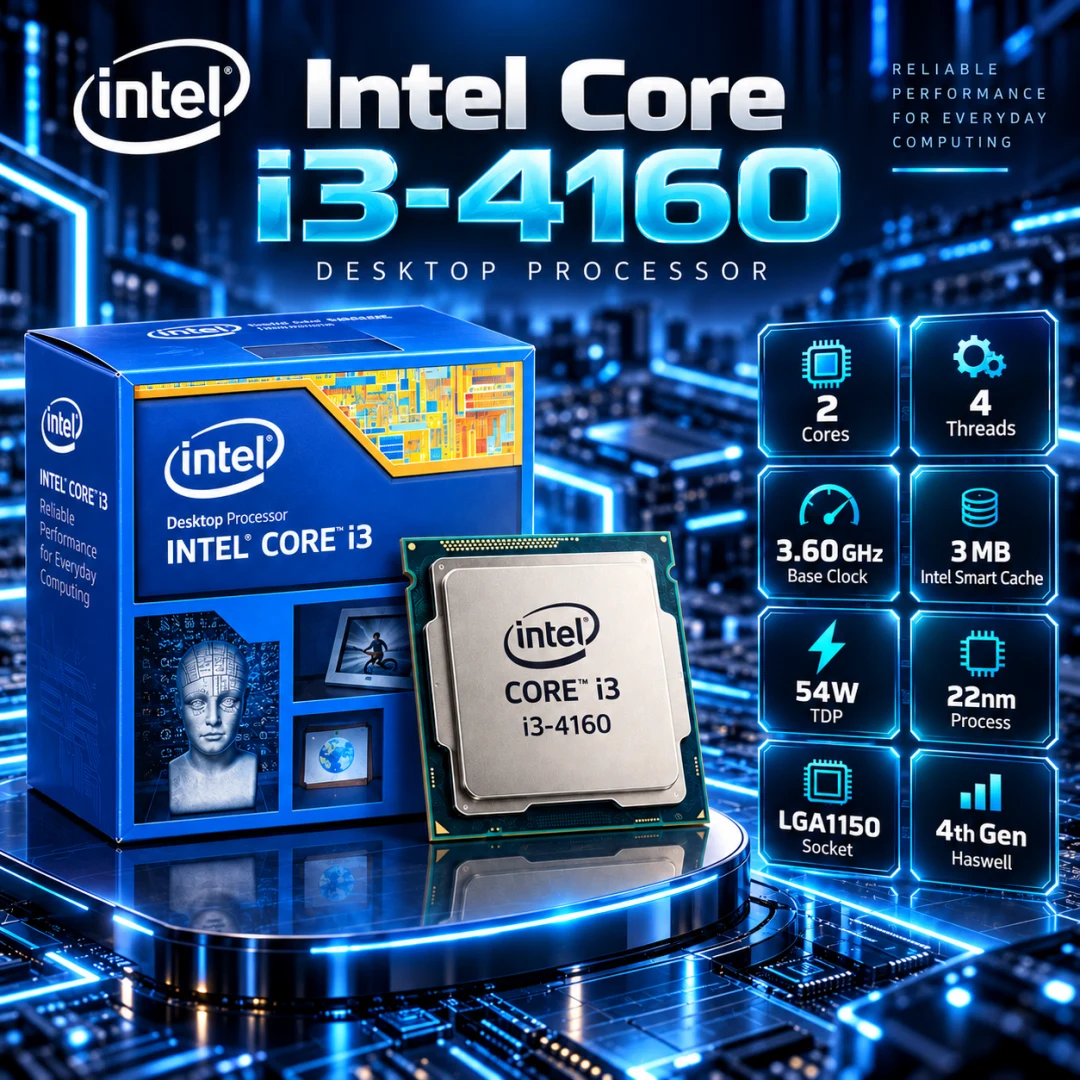
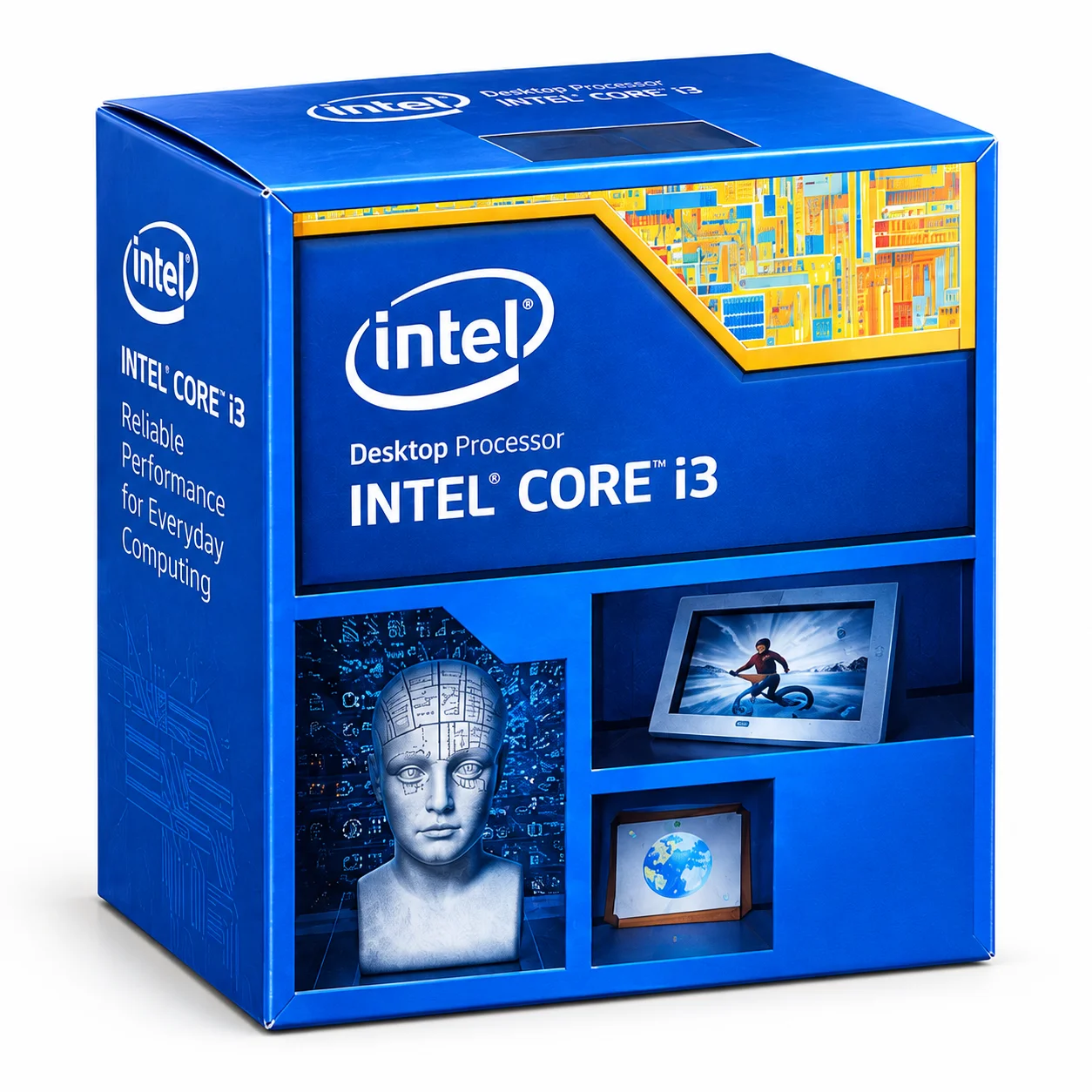
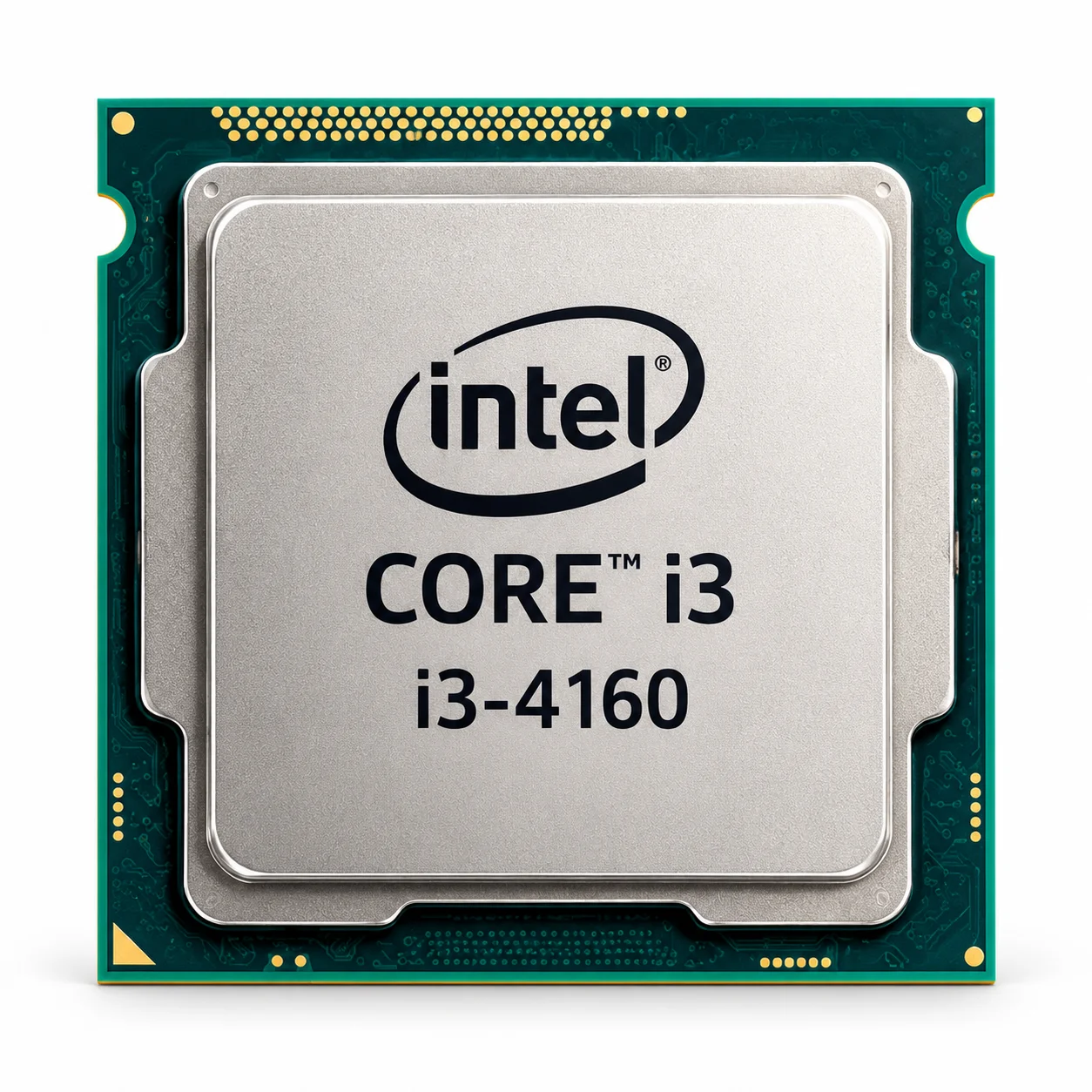
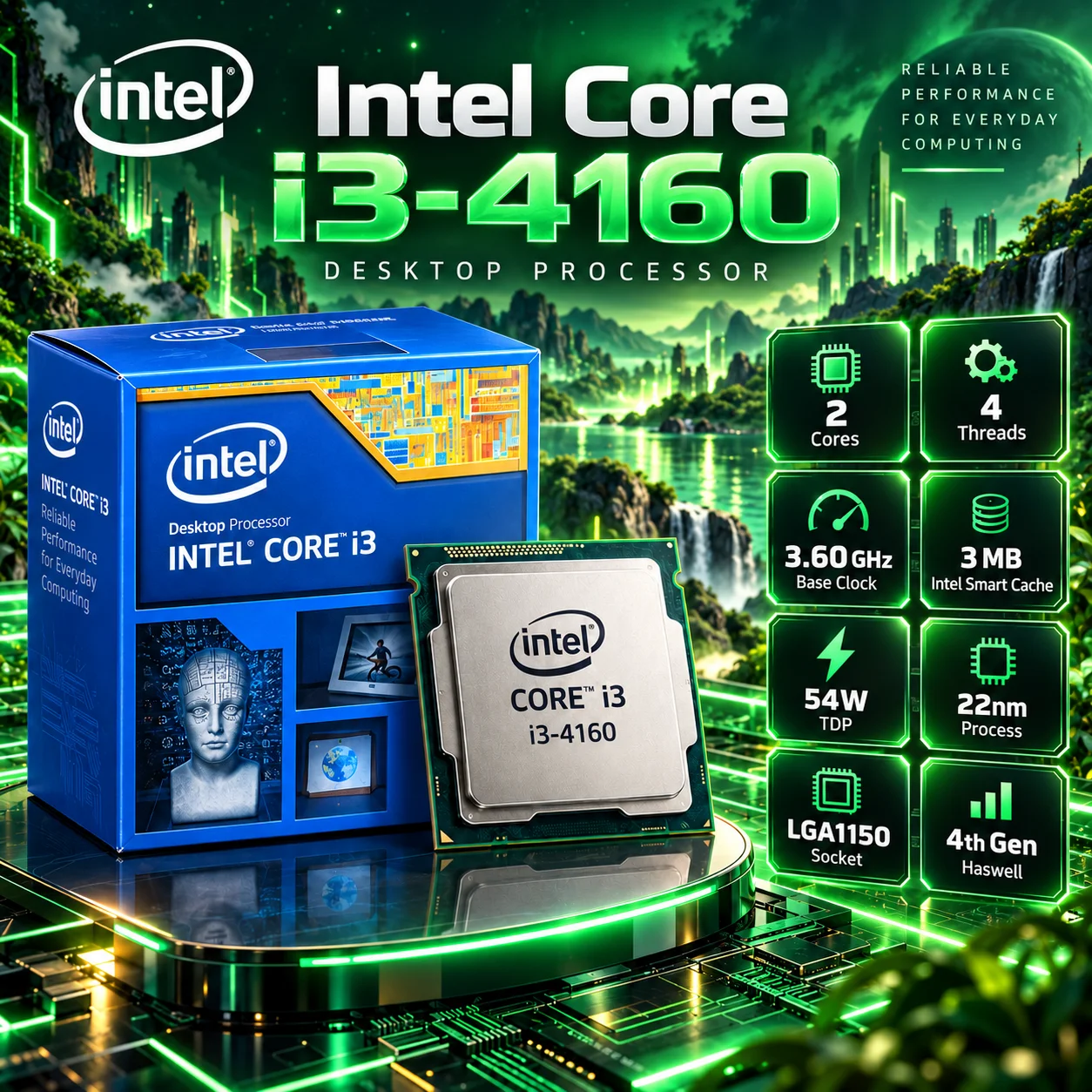
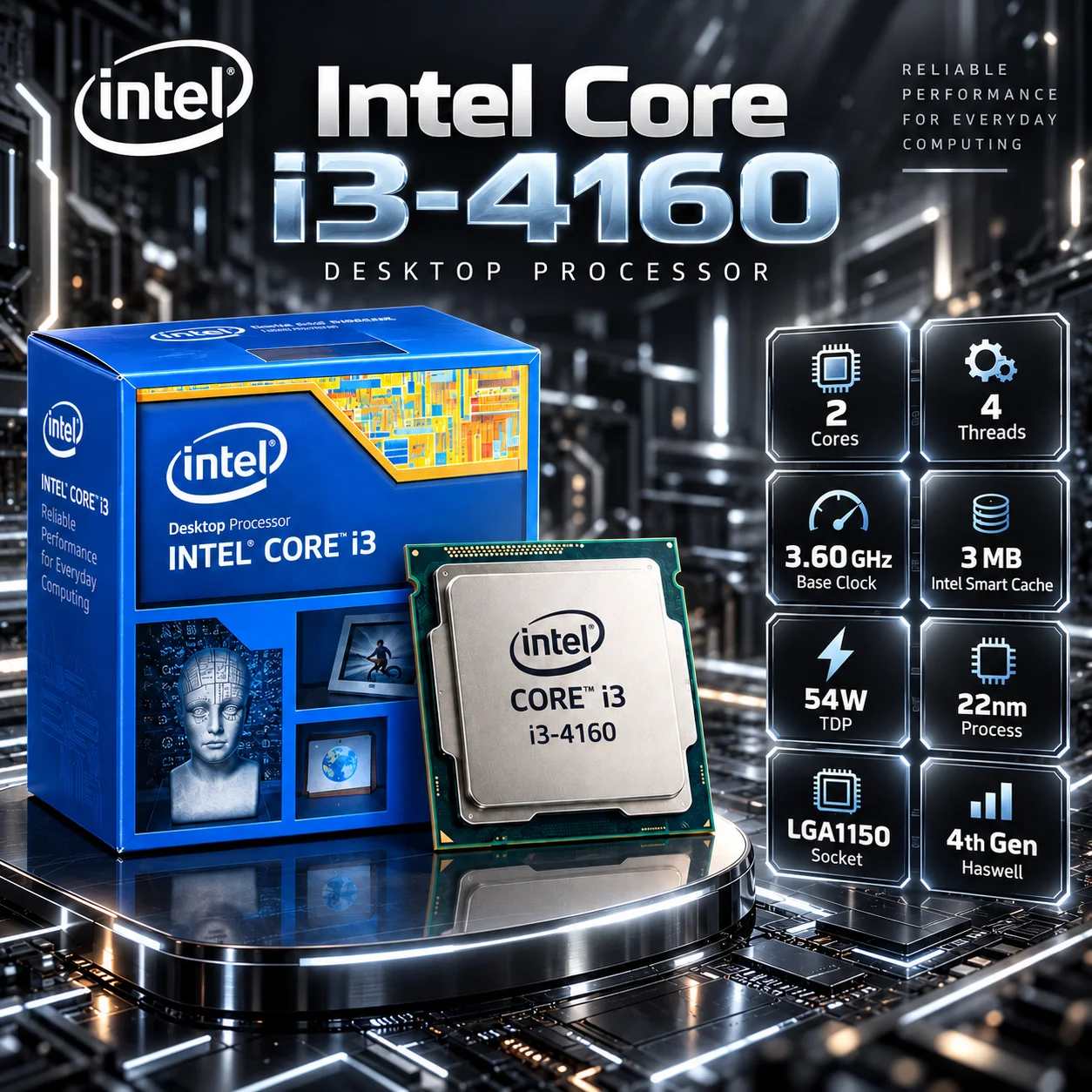
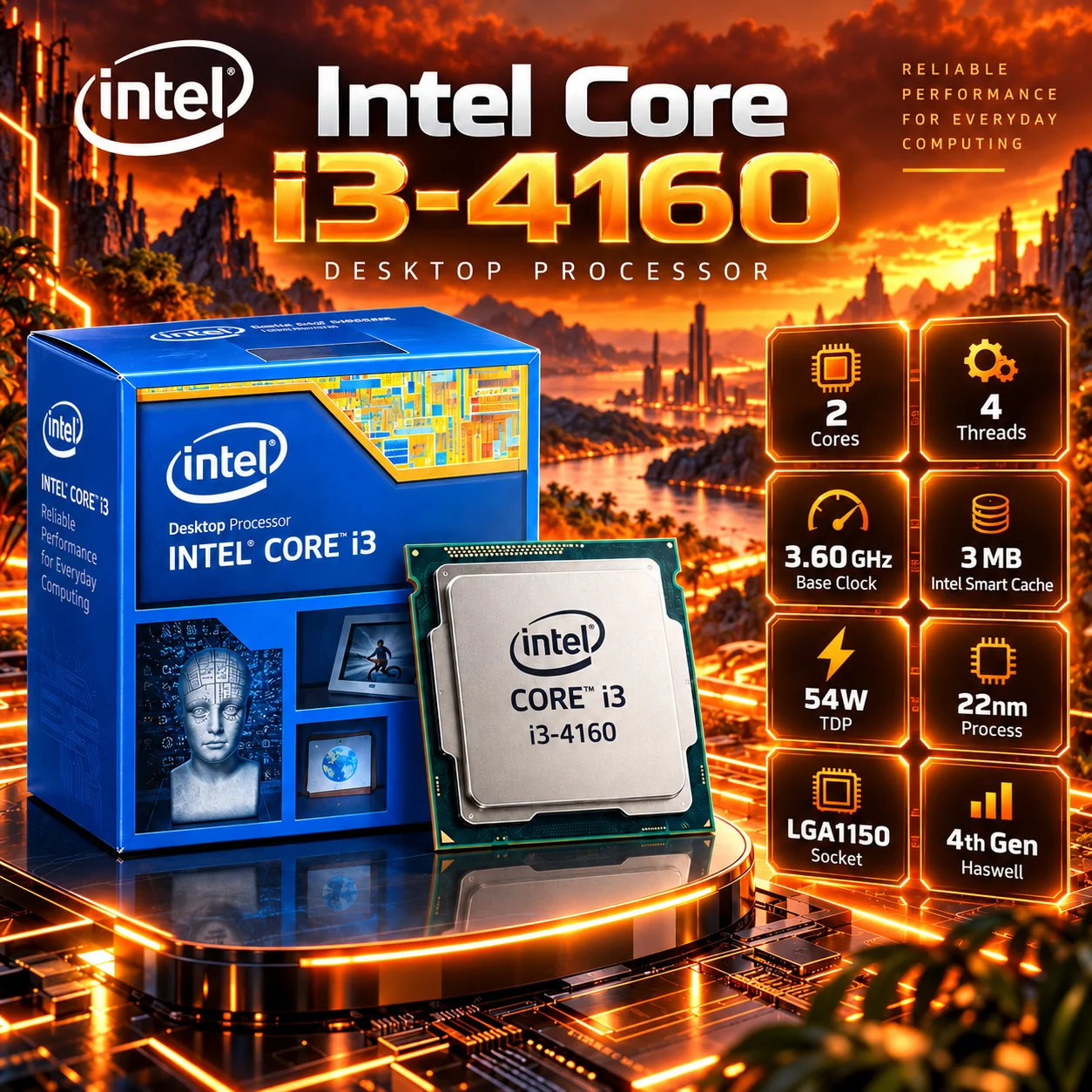
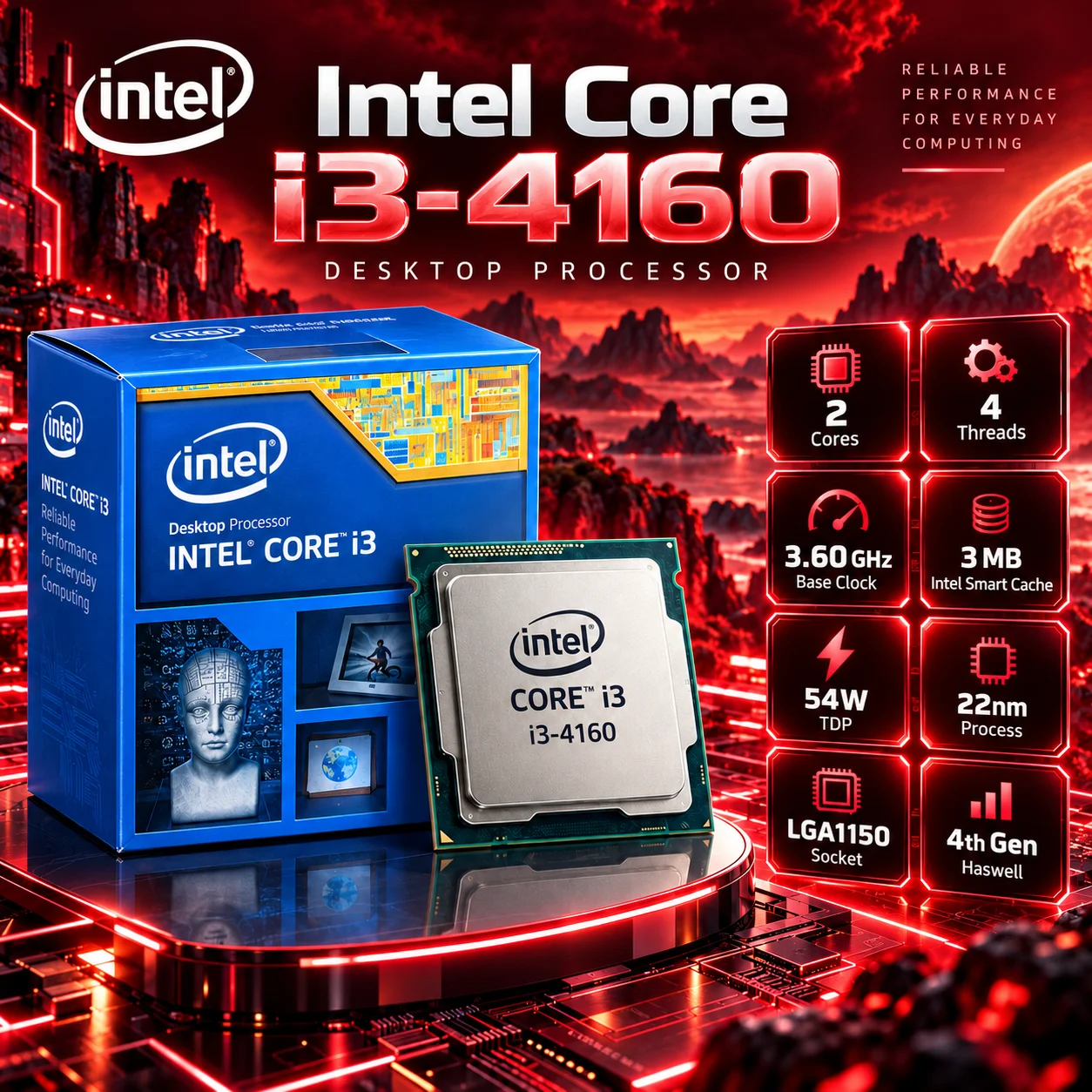
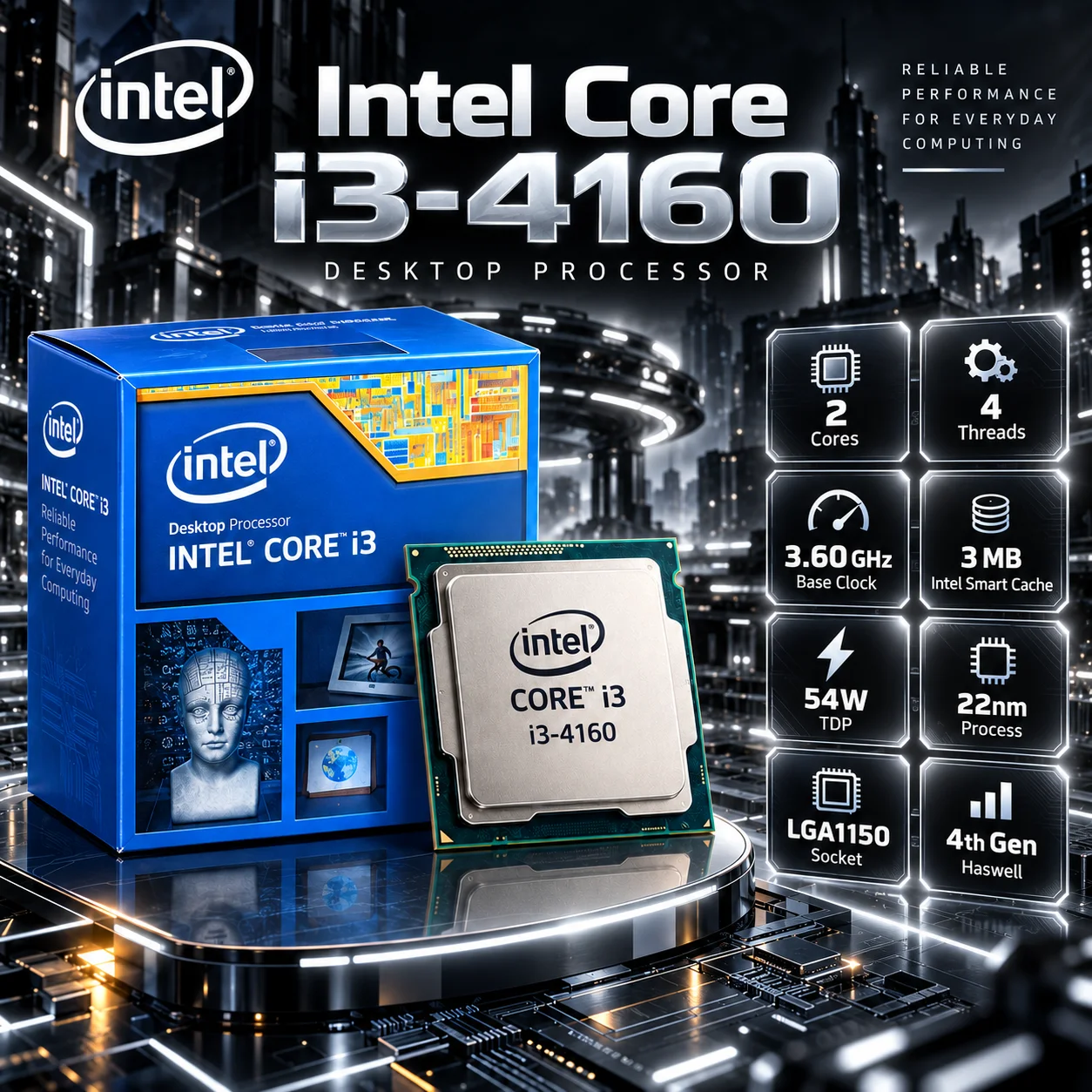
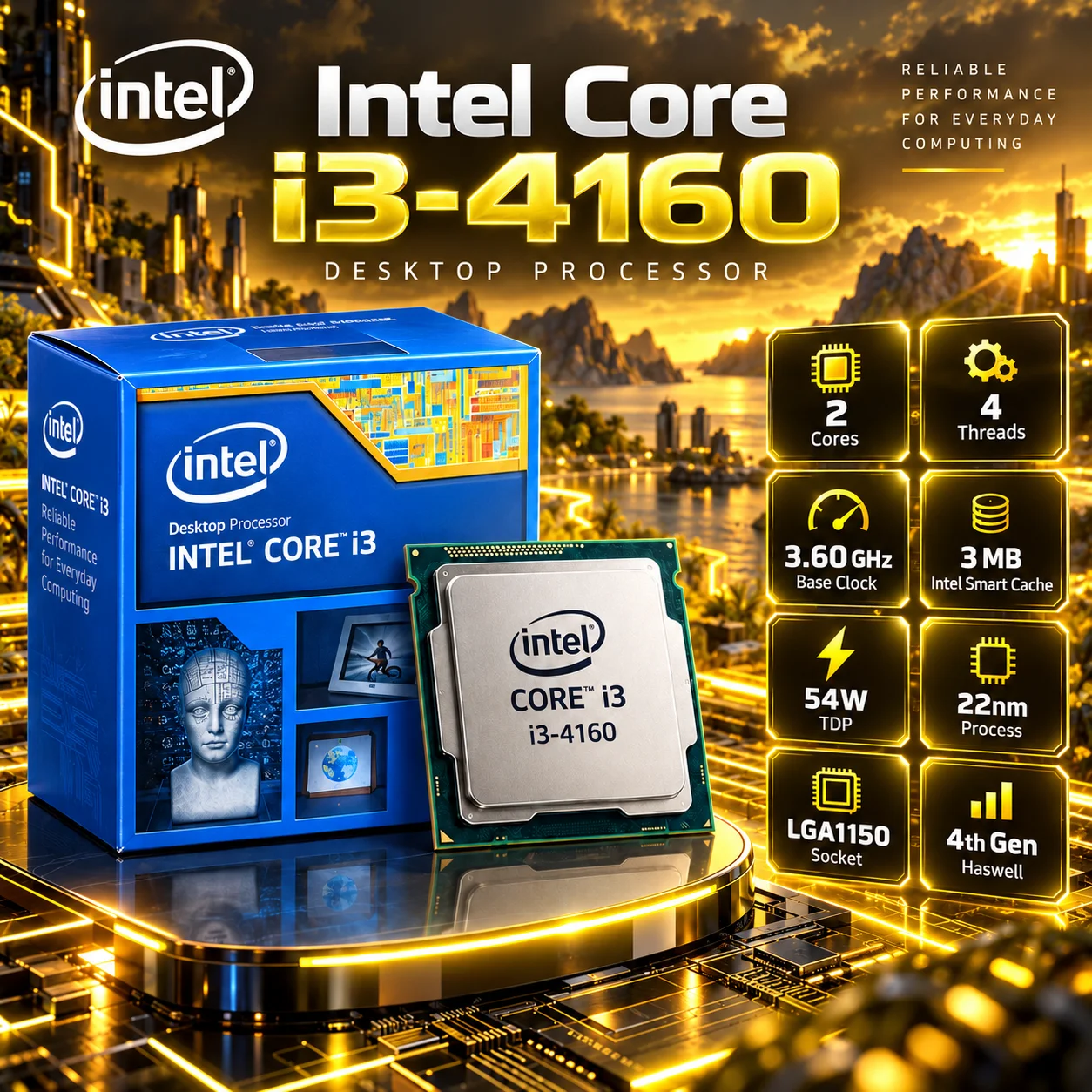
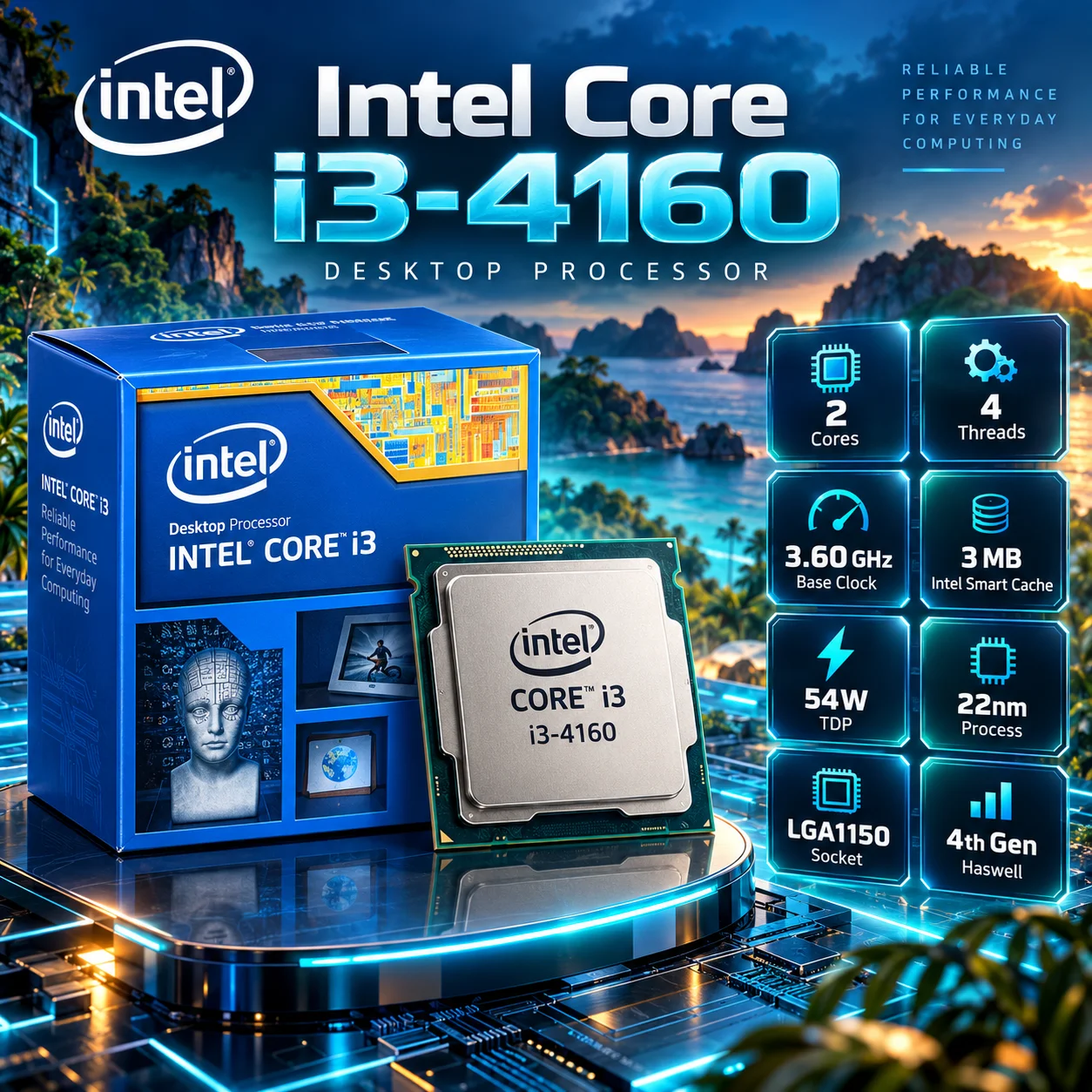
Intel Core i3-4160 3.60 GHz Dual-Core Desktop Processor
- 2 cores and 4 threads with Intel Hyper-Threading Technology
- 3.60 GHz processor base frequency
- Intel HD Graphics 4400 integrated graphics
- 54 W TDP with support for DDR3 memory
*Approximate regional retail guide prices. Pixahunt is an informational catalog.
CPU Benchmark Scores & Performance Analysis
TESTEDCinebench R23, Geekbench 6, PassMark CPU Mark scores & real-world gaming/office suitability tests.
Technical Specifications
Comprehensive hardware architecture and specifications
General
| Series | Core i3 |
| Model | i3-4160 |
| Cpu Cooler | Not Included |
| Code-Name | Haswell |
| Generation | 4th Gen |
| Sockets Supported | FCLGA1150 |
Performance
| Base Frequency | 3.60 GHz |
| Turbo Frequency Max. | N/A |
| Core | 2 |
| Threads | 4 |
| CPU Cache | 3 MB Intel Smart Cache |
| L1 Cache | 64 KB (per core) |
| L2 Cache | 256 KB (per core) |
| L3 Cache | 3 MB |
| TDP | 54 W |
| Lithography | 22 nm |
| Multiplier | 36.0x |
| Multiplier Unlocked | No |
| Processor Type | Core i3 |
Memory Support
| Memory Max. | 32 GB |
| Memory Type | DDR3-1333/1600, DDR3L-1333/1600 @ 1.5V |
| Memory Speed | Up to 1600 MT/s |
| Memory Channel | 2 |
| Max Memory Bandwidth | 25.6 GB/s |
| ECC Memory Supported | Yes |
Graphics
| Built-in GPU | Yes |
| Processor Graphics | Intel HD Graphics 4400 |
| Graphics Base Frequency | 350 MHz |
| Graphics Dynamic Frequency | 1.15 GHz |
| Graphics Core Count | N/A |
| Max Video Memory | 2 GB |
| Max Resolution | HDMI: 4096x2304 @24Hz, DP: 3840x2160 @60Hz, VGA: 1920x1200 @60Hz |
Technical Info
| DirectX Support | 11.1/12 |
| OpenGL Support | 4.3 |
| Approx. Power Consumption | 54 W |
| Compatible Products / Chipsets | Intel 8 series, Intel 9 series |
| PCI Express Version | Up to 3.0 |
| PCI Express Lanes | 16 |
| Thermal Solution (MPK / Box) | PCG 2013C |
| Max. Operating Temperature (Tjmax) | 72°C |
Warranty
| ManufacturingWarranty | 03 Years |
Additional Info
| Specialty | Intel Hyper-Threading Technology, Intel Virtualization Technology (VT-x) |
| Others | Execute Disable Bit, Intel 64 |
| Country Of Origin | USA |
| Made in/ Assemble | China / Malaysia |
Editorial Overview & Review
In-depth insights, architecture summary, and performance evaluation
Introduction & Overview
Welcome back to the workbench, tech enthusiasts. Today, we are taking a nostalgic yet analytical look back at a quintessential piece of silicon history: the Intel Core i3-4160. Launched during the heyday of the fourth-generation "Haswell" microarchitecture, this dual-core desktop processor carved out a very specific, highly successful niche in the consumer market. Positioned squarely as an entry-to-mid-range champion, the i3-4160 was engineered for budget-conscious builders, office fleets, and casual home users who needed reliable, no-nonsense computational power without breaking the bank.
While the modern landscape is dominated by high-core-count behemoths, understanding the i3-4160 requires looking at it through the lens of its era—a time when four threads (via Intel's Hyper-Threading technology) were more than enough to handle the daily digital grind. Let's dive deep into what made this chip tick and how its architecture holds up in retrospective analysis.
Architecture, Performance & Key Technologies
Built on Intel's then-advanced 22-nanometer manufacturing process, the Core i3-4160 operates at a fixed clock speed of 3.6 GHz. Because it belongs to the non-K series lineup, it lacks multiplier overclocking, but it makes up for it with a predictable, highly efficient out-of-the-box performance envelope rated at a modest 54W Thermal Design Power (TDP).
- Core Configuration: Features 2 physical cores and 4 threads thanks to Intel Hyper-Threading, allowing it to juggle concurrent lightweight tasks much more efficiently than standard dual-core alternatives of the past.
- Cache & Memory: Equipped with 3MB of Intel Smart Cache and supporting dual-channel DDR3 memory architectures up to 1600 MHz.
- Integrated Graphics: Packs Intel HD Graphics 4400, capable of driving high-resolution displays, handling basic multimedia acceleration, and decoding modern video codecs natively without requiring a dedicated discrete GPU for standard desktop environments.
- Instruction Sets: Includes crucial instruction sets like SSE4.1/4.2 and AVX 2.0, giving it surprising legacy computational relevance for software requiring vectorized calculations.
Real-World Use Cases
How does a dual-core, four-thread processor from the Haswell generation handle the demands of modern computing? The answer largely depends on your workload expectations.
- Daily Productivity & Office Work: This is where the i3-4160 truly shines. Web browsing with dozens of tabs, heavy Microsoft Office suites, email clients, and multitasking across standard productivity applications are handled smoothly and responsively.
- Content Creation & Media Consumption: Streaming 1080p and 4K video content is a breeze thanks to the integrated graphics hardware acceleration. However, heavy video editing, 3D rendering, or complex photo manipulation will quickly bottleneck due to the physical core limitation.
- Gaming: Paired with an entry-level dedicated GPU of its era (like a GTX 750 Ti or GTX 1050), the i3-4160 serves as a capable budget eSports machine. It handles titles like Counter-Strike, League of Legends, and Dota 2 surprisingly well at 1080p, though modern AAA blockbusters will severely choke on the dual-core architecture.
Strengths & Potential Considerations
Every piece of hardware has its compromises. Here is a breakdown of where the Intel Core i3-4160 excels and where it shows its age:
- Pros: Excellent energy efficiency with a low 54W TDP; rock-solid platform stability on the LGA 1150 socket; highly affordable on the used and secondary markets; includes Hyper-Threading for enhanced multi-threaded responsiveness compared to pure dual-cores.
- Cons: Limited to only 2 physical cores, making it obsolete for modern multi-threaded AAA gaming and heavy workstation tasks; lacks support for newer memory standards like DDR4; integrated graphics cannot handle contemporary modern gaming.
Final Buying Verdict
The Intel Core i3-4160 remains a fascinating historical footnote of efficient desktop engineering. If you are looking to build a brand-new primary rig today, this processor belongs firmly in the past. However, if you are tasked with reviving an old office machine, building a ultra-budget retro emulation station, or piecing together a dirt-cheap file server from used components, the i3-4160 still offers respectable, dependable computing. For its intended historical target audience, it was a home run; for today's power user, it is simply a brilliant reminder of how far consumer silicon has evolved.
OUR RATING CONSENSUS
The overall rating is based on review by our experts & industry benchmark suites
Quick Snapshot
- Overall Rating
- 4.8 / 10
- Brand
- Intel
- Category
- Processor
- Catalog Model
- i3-4160
- Status
- Published
- Release Date
- Oct 10, 2026
Pixahunt Tech Community
Connect with hardware enthusiasts, compare benchmarks, and explore real user setups.
Explore Full Newsfeed →Related Gadgets
- 3.20 GHz Dual-Core Clock Speed for Reliable Everyday Computing
- Intel Hyper-Threading Technology Enabling 4 Parallel Threads
- Built-in Intel HD Graphics for Integrated Display Support
- 2 cores and 4 threads with Intel Hyper-Threading Technology
- 3.10 GHz base processor frequency
- 3 MB Intel Smart Cache
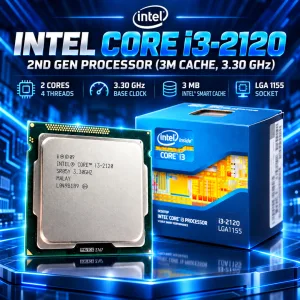
- 2 Cores and 4 Threads with Intel Hyper-Threading Technology
- 3.30 GHz Base Clock Frequency with 3 MB Intel Smart Cache
- Includes Intel HD Graphics 2000 integrated graphics
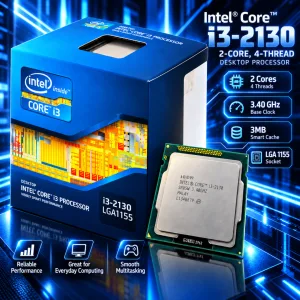
- 2 cores and 4 threads with Intel Hyper-Threading Technology
- 3.40 GHz processor base frequency with 3 MB Intel Smart Cache
- Integrated Intel HD Graphics 2000