

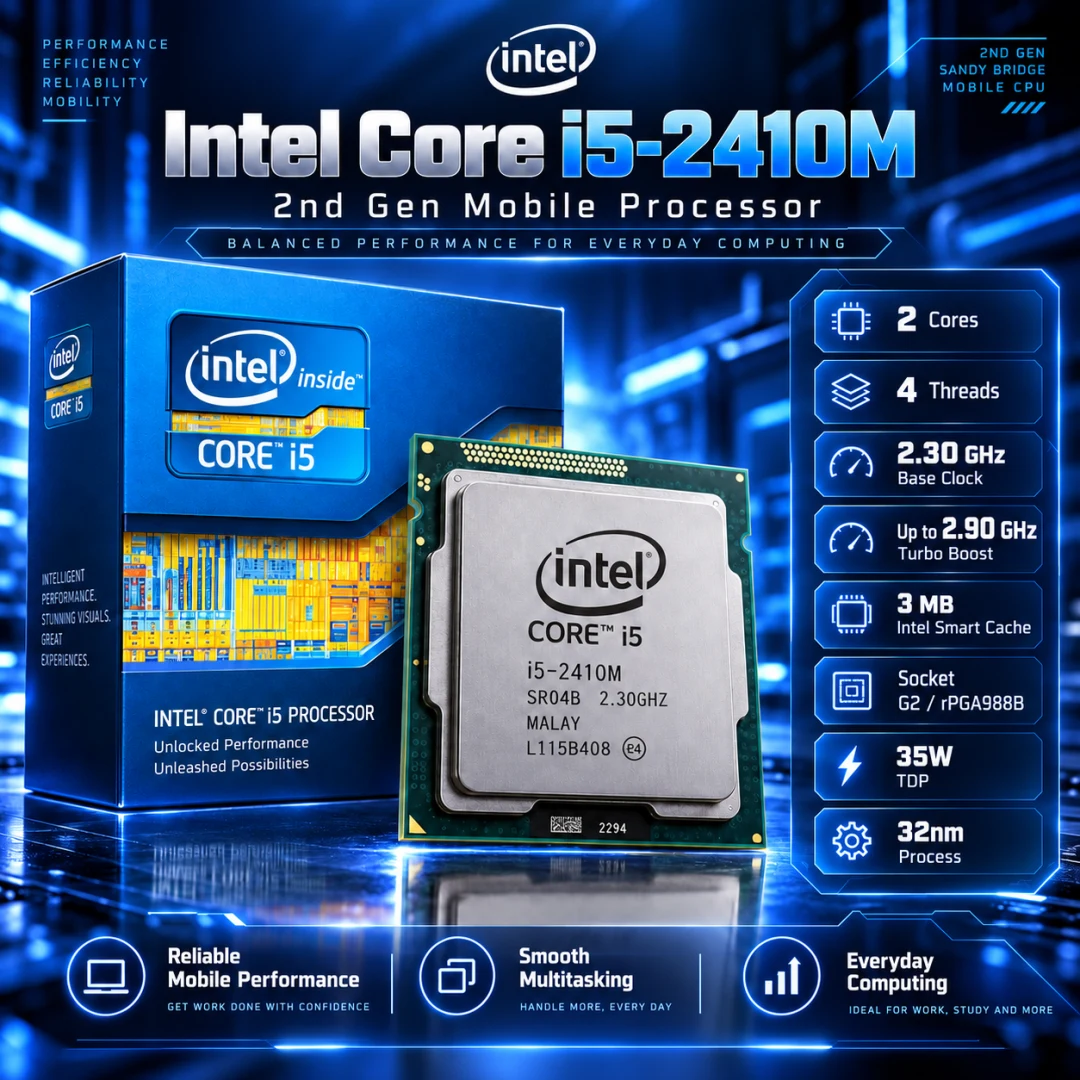
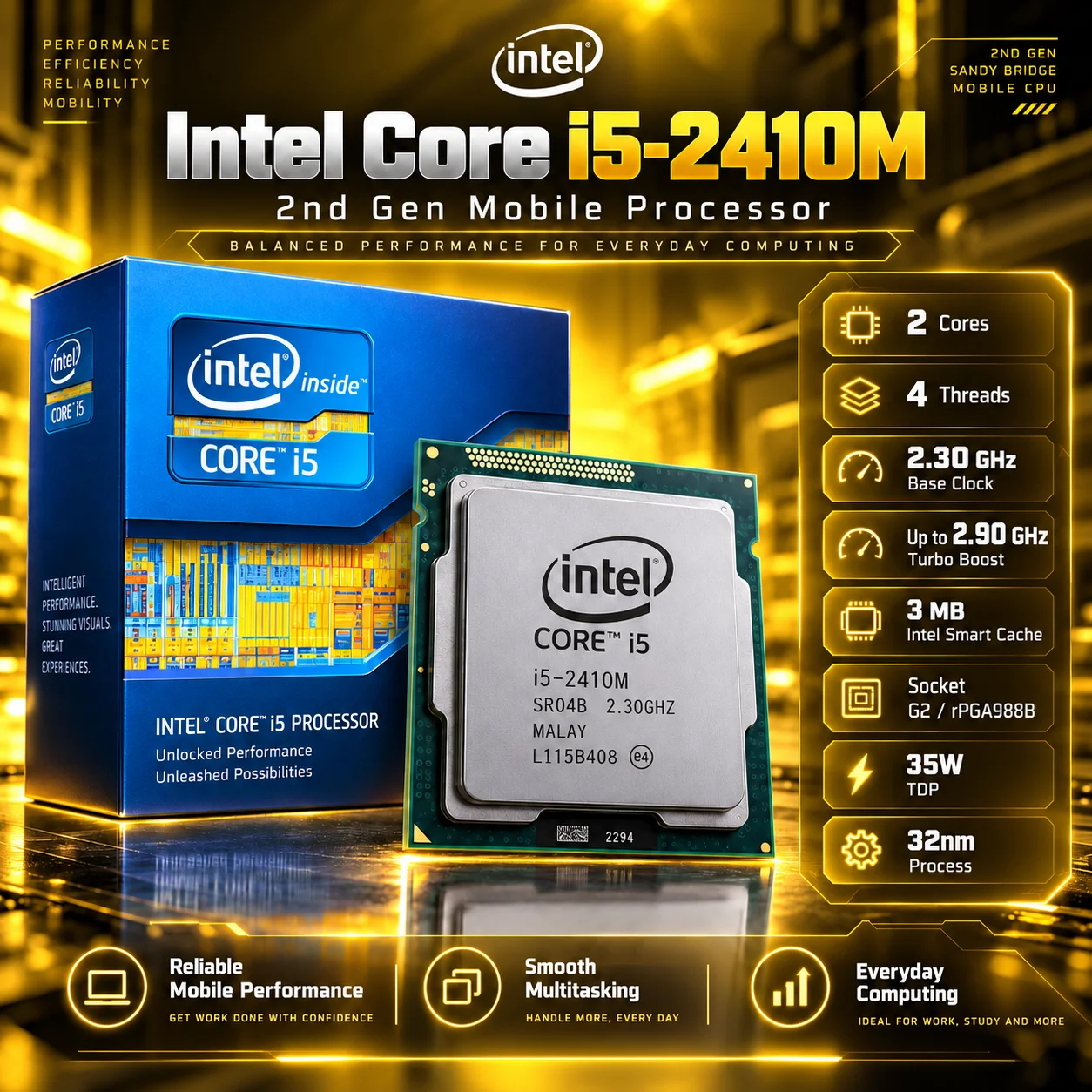
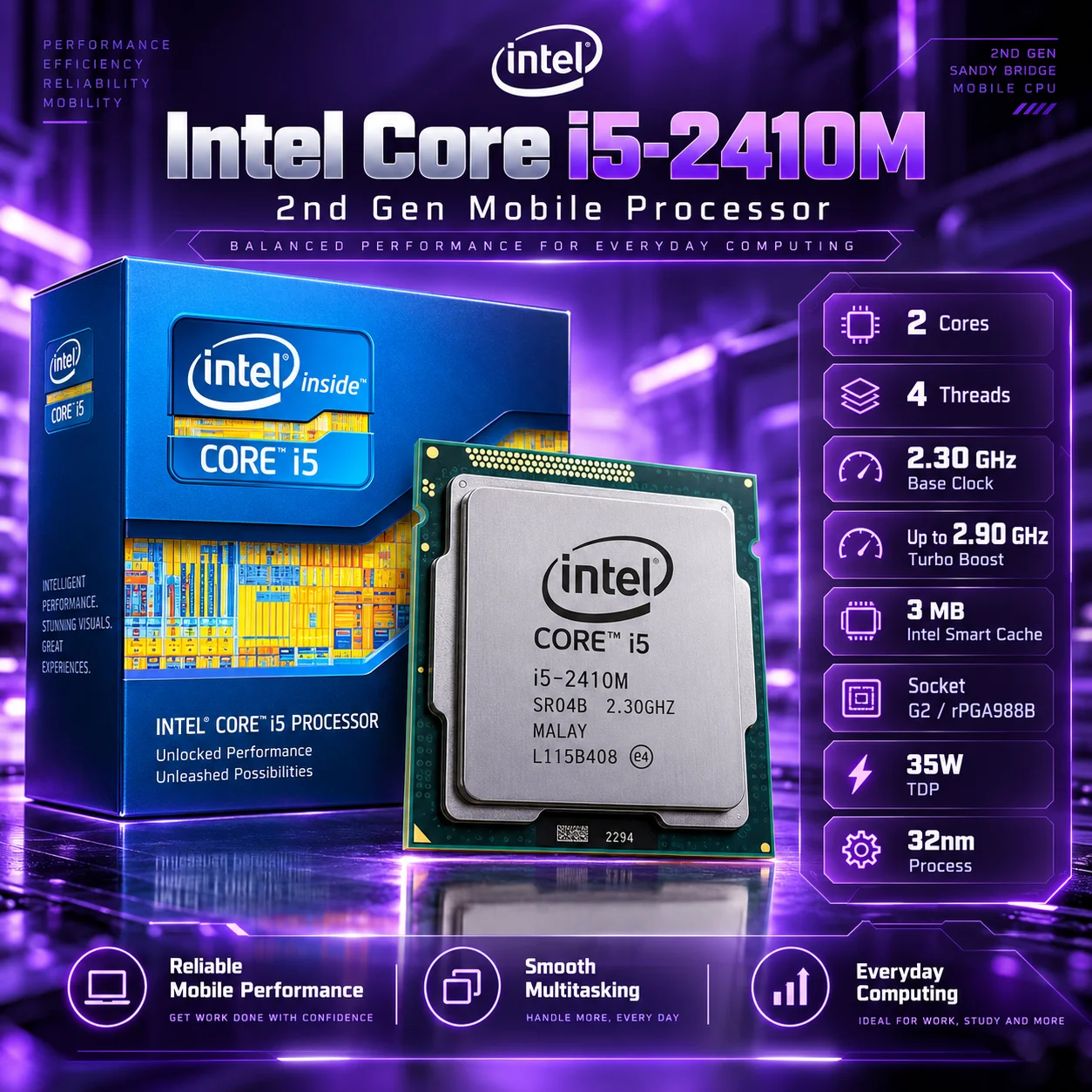
Intel Core i5-2410M 2.30 GHz Dual-Core Mobile Processor
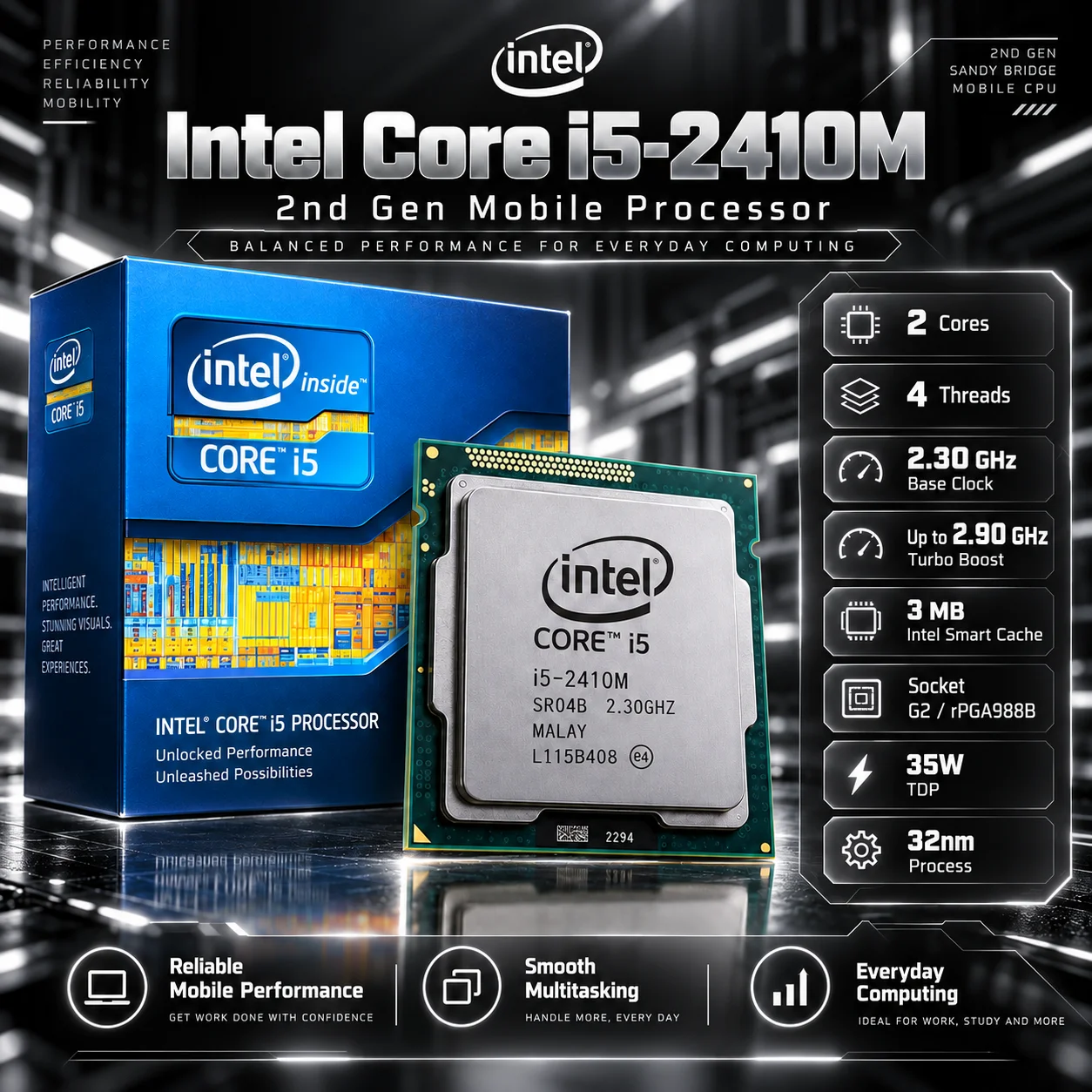
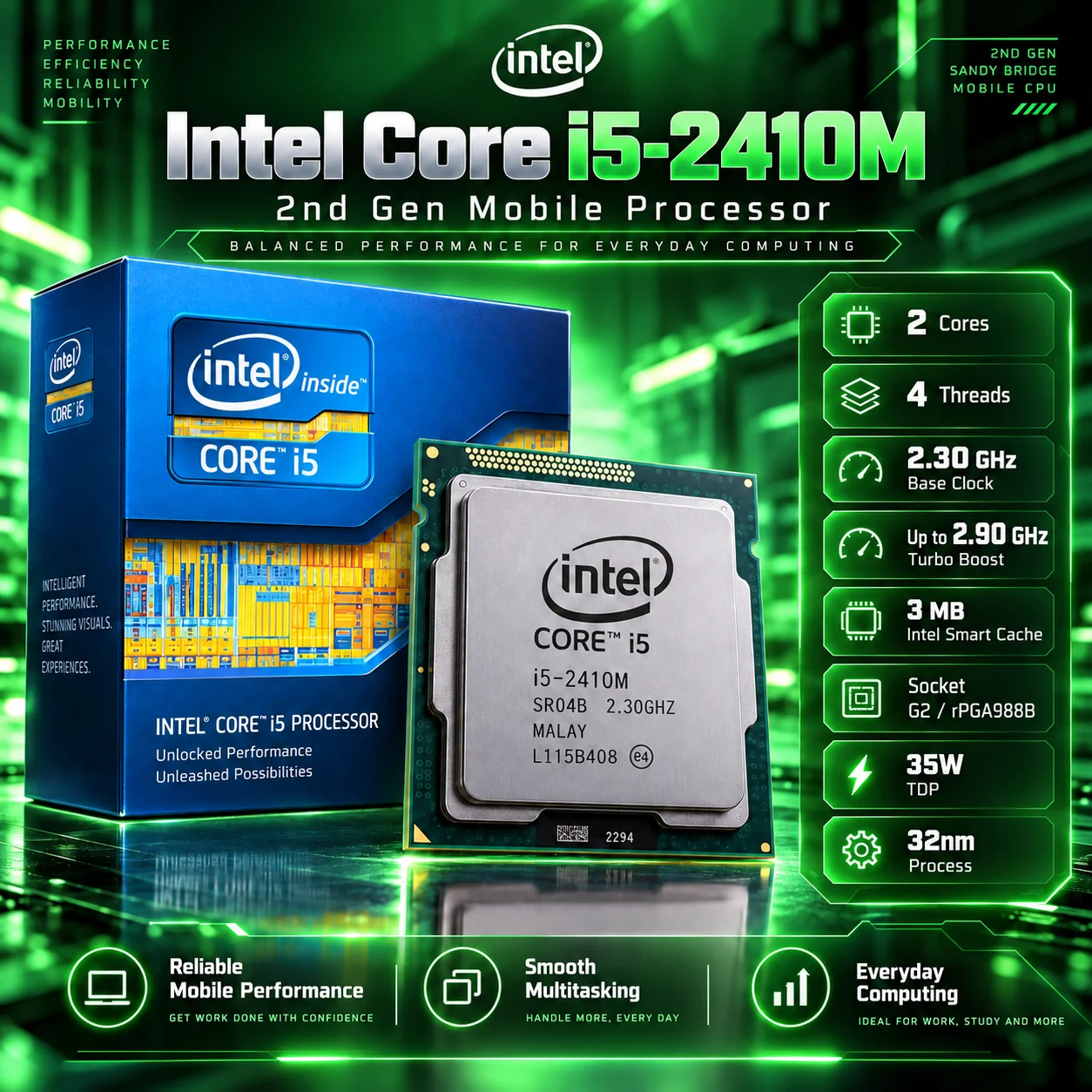
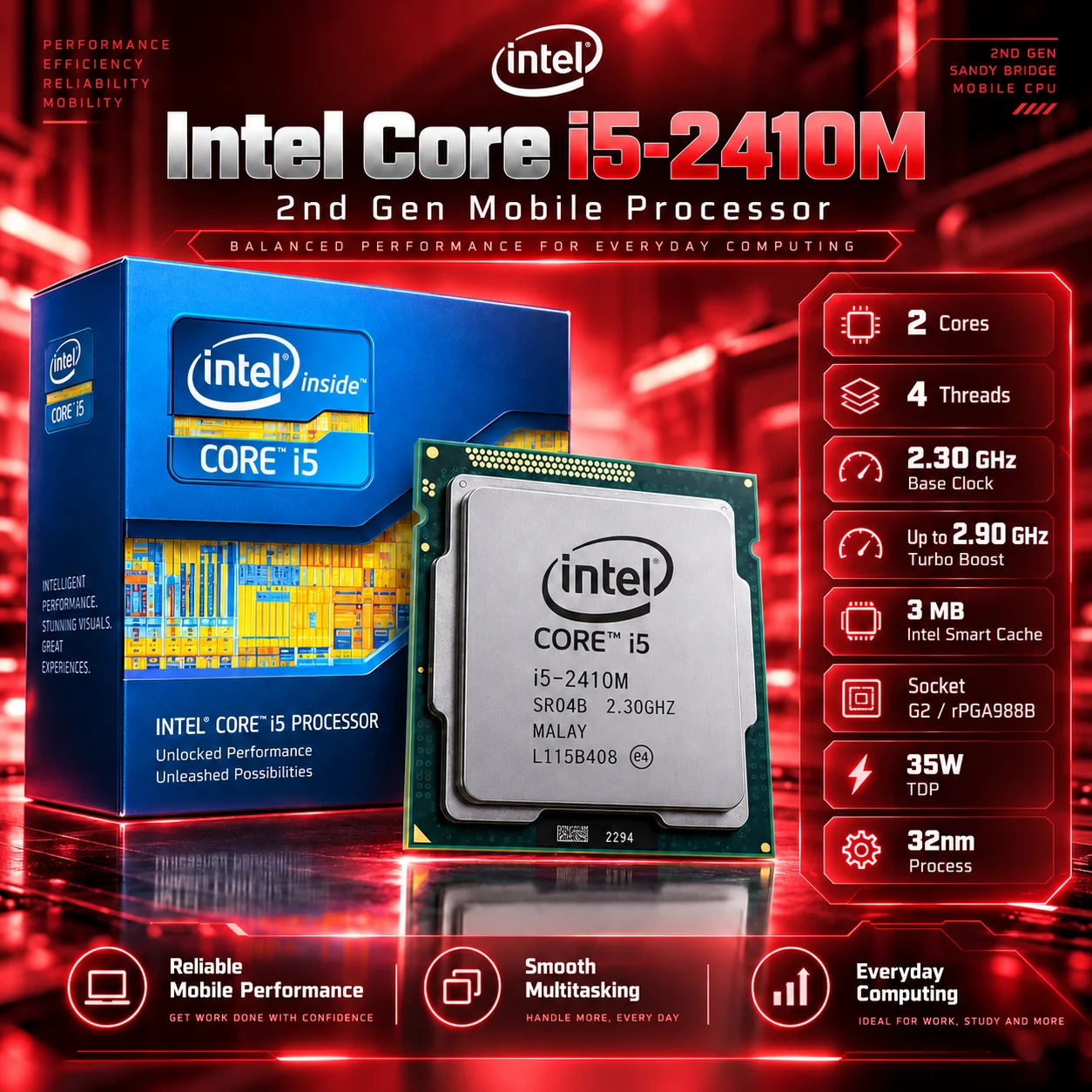
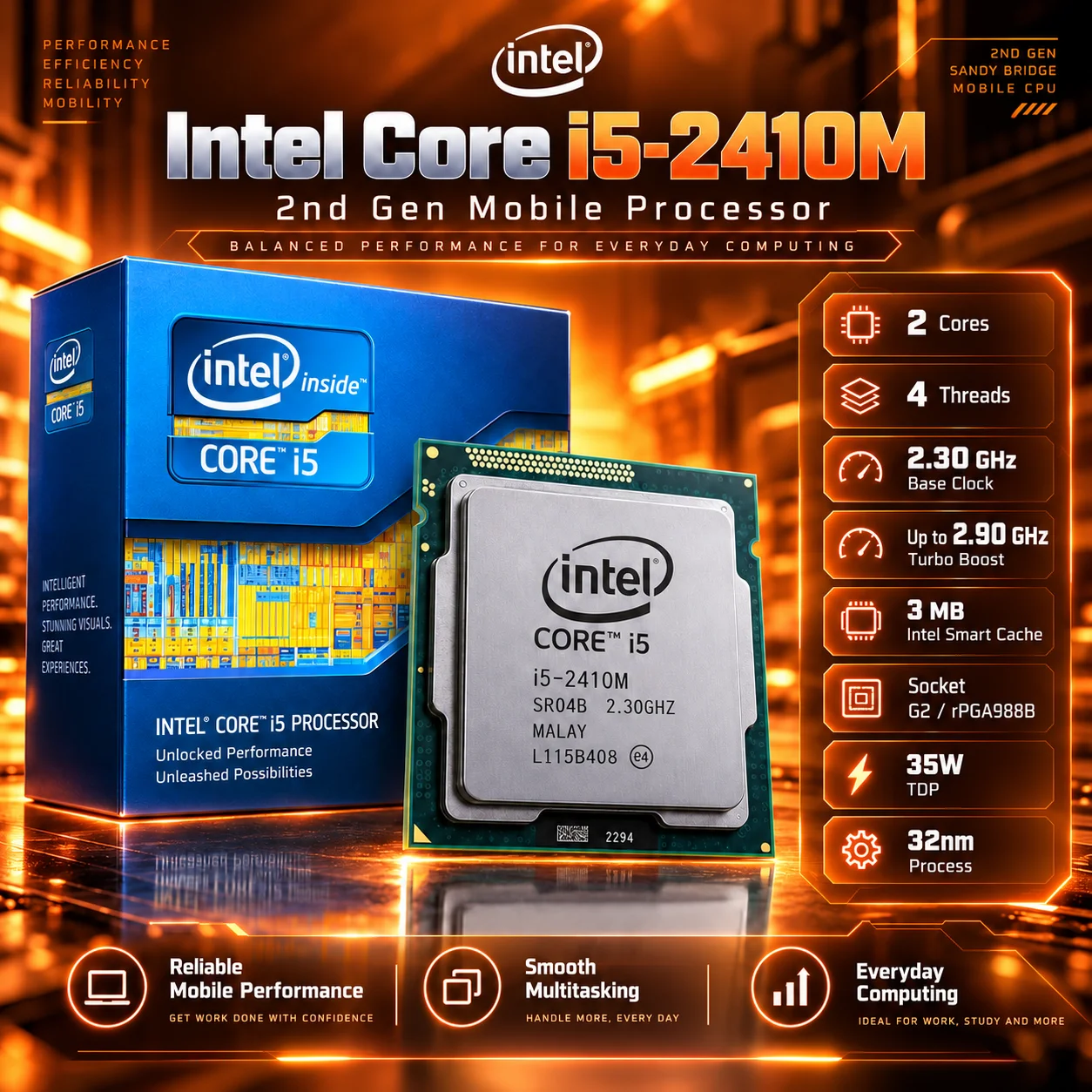
- 2 cores and 4 threads with Intel Hyper-Threading Technology
- 2.30 GHz base frequency with up to 2.90 GHz max turbo frequency
- 3 MB Intel Smart Cache with 32 nm lithography
- Supports DDR3 1066/1333 memory up to 16 GB
*Approximate regional retail guide prices. Pixahunt is an informational catalog.
CPU Benchmark Scores & Performance Analysis
TESTEDCinebench R23, Geekbench 6, PassMark CPU Mark scores & real-world gaming/office suitability tests.
Technical Specifications
Comprehensive hardware architecture and specifications
General
| Series | Core i5 |
| Model | i5-2410M |
| Cpu Cooler | Not Included |
| Code-Name | Sandy Bridge |
| Generation | 2nd Gen |
| Sockets Supported | FCBGA1023, PPGA988 |
Performance
| Base Frequency | 2.30 GHz |
| Turbo Frequency Max. | 2.90 GHz |
| Core | 2 |
| Threads | 4 |
| CPU Cache | 3 MB Intel Smart Cache |
| L1 Cache | N/A |
| L2 Cache | 512 KB |
| L3 Cache | 3 MB |
| TDP | 35W |
| Lithography | 32 nm |
| Multiplier | N/A |
| Multiplier Unlocked | No |
| Processor Type | Core i5 |
Memory Support
| Memory Max. | 16 GB |
| Memory Type | DDR3 1066/1333 |
| Memory Speed | 1066/1333 MT/s |
| Memory Channel | 2 |
| Max Memory Bandwidth | 21.3 GB/s |
| ECC Memory Supported | No |
Graphics
| Built-in GPU | Yes |
| Processor Graphics | Intel HD Graphics 3000 |
| Graphics Base Frequency | 650 MHz |
| Graphics Dynamic Frequency | 1.20 GHz |
| Graphics Core Count | N/A |
| Max Video Memory | N/A |
| Max Resolution | N/A |
Technical Info
| DirectX Support | N/A |
| OpenGL Support | N/A |
| Approx. Power Consumption | 35W |
| Compatible Products / Chipsets | Intel 6 Series Express Chipset family |
| PCI Express Version | 2.0 |
| PCI Express Lanes | 16 |
| Thermal Solution (MPK / Box) | Not Included |
| Max. Operating Temperature (Tjmax) | 100 C |
Warranty
| Manufacturing Warranty | Discontinued (End of Servicing Updates) |
Additional Info
| Specialty | Intel Turbo Boost Technology 2.0, Intel Hyper-Threading Technology, Intel Virtualization Technology (VT-x) |
| Others | Instruction Set 64-bit, Instruction Set Extensions Intel AVX |
| Country Of Origin | USA |
| Made in/ Assemble | China / Malaysia |
Editorial Overview & Review
In-depth insights, architecture summary, and performance evaluation
Introduction & Overview: The Workhorse of the Sandy Bridge Era
Back in 2011, Intel fundamentally shifted the landscape of mobile computing with the launch of its 2nd Generation Core architecture, codenamed Sandy Bridge. At the heart of this revolution for mainstream laptops was the Intel Core i5-2410M. Positioned squarely in the performance-to-value sweet spot, this dual-core processor was engineered for everyday professionals, students, and mainstream multimedia enthusiasts who demanded snappy responsiveness without paying the heavy tax of a high-end i7. Built on a mature 32nm manufacturing lithography and designed for socketed (PPGA988) or soldered (FCBGA1023) mobile platforms, the i5-2410M quickly became a ubiquitous silicon engine driving countless portable workstations and consumer notebooks.
Architecture, Performance & Key Technologies
Under the hood, the i5-2410M packs a robust feature set that punched well above its weight class for its generation. It features 2 physical cores and 4 threads, leveraging Intel’s Hyper-Threading Technology to handle multi-threaded workflows efficiently. Out of the box, it operates at a solid base frequency of 2.30 GHz. However, thanks to the dynamic brilliance of Intel Turbo Boost Technology 2.0, it can automatically ramp up its clock speeds to a brisk 2.90 GHz when the workload demands raw single-threaded power.
Complementing the compute cores is 3 MB of Intel Smart Cache alongside 512 KB of L2 cache, ensuring low-latency data access for frequent operations. Memory handling is equally capable, supporting up to 16 GB of dual-channel DDR3 memory at speeds of 1066 or 1333 MT/s, yielding a maximum memory bandwidth of 21.3 GB/s. On the graphics front, the processor integrates Intel HD Graphics 3000. Operating at a base frequency of 650 MHz and scaling dynamically up to 1.20 GHz, this onboard GPU brought viable hardware acceleration and casual gaming capabilities directly to the CPU die.
With a modest thermal design power (TDP) of 35W, the i5-2410M struck an impressive balance between raw performance and thermal efficiency, allowing laptop manufacturers to build slim, relatively quiet machines that still packed a punch. Furthermore, it introduced critical instruction set extensions like Intel AVX (Advanced Vector Extensions), boosting floating-point intensive tasks such as financial modeling, audio processing, and scientific simulations.
Real-World Use Cases: How It Holds Up
When deployed in the wild, the Core i5-2410M proved to be a wonderfully responsive daily driver.
- Daily Productivity & Office Work: Web browsing with dozens of tabs, heavy Microsoft Office suites, email clients, and multitasking across productivity apps are handled with zero friction. The Turbo Boost feature ensures that opening heavy applications feels instantaneous.
- Multimedia & Entertainment: Streaming 1080p video content, decoding high-definition media, and managing large photo libraries are effortless tasks for this chip, aided heavily by the integrated HD 3000 graphics and its Quick Sync Video capabilities.
- Light Gaming & Content Creation: While it is by no means a modern gaming powerhouse, the i5-2410M can comfortably run older eSports titles (like League of Legends or Counter-Strike: Source) at modest settings. For light photo editing in Photoshop or basic 1080p video trimming, it gets the job done, though heavy 3D rendering and modern AAA gaming will quickly expose its dual-core limitations.
Strengths & Potential Considerations
Every processor has its design parameters and evolutionary timeline. Here is how the i5-2410M shakes out:
Strengths:
- Robust Turbo Boost 2.0 implementation providing noticeable single-core speed bursts.
- Efficient 35W TDP that preserves respectable laptop battery life and manageable heat output.
- Inclusion of Intel AVX instructions, bringing advanced vector processing to mainstream mobile devices of its time.
- Reliable multi-tasking capability via Hyper-Threading (4 threads on 2 cores).
Potential Considerations:
- Now firmly a legacy architecture (discontinued by Intel), making it unsuitable for modern, demanding operating systems or heavy contemporary workloads.
- Graphics capabilities (HD 3000) lack modern DirectX and API support required for newer gaming titles.
- Capped at 16 GB of DDR3 RAM and lacks support for ECC memory.
Final Buying Verdict
The Intel Core i5-2410M is a testament to classic engineering durability. While it has long since passed its prime for high-performance computing, gaming, or professional content creation, it remains a nostalgic and surprisingly capable relic for retro enthusiasts, budget-conscious users seeking a ultra-cheap Linux or web-browsing machine, or anyone maintaining legacy hardware powered by the Intel 6 Series chipset. If you happen to encounter one in a thrift-store laptop or a garage-sale rescue, it will still effortlessly handle basic typing, media consumption, and casual web use. However, for modern primary computing, it is time to look toward newer silicon horizons.
OUR RATING CONSENSUS
The overall rating is based on review by our experts & industry benchmark suites
Quick Snapshot
- Overall Rating
- 4.3 / 10
- Brand
- Intel
- Category
- Processor
- Catalog Model
- i5-2410M
- Status
- Published
- Release Date
- Oct 10, 2026
Pixahunt Tech Community
Connect with hardware enthusiasts, compare benchmarks, and explore real user setups.
Explore Full Newsfeed →Related Gadgets
- 3.20 GHz Dual-Core Clock Speed for Reliable Everyday Computing
- Intel Hyper-Threading Technology Enabling 4 Parallel Threads
- Built-in Intel HD Graphics for Integrated Display Support
- 2 cores and 4 threads with Intel Hyper-Threading Technology
- 3.10 GHz base processor frequency
- 3 MB Intel Smart Cache
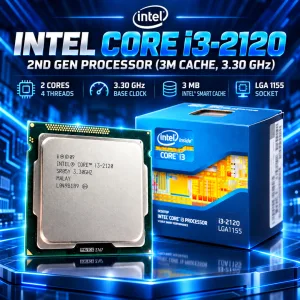
- 2 Cores and 4 Threads with Intel Hyper-Threading Technology
- 3.30 GHz Base Clock Frequency with 3 MB Intel Smart Cache
- Includes Intel HD Graphics 2000 integrated graphics
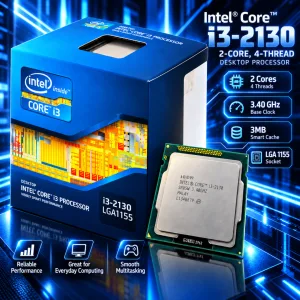
- 2 cores and 4 threads with Intel Hyper-Threading Technology
- 3.40 GHz processor base frequency with 3 MB Intel Smart Cache
- Integrated Intel HD Graphics 2000