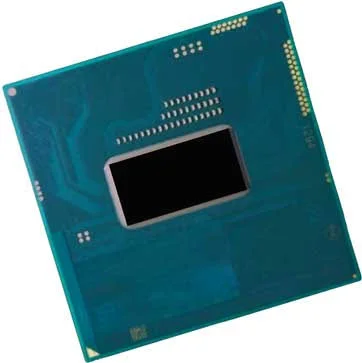
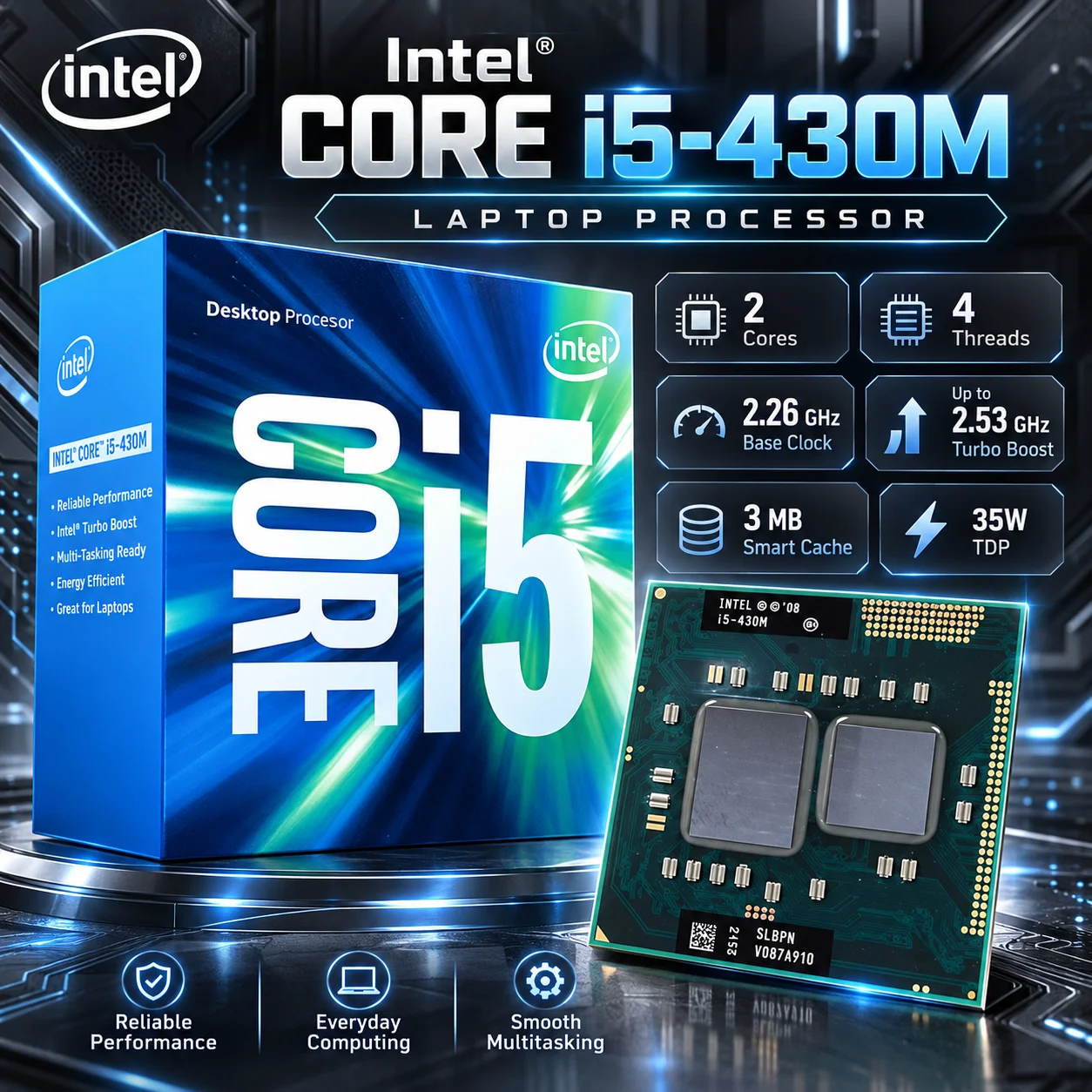
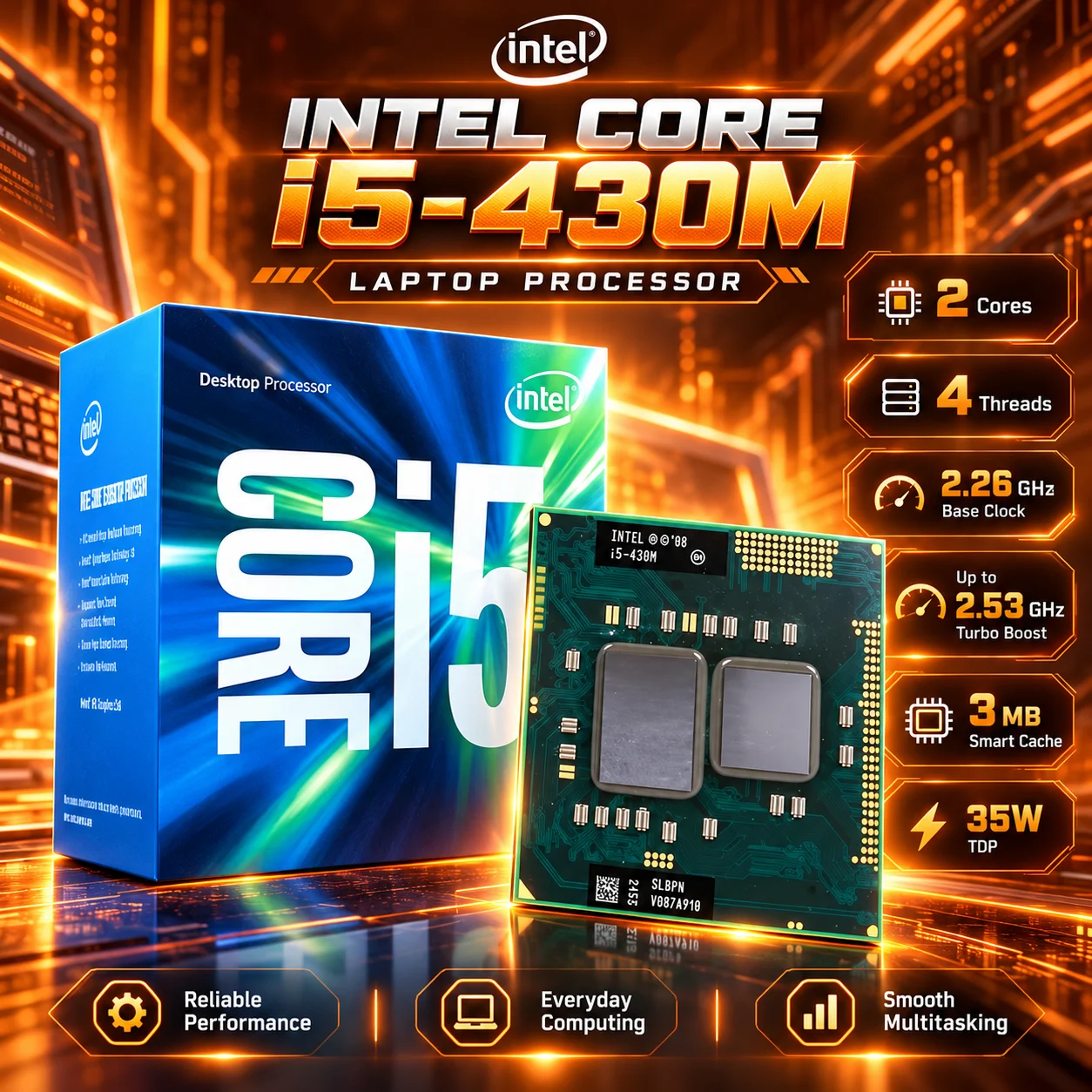
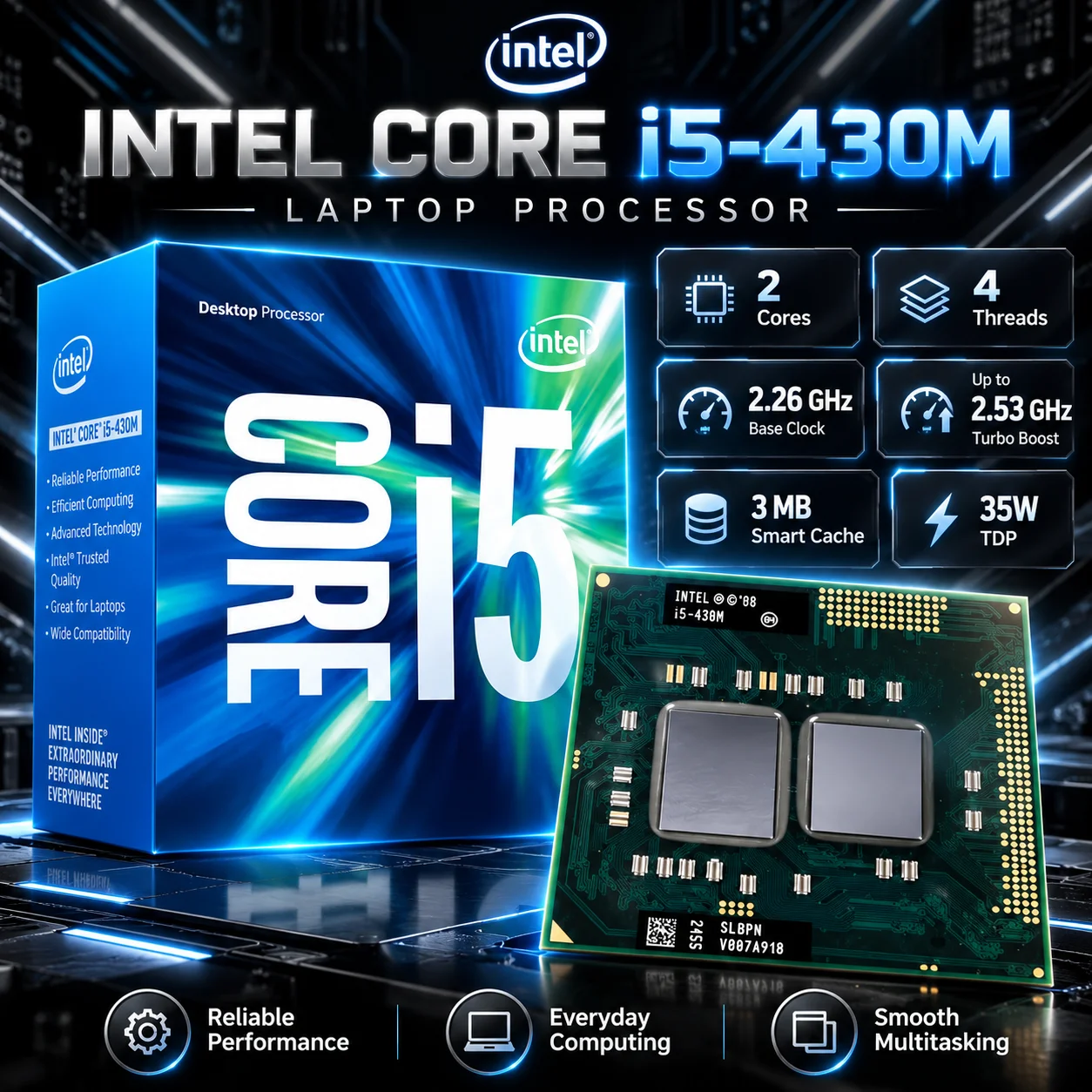
Intel Core i5-430M 2 Cores, 4 Threads Mobile Processor
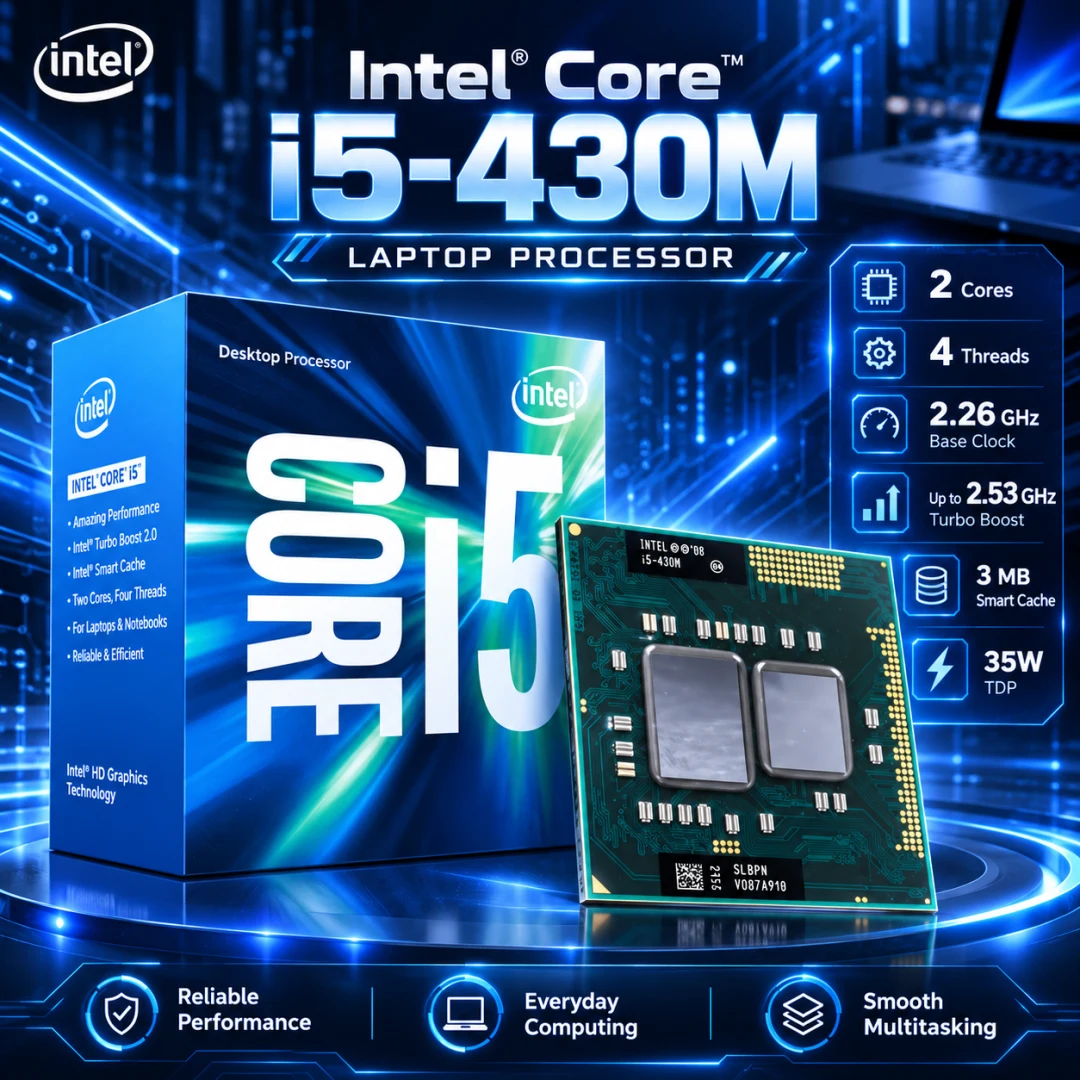
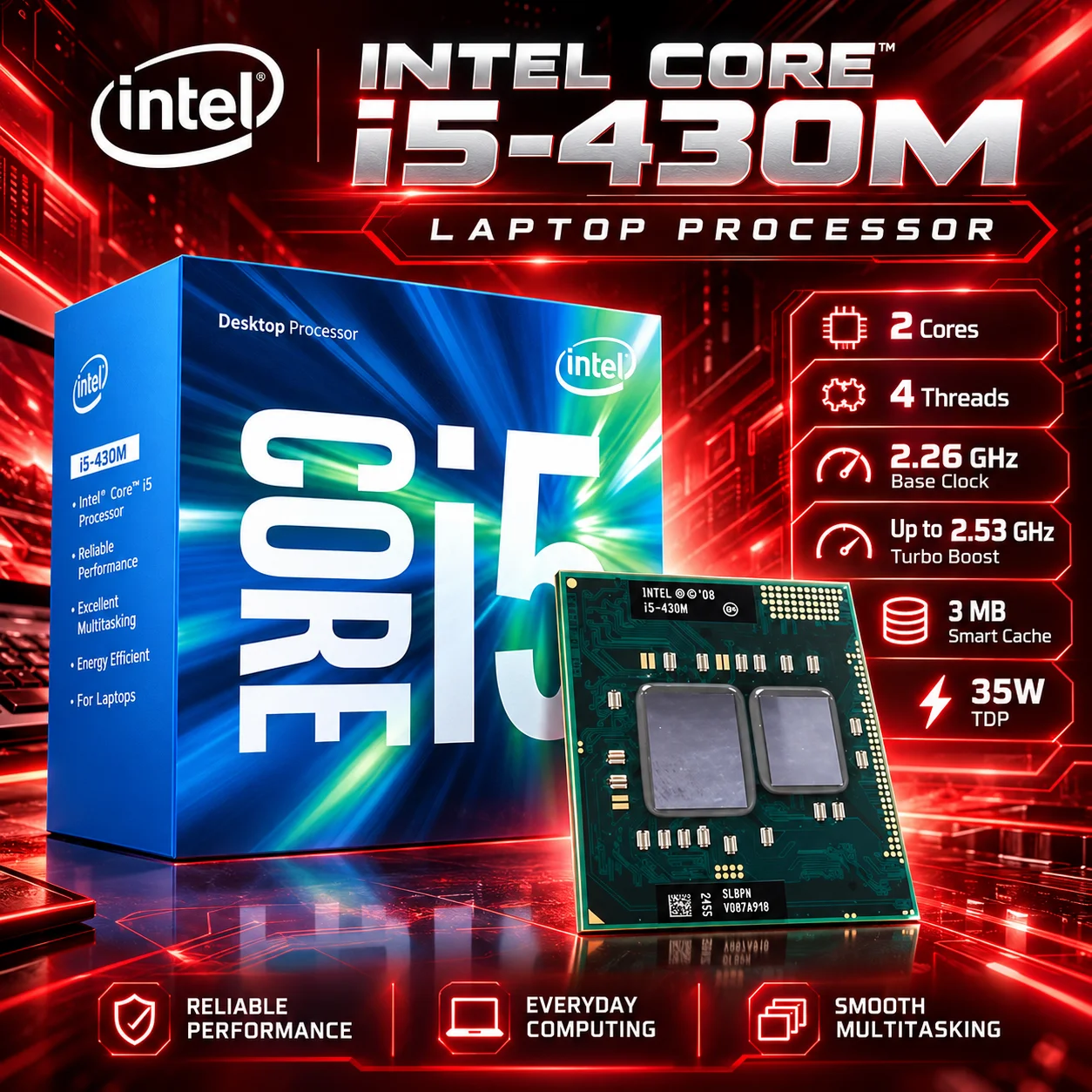
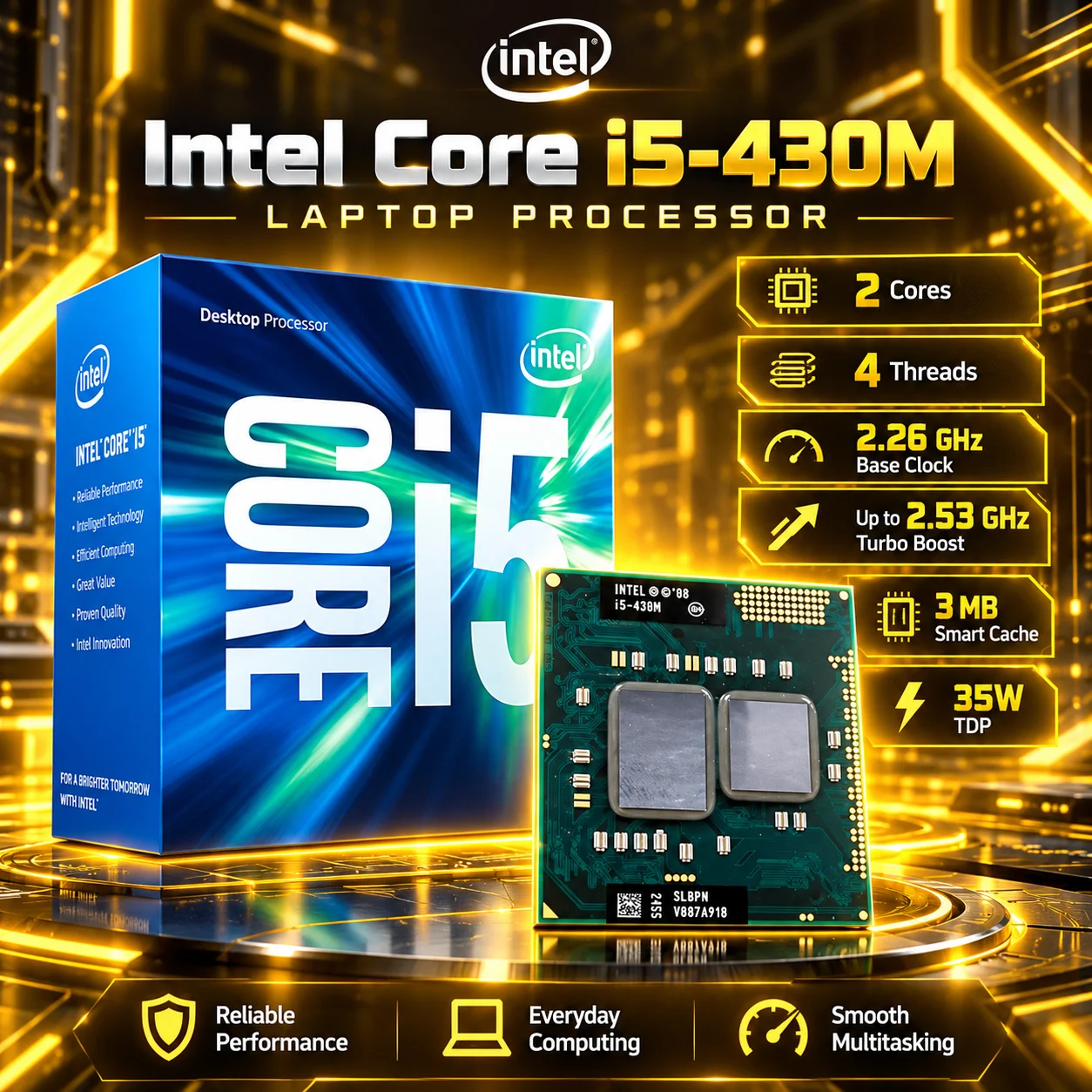
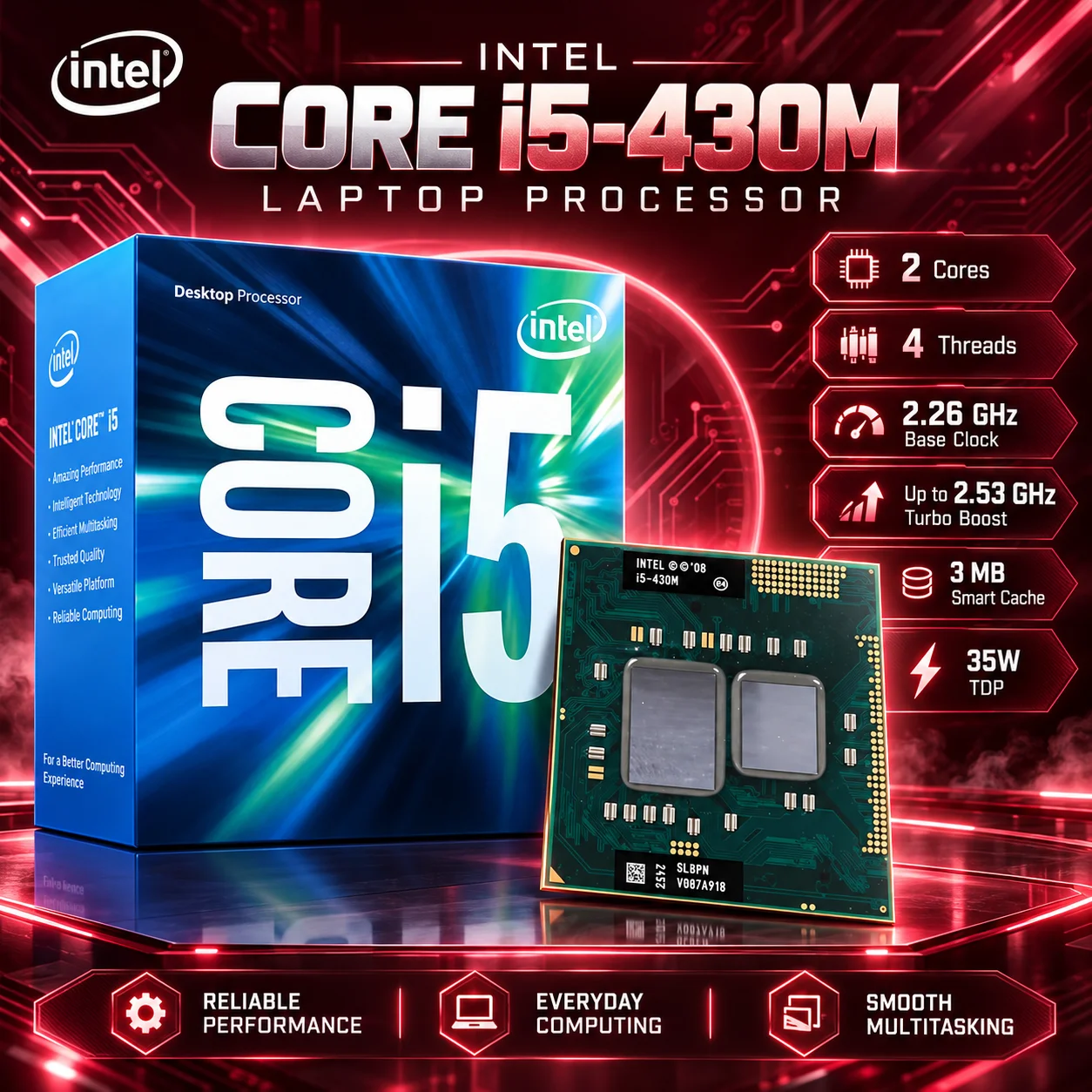
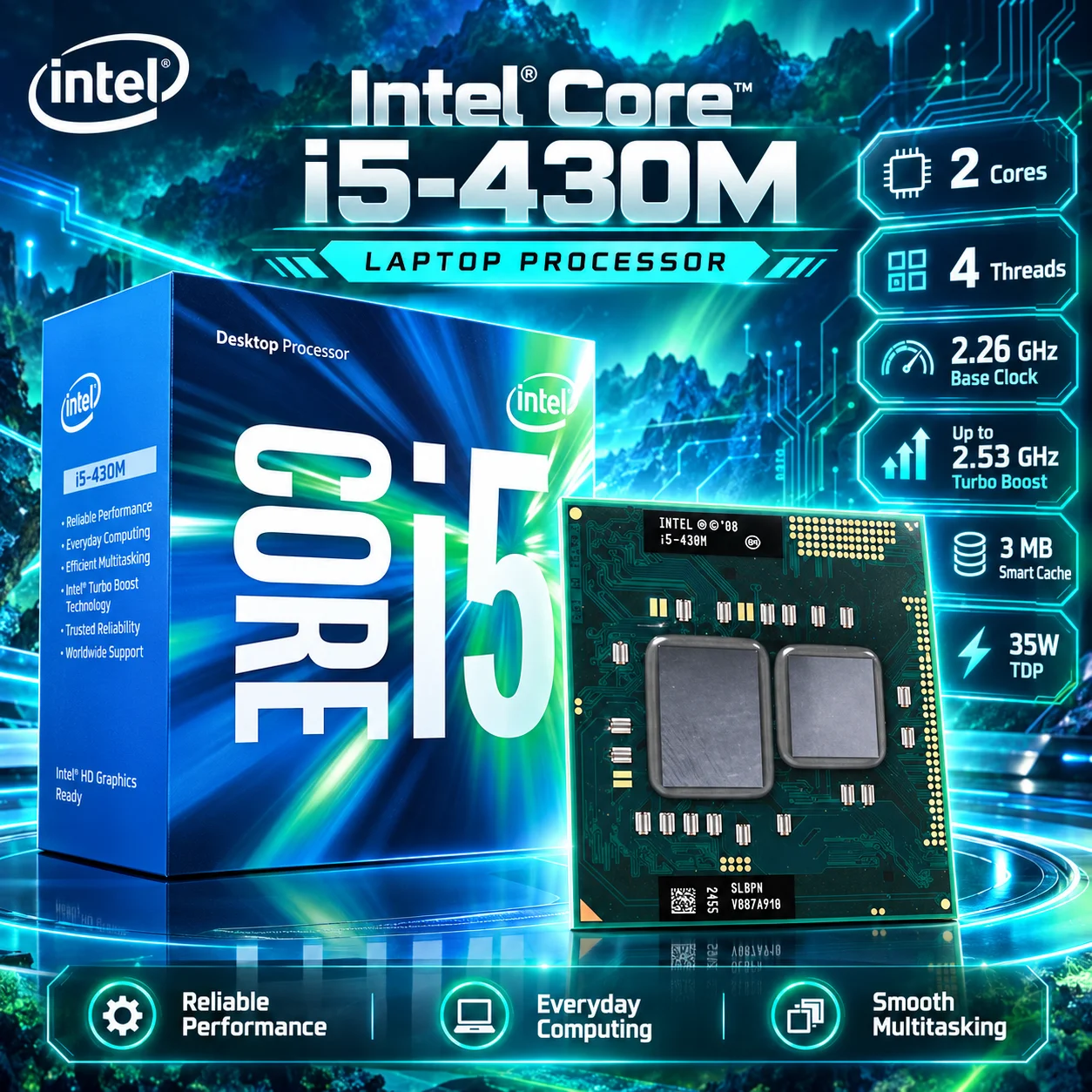
- 2 cores and 4 threads with Intel Hyper-Threading technology
- 2.267 GHz base frequency with up to 2.534 GHz max turbo frequency
- 3 MB of shared L3 Intel Smart Cache
- 32 nm production node with a 35W TDP
*Approximate regional retail guide prices. Pixahunt is an informational catalog.
CPU Benchmark Scores & Performance Analysis
TESTEDCinebench R23, Geekbench 6, PassMark CPU Mark scores & real-world gaming/office suitability tests.
Technical Specifications
Comprehensive hardware architecture and specifications
General
| Series |
Core i5 (Arrandale)
Selected Variant
|
| Model |
i5-430M
Selected Variant
|
| Cpu Cooler |
Not Included
Selected Variant
|
| Code-Name |
Arrandale
Selected Variant
|
| Generation |
1st Gen
Selected Variant
|
| Sockets Supported |
Socket G1 (rPGA)
Selected Variant
|
| Release Date |
January 7, 2010
Selected Variant
|
Performance
| Base Frequency |
2.267 GHz
Selected Variant
|
| Turbo Frequency Max. |
2.534 GHz
Selected Variant
|
| Core |
2
Selected Variant
|
| Threads |
4
Selected Variant
|
| CPU Cache |
3 MB L3 Cache
Selected Variant
|
| L1 Cache |
64 KB (per core)
Selected Variant
|
| L2 Cache |
256 KB (per core)
Selected Variant
|
| L3 Cache |
3 MB
Selected Variant
|
| TDP |
35 W
Selected Variant
|
| Lithography |
32 nm
Selected Variant
|
| Multiplier |
17.0x
Selected Variant
|
| Multiplier Unlocked |
No
Selected Variant
|
| Processor Type. |
Laptop / Notebook Mobile Processor (2 Cores, 4 Threads)
Best for: Everyday Laptop Computing, Web Browsing & Business Portability Selected Variant |
Memory Support
| Memory Max. |
N/A
Selected Variant
|
| Memory Type |
DDR3
Selected Variant
|
| Memory Speed |
N/A
Selected Variant
|
| Memory Channel |
N/A
Selected Variant
|
| Max Memory Bandwidth |
N/A
Selected Variant
|
| ECC Memory Supported |
No
Selected Variant
|
Graphics
| Built-in GPU |
Yes
Selected Variant
|
| Processor Graphics |
Intel HD Graphics
Selected Variant
|
| Graphics Base Frequency |
N/A
Selected Variant
|
| Graphics Dynamic Frequency |
N/A
Selected Variant
|
| Graphics Core Count |
N/A
Selected Variant
|
| Max Video Memory |
N/A
Selected Variant
|
| Max Resolution |
N/A
Selected Variant
|
Technical Info
| DirectX Support |
N/A
Selected Variant
|
| OpenGL Support |
N/A
Selected Variant
|
| Approx. Power Consumption |
35 W
Selected Variant
|
| Compatible Products / Chipsets |
Intel Chipsets with Socket G1
Selected Variant
|
| PCI Express Version |
Gen 2
Selected Variant
|
| PCI Express Lanes |
N/A
Selected Variant
|
| Thermal Solution (MPK / Box) |
Not Included
Selected Variant
|
| Max. Operating Temperature (Tjmax) |
N/A
Selected Variant
|
Warranty
| Manufacturing Warranty |
N/A
Selected Variant
|
Additional Info
| Specialty |
Intel Hyper-Threading, Intel Turbo Boost, Hardware Virtualization (VT-x, VT-d)
Selected Variant
|
| Others |
Mobile Processor
Selected Variant
|
| Country Of Origin |
N/A
Selected Variant
|
| Made in/ Assemble |
N/A
Selected Variant
|
Editorial Overview & Review
In-depth insights, architecture summary, and performance evaluation
Introduction & Overview
As the consumer tech landscape continues its relentless march toward hyper-portable performance, it pays to look back at the silicon foundations that paved the way for modern mobile computing. Enter the Intel Core i5-430M, a quintessential first-generation mobile processor built on the "Arrandale" microarchitecture. Positioned firmly in the mainstream performance tier of its era, this dual-core powerhouse was designed primarily for mainstream consumer laptops and versatile multimedia notebooks. Targeted at everyday professionals, students, and casual content creators who demanded a reliable balance between computing muscle and battery efficiency, the i5-430M became a defining mobile CPU of the early 2010s.
Architecture, Performance & Key Technologies
At its technological core, the Intel Core i5-430M represents a massive leap forward in mobile computing efficiency, manufactured on a pioneering 32nm lithography process. Operating at a base frequency of 2.267 GHz, the processor packs 2 physical cores and leverages Intel’s Hyper-Threading technology to handle up to 4 threads concurrently. When heavier workloads demand an extra kick of performance, Intel’s Turbo Boost technology dynamically ramps the clock speed up to a maximum frequency of 2.534 GHz.
Memory management is handled via a dual-channel DDR3 memory controller integrated directly onto the package, communicating through the Socket G1 (rPGA) infrastructure. To reduce latency, the CPU is outfitted with a robust cache hierarchy: 64 KB of L1 cache and 256 KB of L2 cache per core, backed by a generous 3 MB of shared L3 cache.
One of the defining engineering milestones of the Arrandale generation was the integration of graphics onto the processor package. The i5-430M features built-in Intel HD Graphics, allowing manufacturers to build slimmer laptops without dedicated, power-hungry entry-level graphics cards for basic display outputs and hardware-accelerated video decoding. Despite its dynamic capabilities, the processor maintains a thermal design power (TDP) of just 35 W, striking an impressive balance for the laptop form factors of its generation.
Real-World Use Cases
In day-to-day scenarios, the Intel Core i5-430M proved to be a remarkably capable daily driver. Thanks to the inclusion of Turbo Boost and Hyper-Threading, office productivity suites like Microsoft Office, heavy web browsing with dozens of tabs open, and seamless multitasking felt responsive and fluid. Switching between applications or running background antivirus scans rarely bogged down the system.
For light content creation—such as basic photo editing in Adobe Photoshop or transcoding home videos—the 3 MB L3 cache and dual-core setup provided enough headroom to get the job done without excessive wait times. While modern AAA gaming would be entirely out of its league today, the integrated Intel HD Graphics handled casual titles, older 3D games, and media streaming smoothly, making it a stellar companion for students writing papers in a dorm room or professionals managing spreadsheets on the go.
Strengths & Potential Considerations
- Pros:
- Solid multitasking performance via Intel Hyper-Threading (4 threads).
- Adaptive performance scaling with Intel Turbo Boost technology.
- Efficient 32nm Arrandale architecture keeping thermal output manageable at a 35W TDP.
- Integrated Intel HD Graphics eliminates the strict need for a discrete GPU for basic multimedia tasks.
- Hardware virtualization support (VT-x, VT-d) for running virtual machines.
- Cons:
- Limited to just 2 physical cores, which struggles heavily under modern multi-threaded software.
- Socket G1 infrastructure and DDR3 memory standard are entirely obsolete by today's standards.
- Integrated graphics lack modern DirectX and OpenGL feature sets required for contemporary gaming or UI rendering.
Final Buying Verdict
From a historical and architectural standpoint, the Intel Core i5-430M was a landmark processor that democratized smart power management and Turbo Boost technology for mainstream laptop users. Today, as a legacy piece of hardware, it naturally falls short of contemporary computing demands and cannot be recommended for modern productivity, gaming, or general daily use.
However, for retro hardware enthusiasts, hobbyists tinkering with vintage Windows 7/10 laptops, or anyone looking to understand the evolution of mobile architecture, a machine powered by the i5-430M remains a nostalgic and fascinating piece of engineering. It successfully defined an era where laptops truly transitioned from portable desktop replacements to genuinely smart, adaptive mobile companions.
OUR RATING CONSENSUS
The overall rating is based on review by our experts & industry benchmark suites
Quick Snapshot
- Overall Rating
- 4.1 / 10
- Brand
- Intel
- Category
- Processor
- Catalog Model
- i5-430M
- Status
- Published
- Release Date
- January 7, 2010
Pixahunt Tech Community
Connect with hardware enthusiasts, compare benchmarks, and explore real user setups.
Explore Full Newsfeed →Related Gadgets
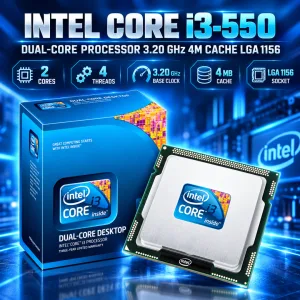
- 3.20 GHz Dual-Core Clock Speed for Reliable Everyday Computing
- Intel Hyper-Threading Technology Enabling 4 Parallel Threads
- Built-in Intel HD Graphics for Integrated Display Support
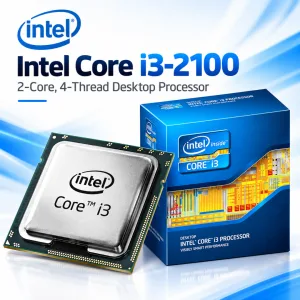
- 2 cores and 4 threads with Intel Hyper-Threading Technology
- 3.10 GHz base processor frequency
- 3 MB Intel Smart Cache
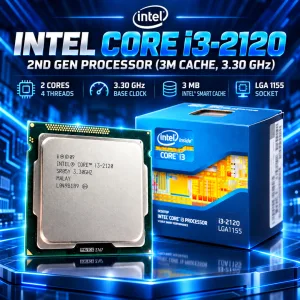
- 2 Cores and 4 Threads with Intel Hyper-Threading Technology
- 3.30 GHz Base Clock Frequency with 3 MB Intel Smart Cache
- Includes Intel HD Graphics 2000 integrated graphics
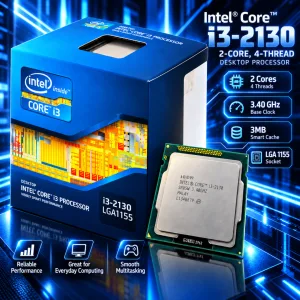
- 2 cores and 4 threads with Intel Hyper-Threading Technology
- 3.40 GHz processor base frequency with 3 MB Intel Smart Cache
- Integrated Intel HD Graphics 2000
Compare i5-430M with Similar Processor
Real-world benchmark differences, TDP energy consumption, pros & cons, and market pricing in Bangladesh.