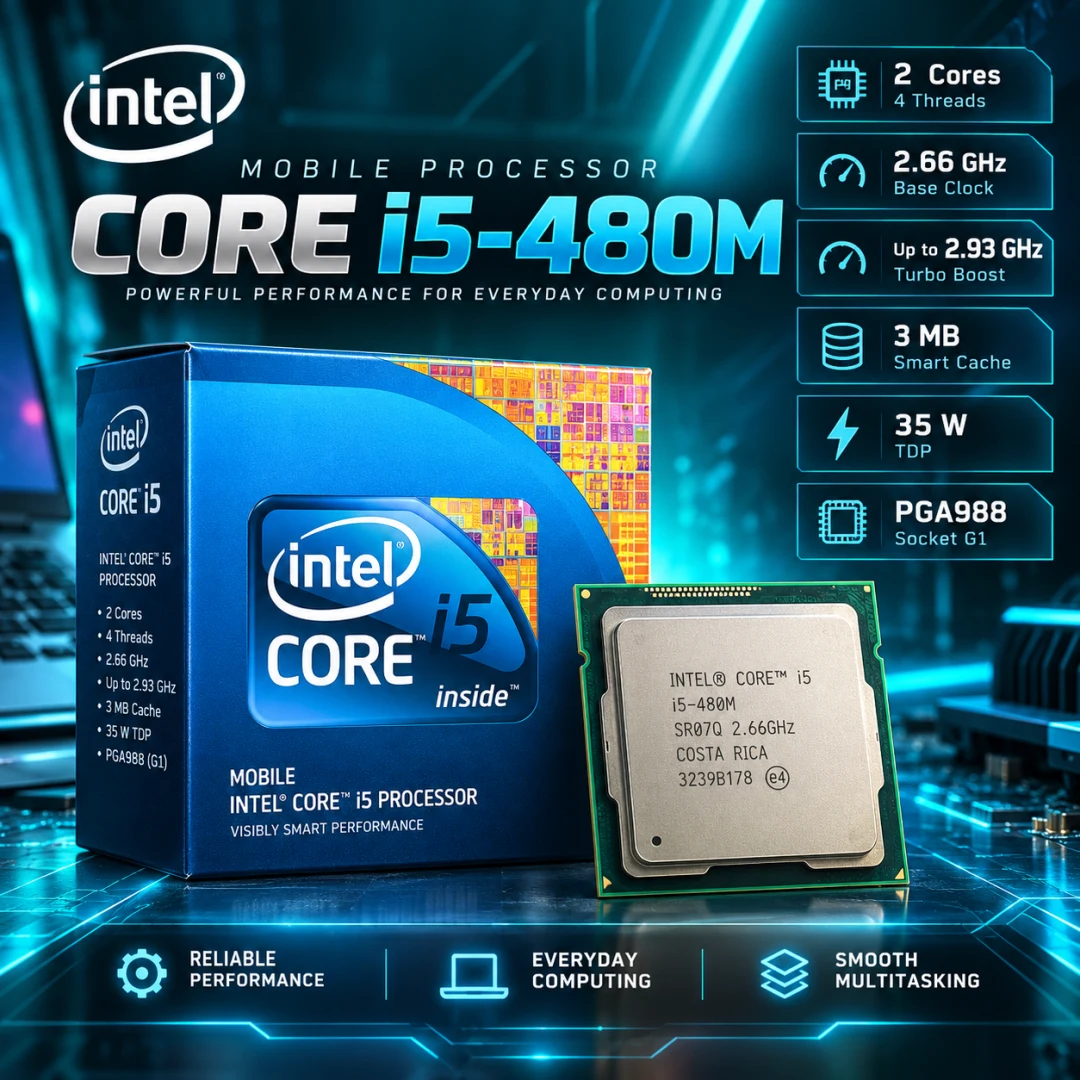
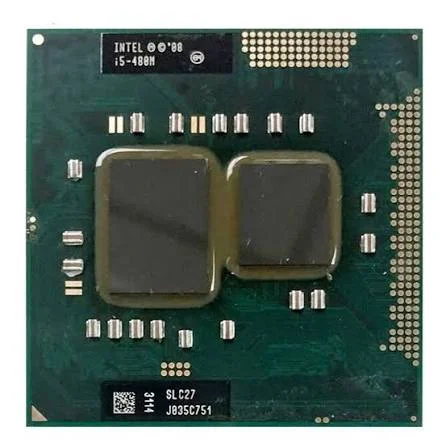
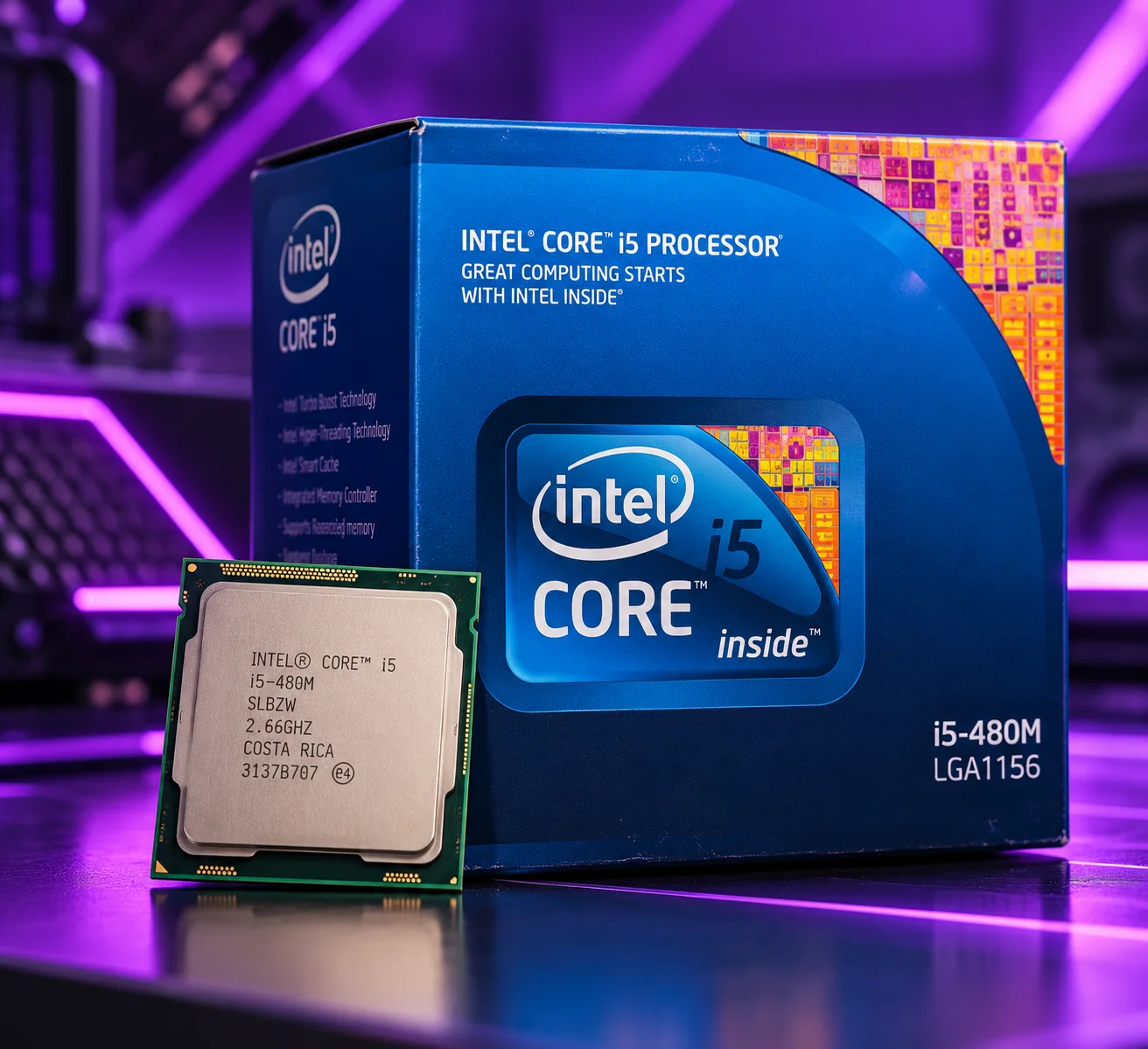
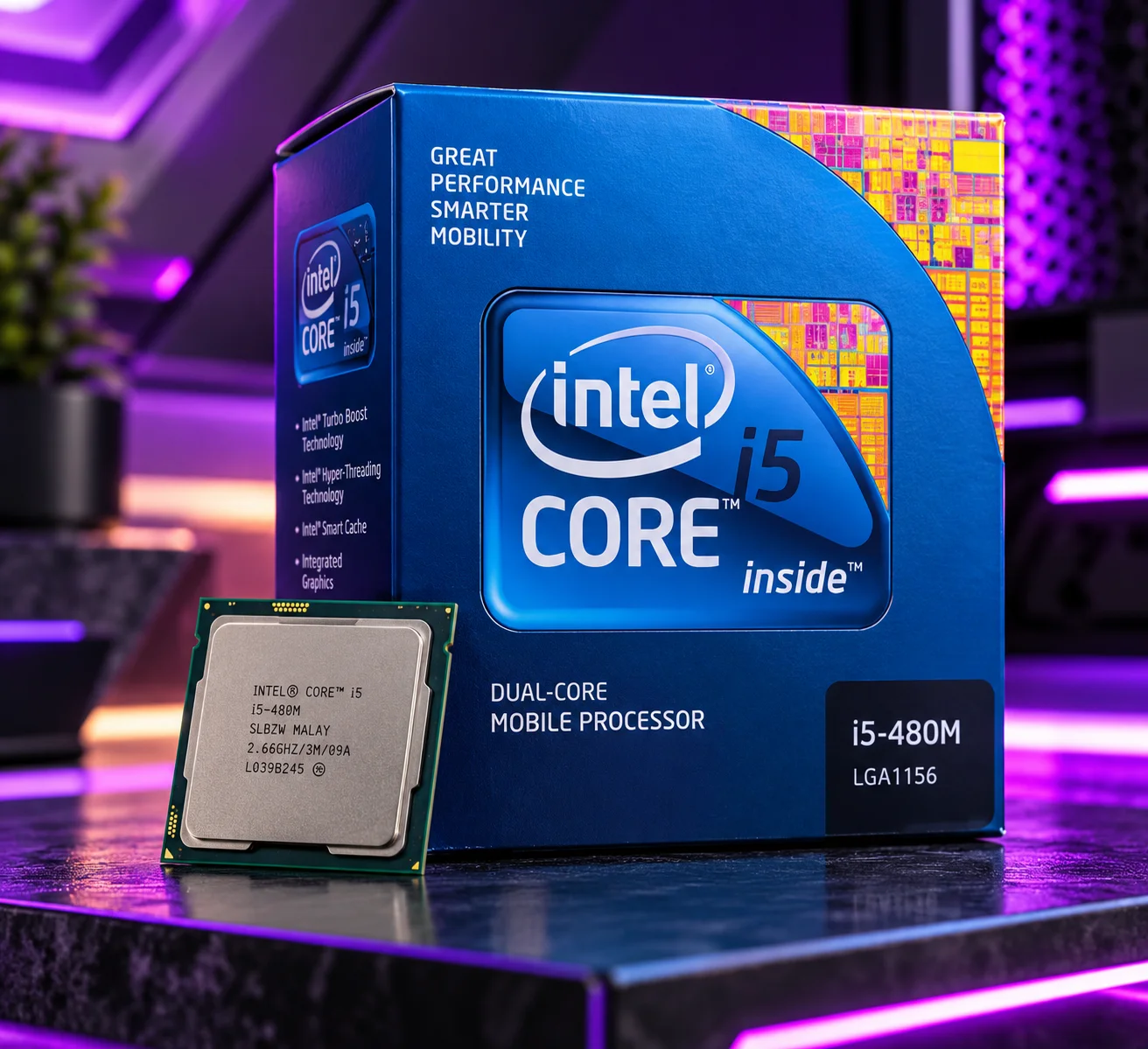
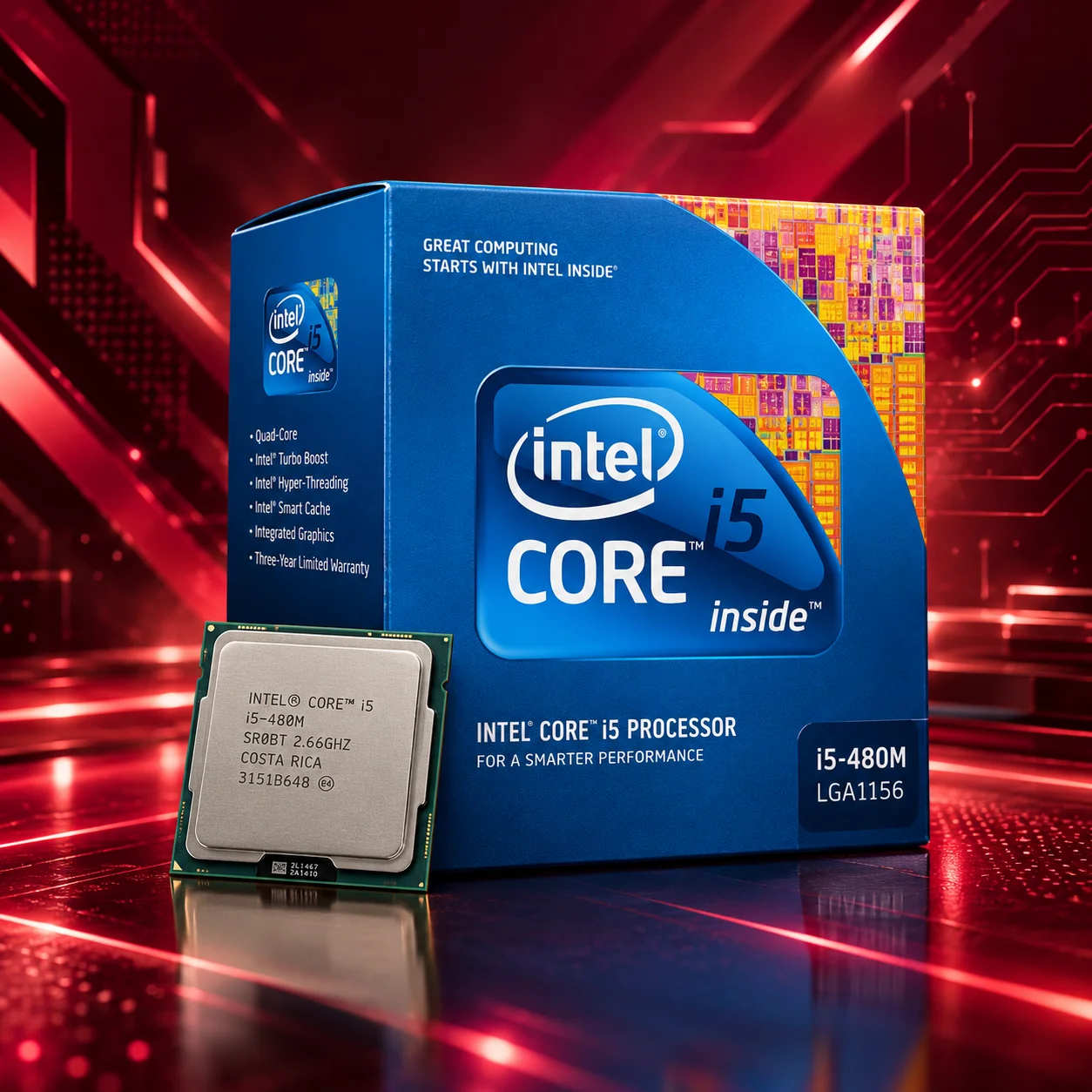
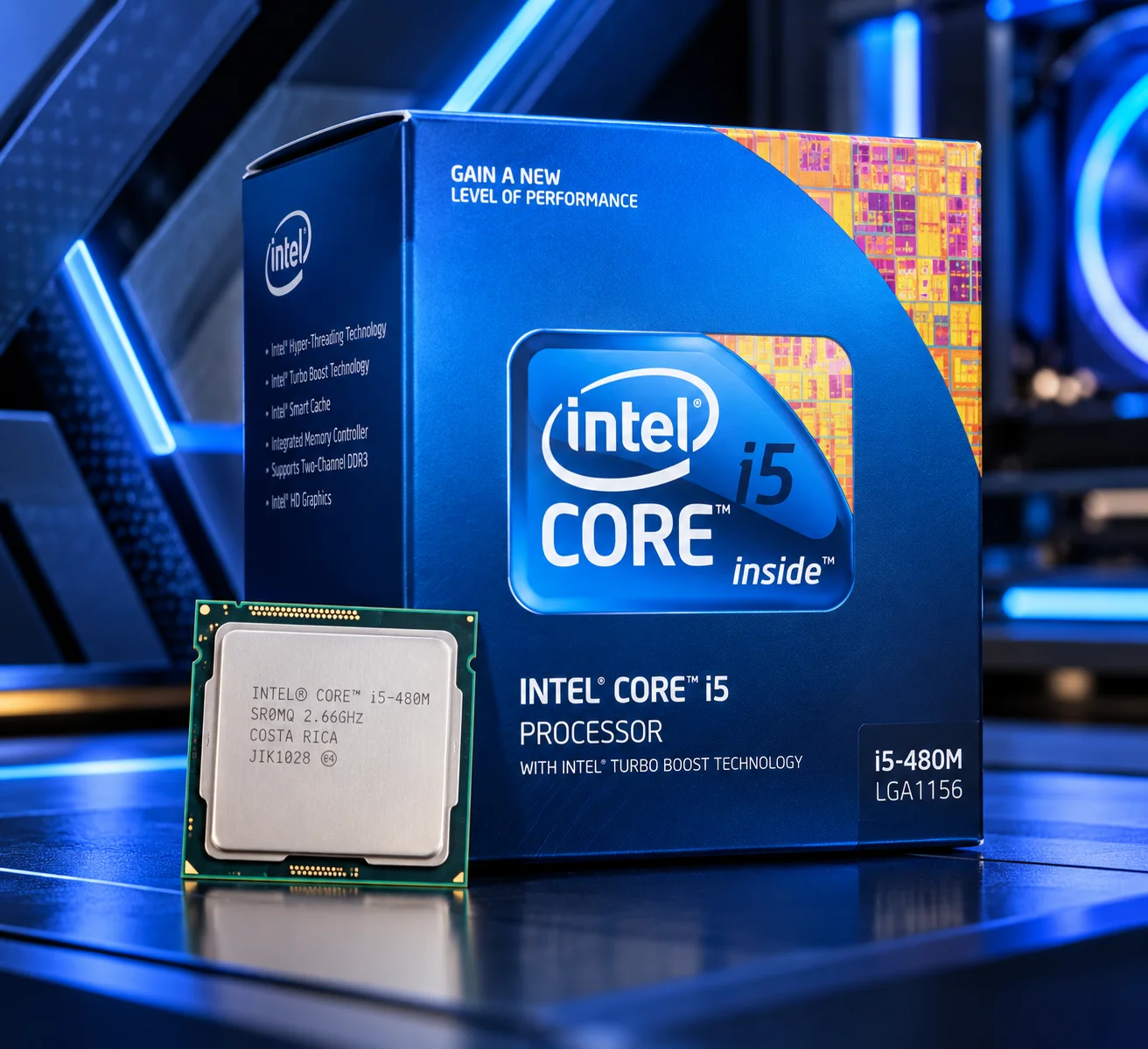
Intel Core i5-480M Mobile Processor (2 Cores, 4 Threads, 2.667 GHz up to 2.933 GHz)
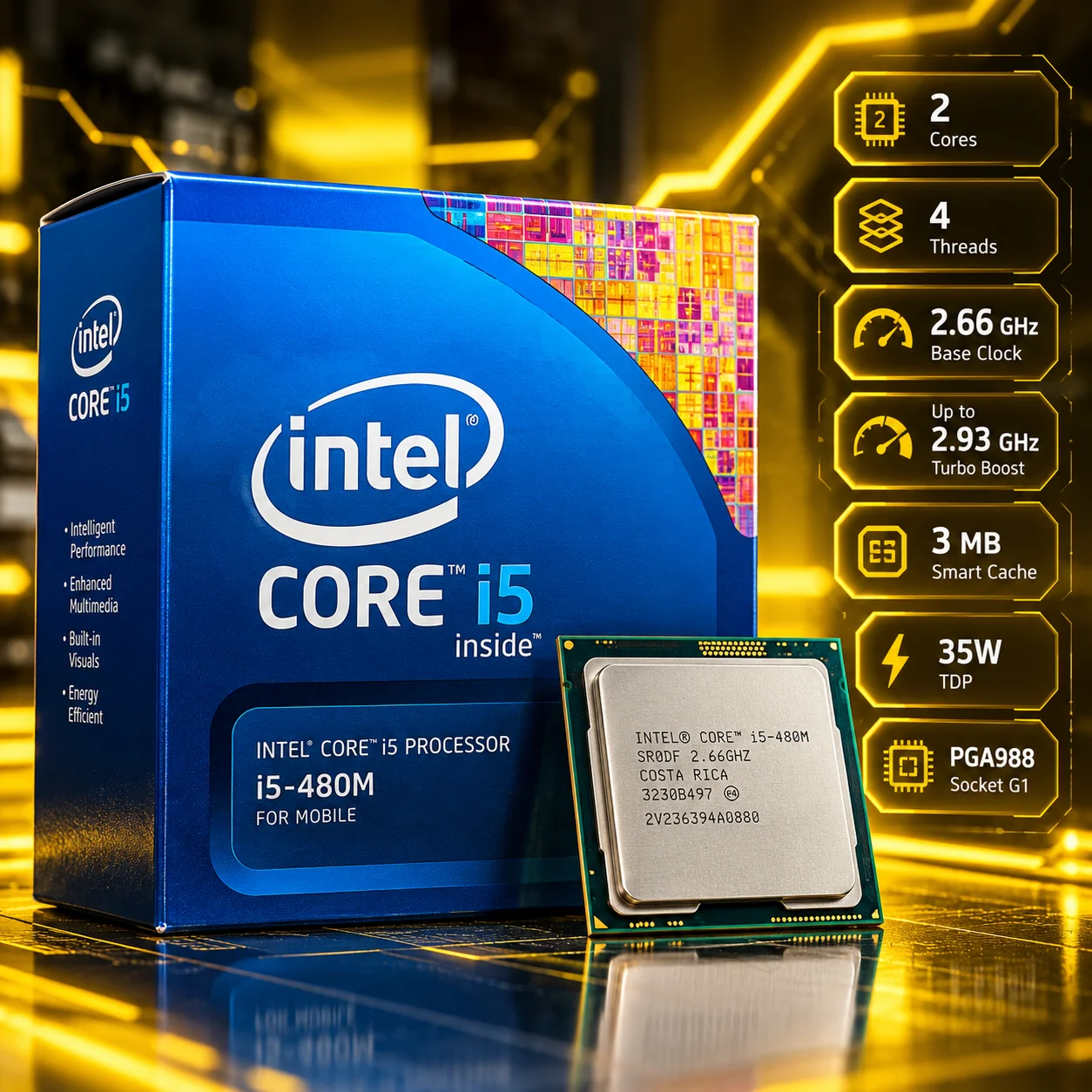
- 2 cores and 4 threads with Intel Hyper-Threading technology
- 2.667 GHz base frequency with up to 2.933 GHz Turbo Boost
- 3 MB of shared L3 cache
- Built on a 32 nm process with a 35W TDP for mobile efficiency
*Approximate regional retail guide prices. Pixahunt is an informational catalog.
CPU Benchmark Scores & Performance Analysis
TESTEDCinebench R23, Geekbench 6, PassMark CPU Mark scores & real-world gaming/office suitability tests.
Technical Specifications
Comprehensive hardware architecture and specifications
General
| Series |
Core i5 (Arrandale)
Selected Variant
|
| Model |
i5-480M
Selected Variant
|
| Cpu Cooler |
Not Included
Selected Variant
|
| Code-Name |
Arrandale
Selected Variant
|
| Generation |
1st Gen
Selected Variant
|
| Sockets Supported |
Intel Socket G1
Selected Variant
|
| Release Date |
January 9, 2011
Selected Variant
|
Performance
| Base Frequency |
2.667 GHz
Selected Variant
|
| Turbo Frequency Max. |
2.933 GHz
Selected Variant
|
| Core |
2
Selected Variant
|
| Threads |
4
Selected Variant
|
| CPU Cache |
3 MB L3 Cache
Selected Variant
|
| L1 Cache |
64 KB (per core)
Selected Variant
|
| L2 Cache |
256 KB (per core)
Selected Variant
|
| L3 Cache |
3 MB
Selected Variant
|
| TDP |
35 W
Selected Variant
|
| Lithography |
32 nm
Selected Variant
|
| Multiplier |
20.0x
Selected Variant
|
| Multiplier Unlocked |
No
Selected Variant
|
| Processor Type. |
Laptop / Notebook Mobile Processor (2 Cores, 4 Threads)
Best for: Portable Notebook Multitasking, Office Work & Video Streaming Selected Variant |
Memory Support
| Memory Max. |
N/A
Selected Variant
|
| Memory Type |
DDR3
Selected Variant
|
| Memory Speed |
N/A
Selected Variant
|
| Memory Channel |
N/A
Selected Variant
|
| Max Memory Bandwidth |
N/A
Selected Variant
|
| ECC Memory Supported |
No
Selected Variant
|
Graphics
| Built-in GPU |
Yes
Selected Variant
|
| Processor Graphics |
Intel HD Graphics
Selected Variant
|
| Graphics Base Frequency |
N/A
Selected Variant
|
| Graphics Dynamic Frequency |
N/A
Selected Variant
|
| Graphics Core Count |
N/A
Selected Variant
|
| Max Video Memory |
N/A
Selected Variant
|
| Max Resolution |
N/A
Selected Variant
|
Technical Info
| DirectX Support |
N/A
Selected Variant
|
| OpenGL Support |
N/A
Selected Variant
|
| Approx. Power Consumption |
35 W
Selected Variant
|
| Compatible Products / Chipsets |
Intel HM55, HM57, QM57, QS57
Selected Variant
|
| PCI Express Version |
Gen 2
Selected Variant
|
| PCI Express Lanes |
N/A
Selected Variant
|
| Thermal Solution (MPK / Box) |
Not Included
Selected Variant
|
| Max. Operating Temperature (Tjmax) |
N/A
Selected Variant
|
Warranty
| Manufacturing Warranty |
N/A
Selected Variant
|
Additional Info
| Specialty |
Intel Hyper-Threading, Turbo Boost, VT-x, VT-d, AES-NI
Selected Variant
|
| Others |
Mobile Processor
Selected Variant
|
| Country Of Origin |
N/A
Selected Variant
|
| Made in/ Assemble |
N/A
Selected Variant
|
Editorial Overview & Review
In-depth insights, architecture summary, and performance evaluation
Introduction & Overview: The Workhorse of the Arrandale Era
Back when the mobile computing landscape was undergoing a massive paradigm shift toward integrated graphics and multi-core efficiency, Intel introduced its 1st Generation Core processors, codenamed Arrandale. Among the most popular and balanced mid-to-high-tier offerings of that era was the Intel Core i5-480M. Positioned squarely in the mainstream consumer and professional laptop segment, this mobile processor was designed for users who demanded a snappy, responsive computing experience without sacrificing battery life to the extent of older, power-hungry desktop-replacement units.
Targeted at everyday power users, students, and mobile professionals, the i5-480M aimed to bridge the gap between basic dual-core economy and high-end workstation performance. Housed in the Intel Socket G1 form factor and typically paired with chipsets like the HM55 or HM57, this CPU became a staple in mid-to-high-end notebooks from major manufacturers during its heyday, defining the standard for productivity on the move.
Architecture, Performance & Key Technologies
Built on a then-cutting-edge 32nm lithography process, the Core i5-480M packs a serious punch for a 35W Thermal Design Power (TDP) mobile processor. At its core, it features 2 physical cores and 4 threads, leveraging Intel’s Hyper-Threading technology to optimize multitasking across concurrent workloads.
Out of the box, the processor operates at a solid 2.667 GHz base frequency. However, when demanding applications call for extra processing muscle, Intel’s Turbo Boost Technology kicks in, dynamically ramping the clock speed up to a maximum of 2.933 GHz. This is complemented by 3 MB of L3 cache (alongside 64 KB of L1 and 256 KB of L2 cache per core), ensuring that frequently accessed data remains close to the execution units for minimal latency.
One of the defining engineering achievements of the Arrandale generation was the integration of the graphics processor directly onto the CPU package. The i5-480M features Intel HD Graphics, which handles basic graphical outputs, high-definition video decoding, and light visual tasks efficiently. Furthermore, memory duties are managed via a robust DDR3 memory controller, ensuring ample bandwidth for daily tasks.
The processor also punches above its weight class by including enterprise-grade and security-focused feature sets:
- Intel Hyper-Threading: Enhances multi-threaded application performance.
- Intel Turbo Boost: Automatically boosts CPU frequency on demand.
- Intel VT-x and VT-d: Hardware-level virtualization support for running virtual machines securely.
- AES-NI: Accelerated encryption instructions for safer data handling and secure web browsing.
Real-World Use Cases: Daily Productivity and Beyond
In practice, the Intel Core i5-480M excels in environments where responsiveness and multi-application handling are paramount. For daily productivity—such as managing heavy multi-tab web browsing sessions, running Microsoft Office suites, compiling documents, and streaming 1080p media—the processor handles operations with effortless fluidity.
When it comes to content creation and multitasking, the 4 threads and Turbo Boost capability allow users to dabble in casual photo editing (using tools like Adobe Photoshop) and basic 720p/1080p video rendering. While it won't replace a modern rendering rig, it handles localized workflows respectably for its class.
Gaming-wise, the built-in Intel HD Graphics is best suited for older titles, casual indie games, and eSports classics (like Minecraft, League of Legends, or source-engine games) at modest settings. For heavier modern gaming, laptops equipped with this CPU typically required a discrete dedicated GPU pairing. Nevertheless, its primary domain remains reliable, everyday computing.
Strengths & Potential Considerations
As with any legacy hardware, evaluating the i5-480M requires balancing its historical strengths against the realities of modern computing demands.
- Strengths:
- Solid single-core and respectable multi-threaded performance via Turbo Boost and Hyper-Threading.
- Efficient 35W TDP that balances thermal output with mobile battery endurance.
- Robust feature set including virtualization (VT-x/VT-d) and AES-NI encryption support.
- Reliable platform stability on HM55/HM57 chipset architectures.
- Potential Considerations:
- Struggles with modern, heavy AAA gaming and intensive 4K video editing workflows.
- Integrated Intel HD Graphics lacks DirectX 11/12 capabilities required for contemporary software standards.
- Socket G1 is a legacy architecture with no modern upgrade path.
Final Buying Verdict
The Intel Core i5-480M stands out as a classic example of solid, enduring engineering. While it belongs to a bygone era of mobile computing, it remains a thoroughly capable processor for retro-computing builds, lightweight Linux workstations, or budget-friendly secondary laptops used strictly for typing, media consumption, and web browsing.
If you are looking at a vintage machine powered by the i5-480M for heavy modern gaming or high-end professional production, its age will certainly show. However, for light productivity, learning about older x86 architectures, or breathing new life into an older chassis with an SSD upgrade, this mobile workhorse still delivers dependable, honest performance.
OUR RATING CONSENSUS
The overall rating is based on review by our experts & industry benchmark suites
Quick Snapshot
- Overall Rating
- 4.1 / 10
- Brand
- Intel
- Category
- Processor
- Catalog Model
- i5-480M
- Status
- Published
- Release Date
- January 9, 2011
Pixahunt Tech Community
Connect with hardware enthusiasts, compare benchmarks, and explore real user setups.
Explore Full Newsfeed →Related Gadgets
- 3.20 GHz Dual-Core Clock Speed for Reliable Everyday Computing
- Intel Hyper-Threading Technology Enabling 4 Parallel Threads
- Built-in Intel HD Graphics for Integrated Display Support
- 2 cores and 4 threads with Intel Hyper-Threading Technology
- 3.10 GHz base processor frequency
- 3 MB Intel Smart Cache
- 2 Cores and 4 Threads with Intel Hyper-Threading Technology
- 3.30 GHz Base Clock Frequency with 3 MB Intel Smart Cache
- Includes Intel HD Graphics 2000 integrated graphics
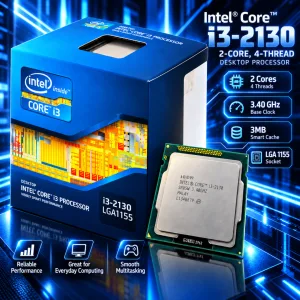
- 2 cores and 4 threads with Intel Hyper-Threading Technology
- 3.40 GHz processor base frequency with 3 MB Intel Smart Cache
- Integrated Intel HD Graphics 2000
Compare i5-480M with Similar Processor
Real-world benchmark differences, TDP energy consumption, pros & cons, and market pricing in Bangladesh.