

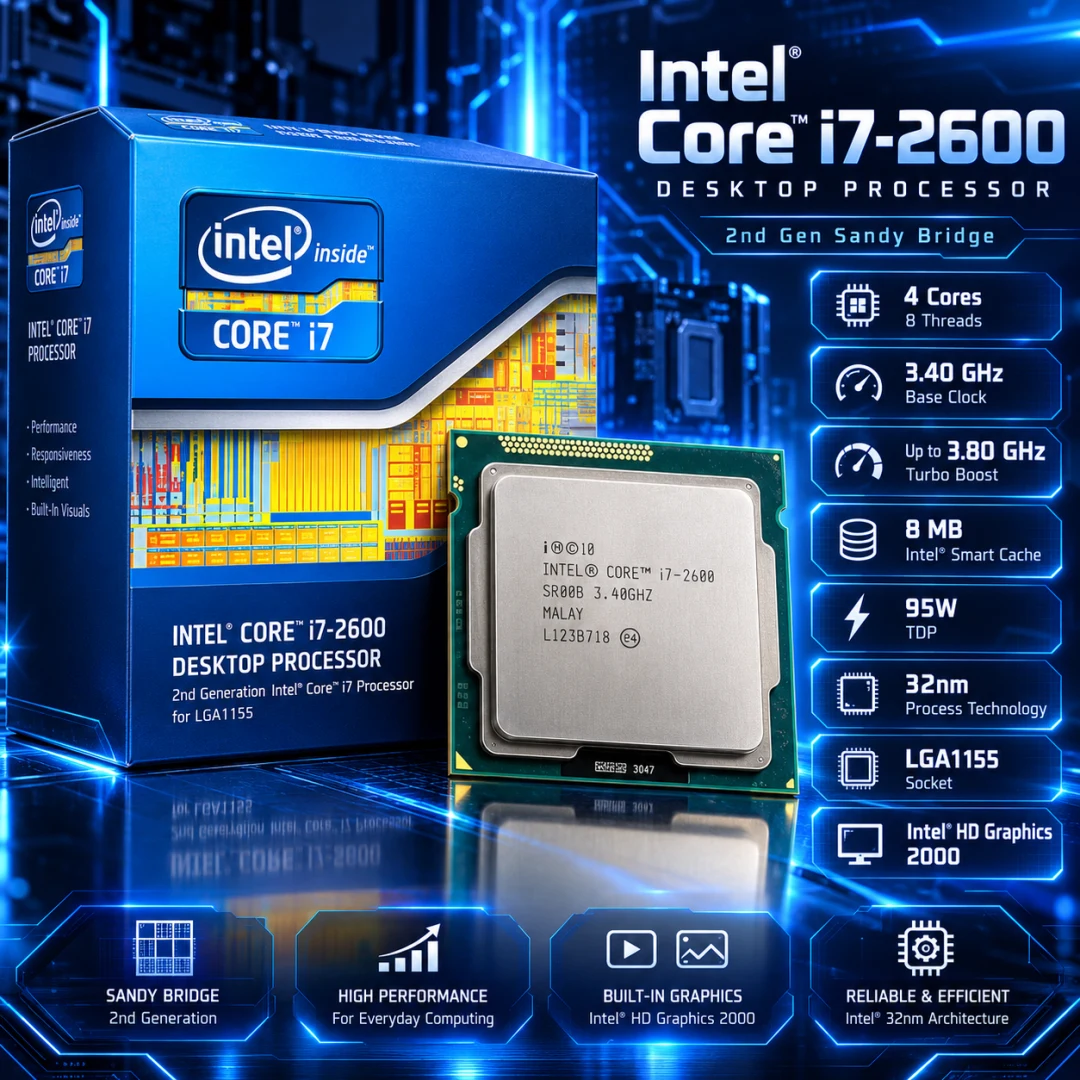
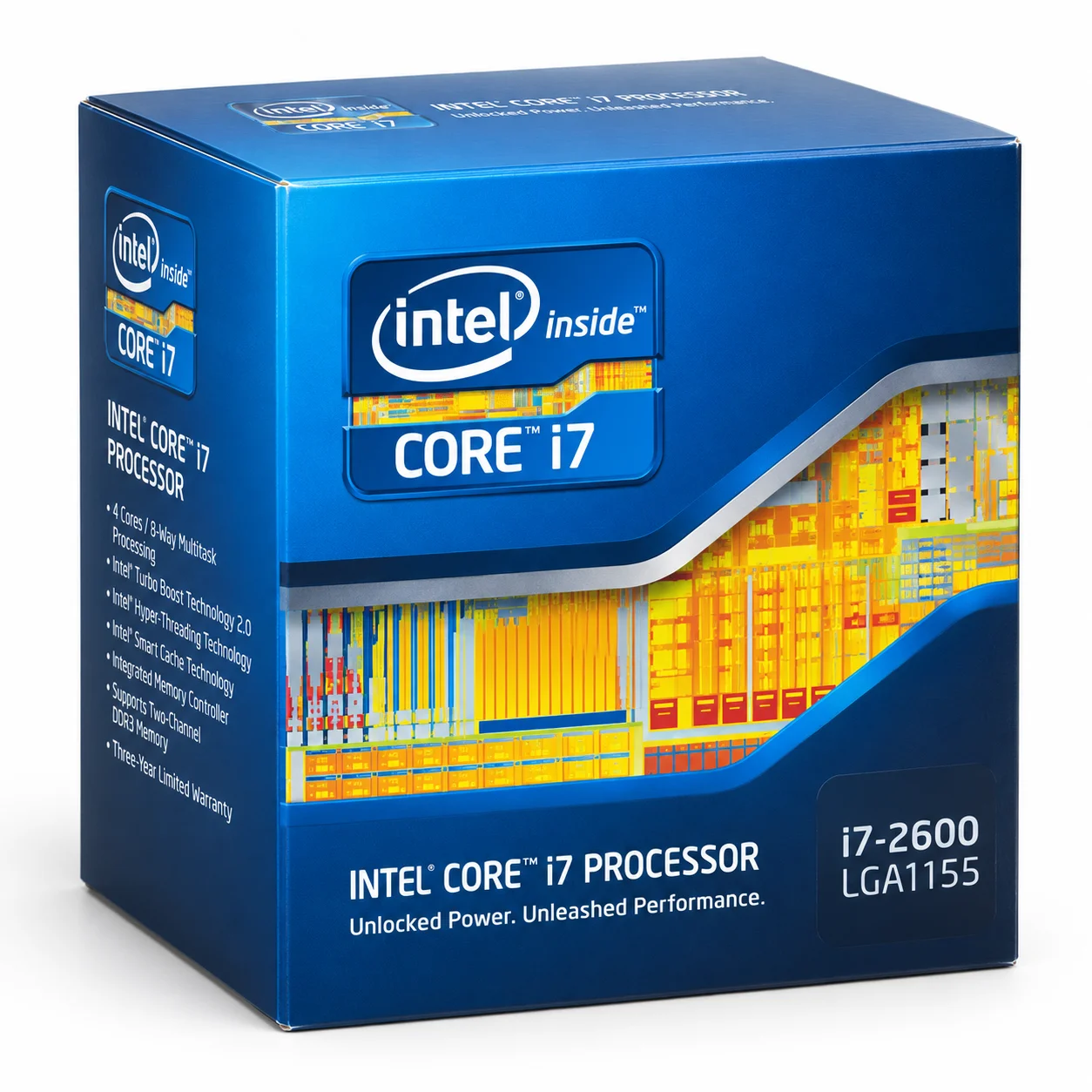
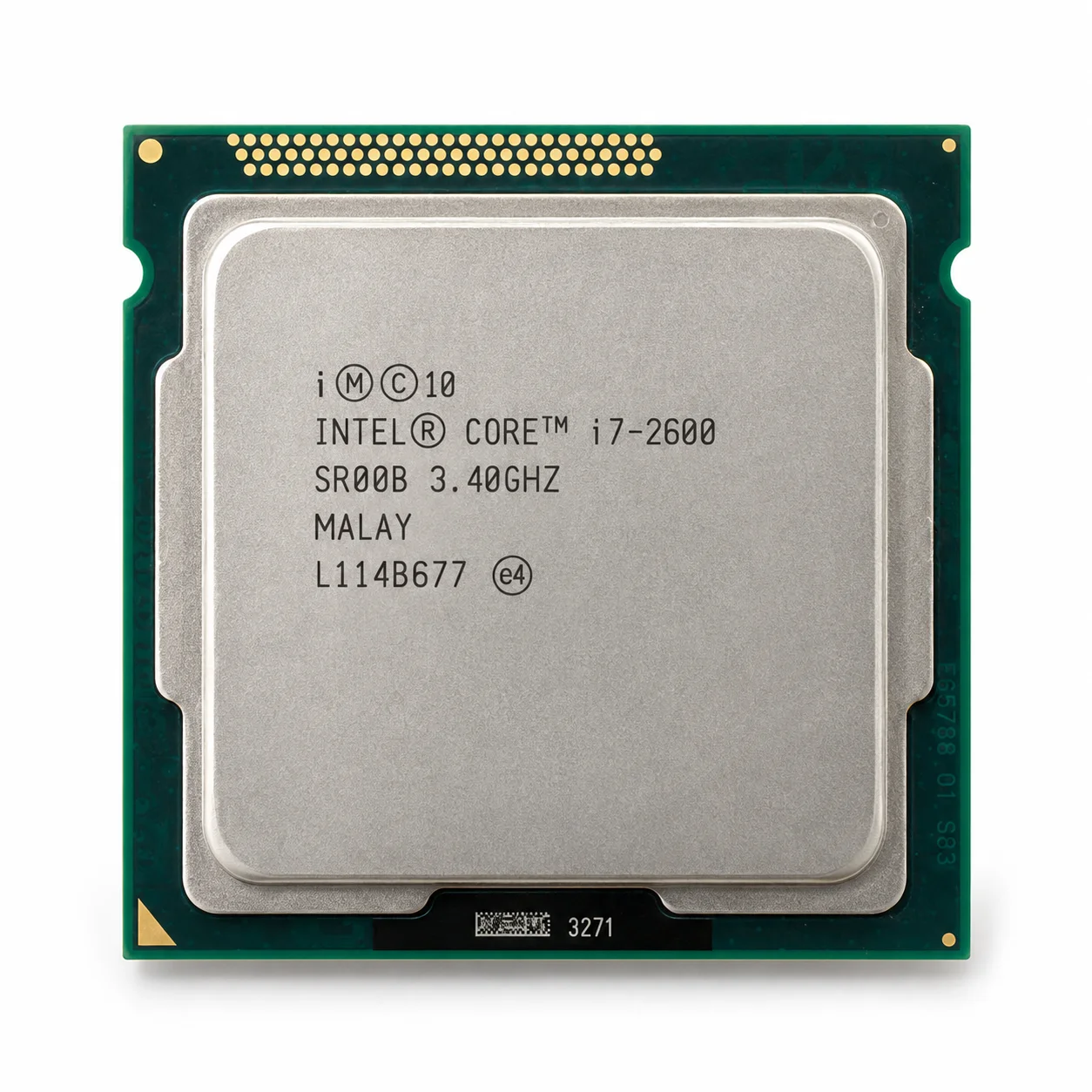
Intel Core i7-2600 3.4 GHz Quad-Core Desktop Processor
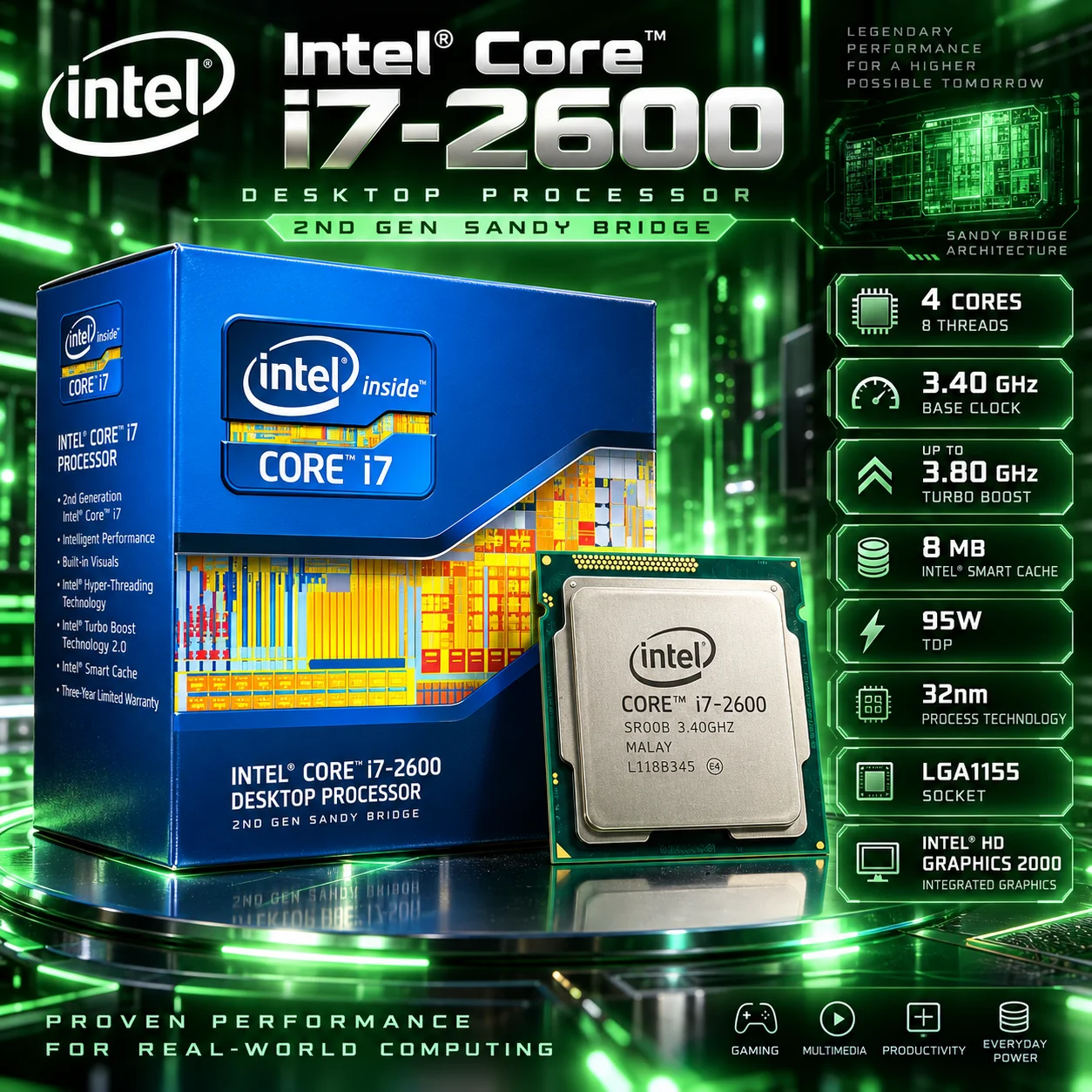
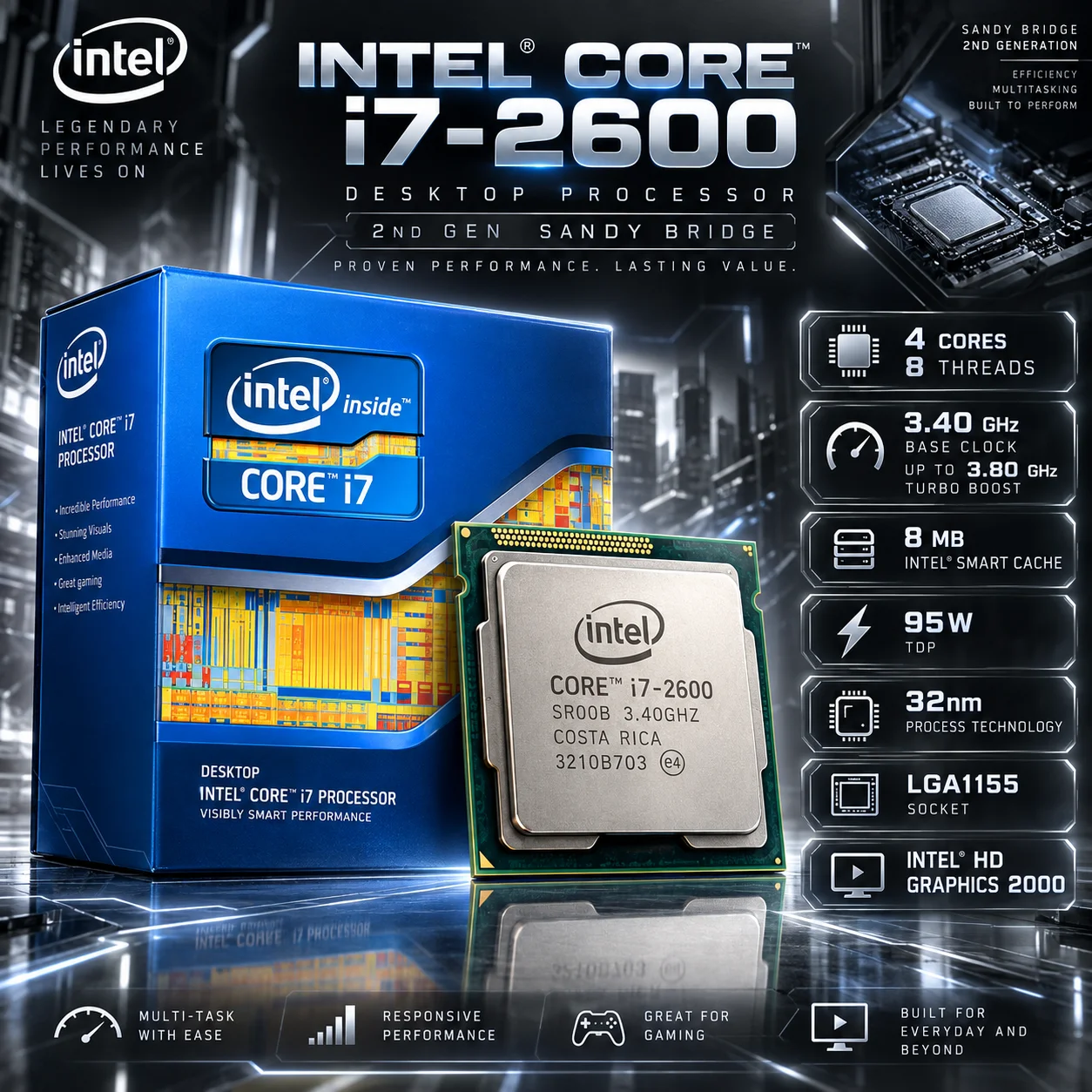
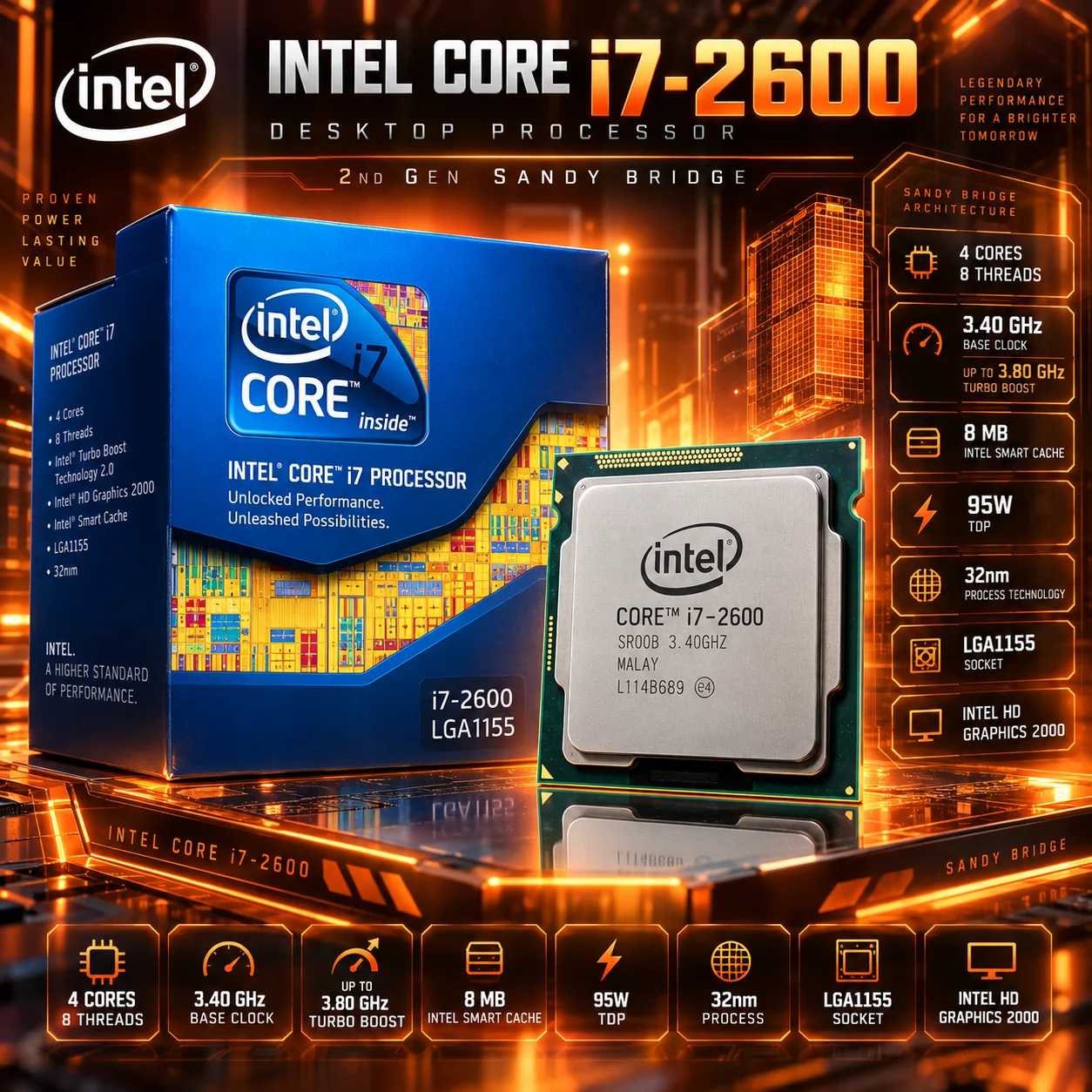
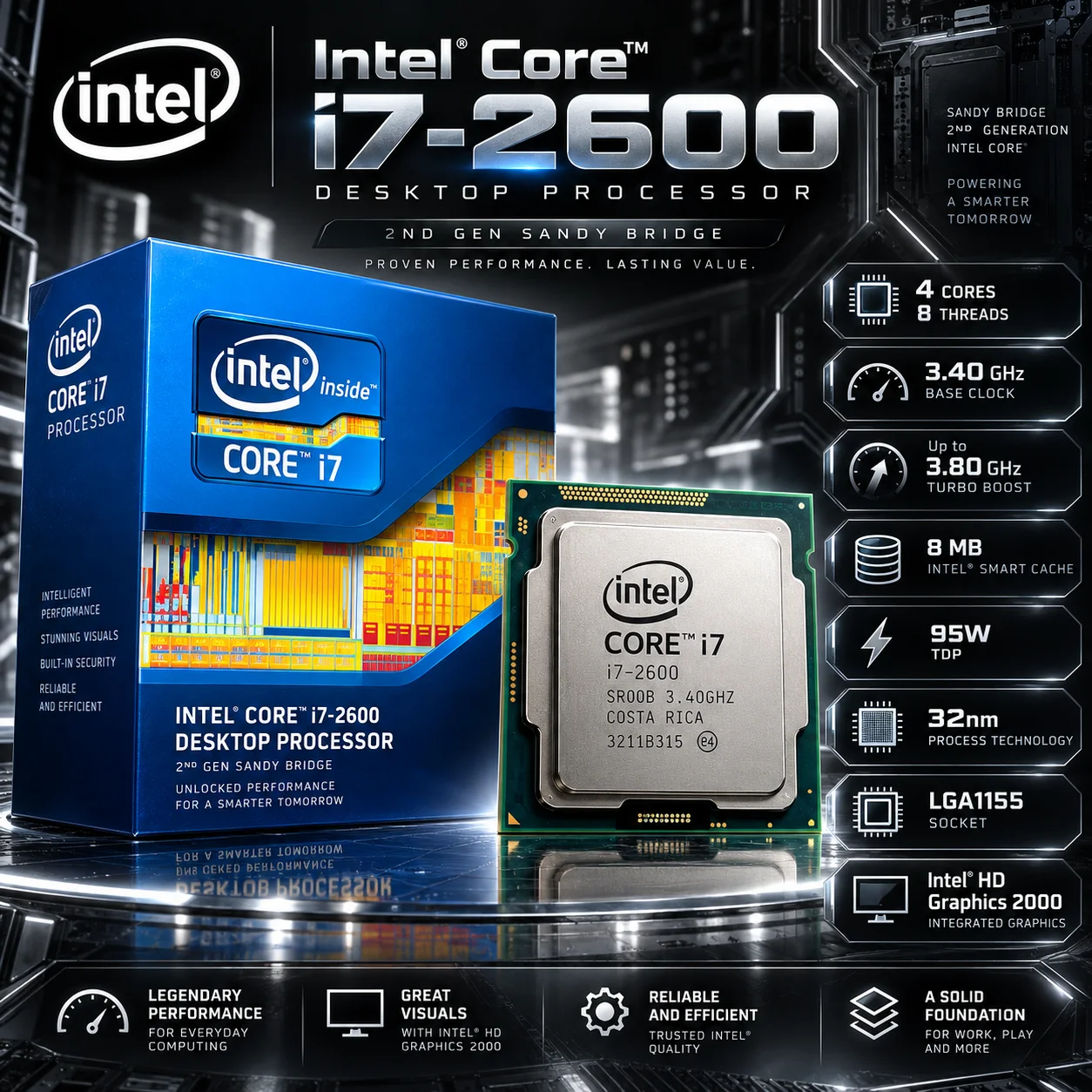
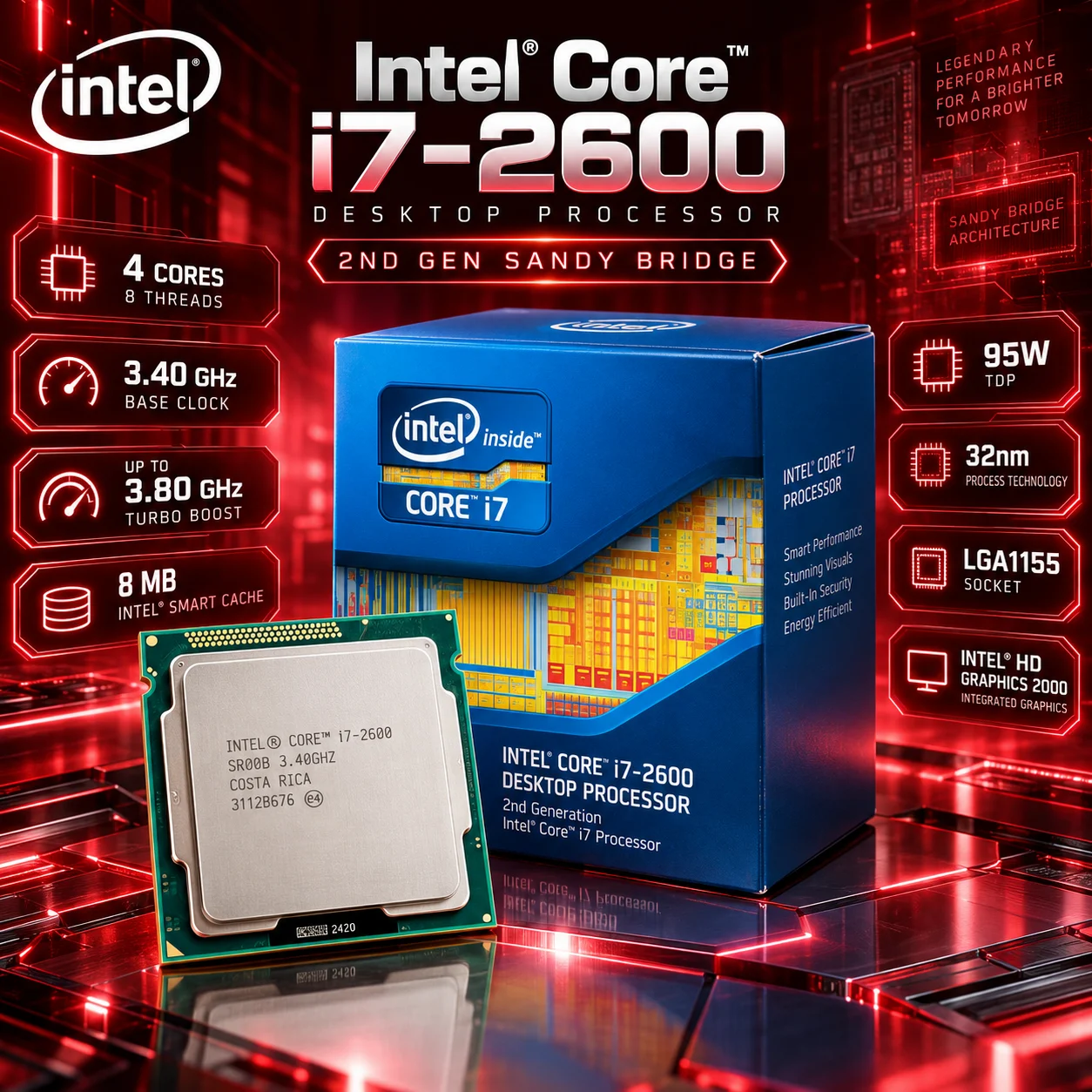
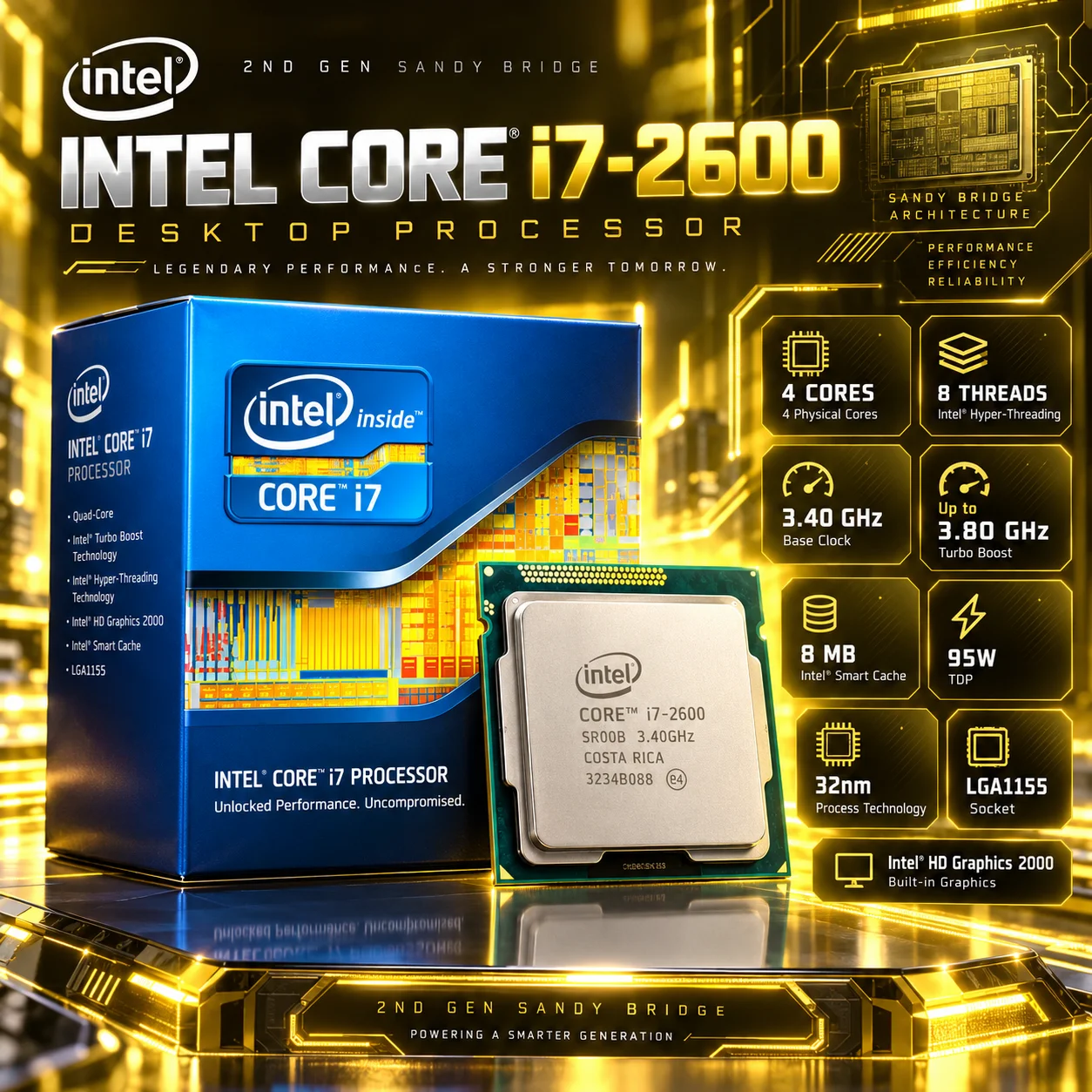
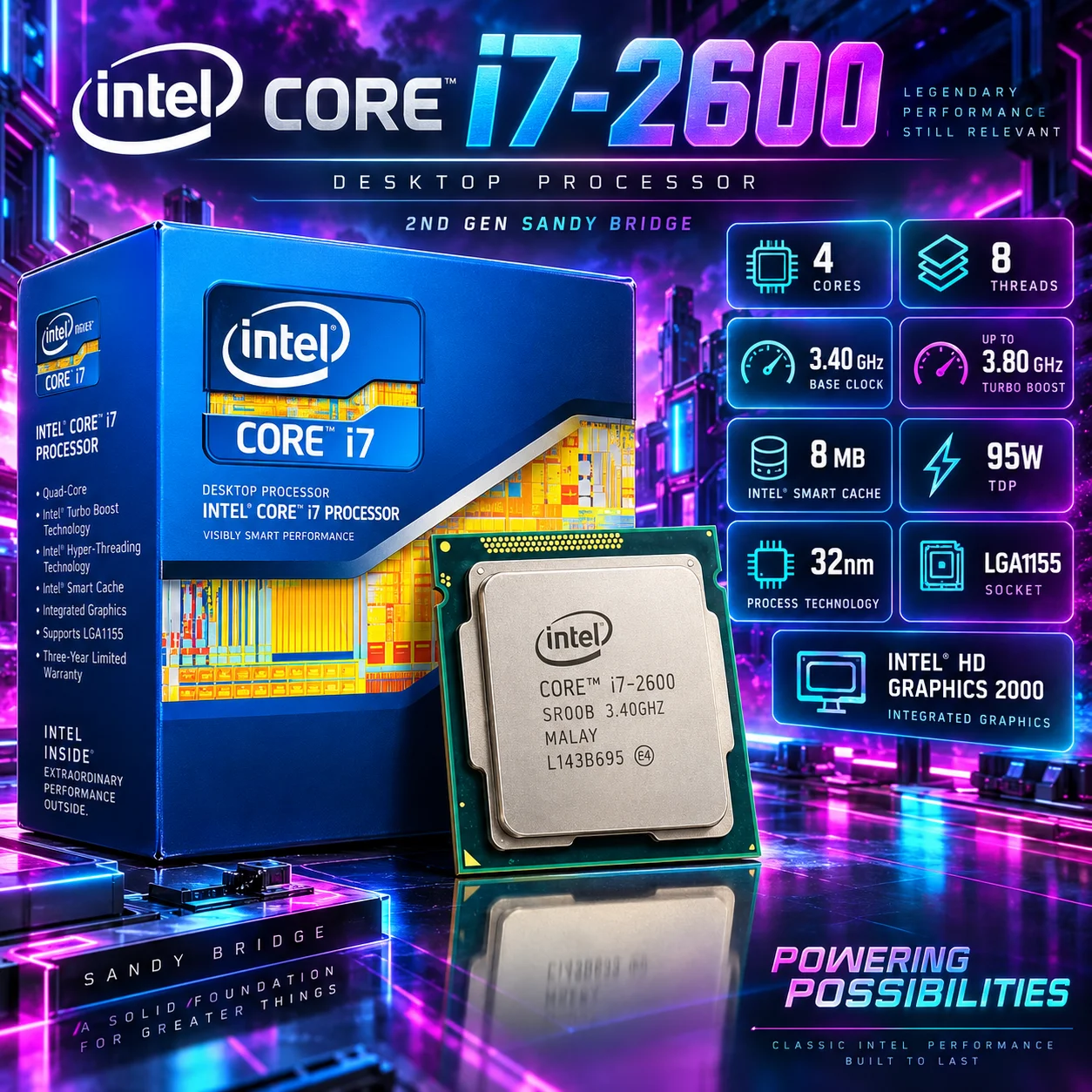
- 4 cores and 8 threads with Intel Hyper-Threading Technology
- 3.40 GHz base frequency with up to 3.80 GHz max turbo frequency
- 8 MB Intel Smart Cache
- Includes Intel HD Graphics 2000
*Approximate regional retail guide prices. Pixahunt is an informational catalog.
CPU Benchmark Scores & Performance Analysis
TESTEDCinebench R23, Geekbench 6, PassMark CPU Mark scores & real-world gaming/office suitability tests.
Technical Specifications
Comprehensive hardware architecture and specifications
General
| Series | Core i7 |
| Model | i7-2600 |
| Cpu Cooler | Not Included |
| Code-Name | Sandy Bridge |
| Generation | 2nd Gen |
| Sockets Supported | LGA1155 |
Performance
| Base Frequency | 3.40 GHz |
| Turbo Frequency Max. | 3.80 GHz |
| Core | 4 |
| Threads | 8 |
| CPU Cache | 8 MB Intel Smart Cache |
| L1 Cache | 64 KB per core |
| L2 Cache | 256 KB per core |
| L3 Cache | 8 MB shared |
| TDP | 95 W |
| Lithography | 32 nm |
| Multiplier | 34.0x |
| Multiplier Unlocked | No |
| Processor Type | Core i7 |
Memory Support
| Memory Max. | 32 GB |
| Memory Type | DDR3 |
| Memory Speed | 1066/1333 |
| Memory Channel | 2 |
| Max Memory Bandwidth | 21 GB/s |
| ECC Memory Supported | No |
Graphics
| Built-in GPU | Yes |
| Processor Graphics | Intel HD Graphics 2000 |
| Graphics Base Frequency | 850 MHz |
| Graphics Dynamic Frequency | 1.35 GHz |
| Graphics Core Count | N/A |
| Max Video Memory | N/A |
| Max Resolution | N/A |
Technical Info
| DirectX Support | N/A |
| OpenGL Support | N/A |
| Approx. Power Consumption | 95 W |
| Compatible Products / Chipsets | Intel 6 Series |
| PCI Express Version | 2.0 |
| PCI Express Lanes | 16 |
| Thermal Solution (MPK / Box) | N/A |
| Max. Operating Temperature (Tjmax) | 72.6°C |
Warranty
| ManufacturingWarranty | Discontinued (Legacy Product) |
Additional Info
| Specialty | Intel Hyper-Threading Technology, Intel Turbo Boost Technology 2.0, Intel Virtualization Technology |
| Others | PC/Client/Tablet |
| Country Of Origin | N/A |
| Made in/ Assemble | N/A |
Editorial Overview & Review
In-depth insights, architecture summary, and performance evaluation
1. Introduction & Overview
When computing historians look back at pivotal moments in x86 microprocessor design, Intel’s 2nd Generation Core architecture—codenamed Sandy Bridge—invariably tops the list. Released on the LGA1155 socket platform, the Intel Core i7-2600 represented a monumental leap forward in consumer desktop processing power. Positioning itself as a flagship workhorse for power users, content creators, and demanding gamers, the i7-2600 offered an optimal balance of raw clock speed and multithreaded efficiency.
Although currently classified as a discontinued legacy product, the i7-2600 retains an iconic status in hardware history. It carved out a reputation for unbelievable longevity, remaining capable for years past its launch window. Today, it serves a distinct niche in the second-hand market: an ultra-budget foundation for entry-level desktop retro-builds, secondary home office PCs, or low-cost home virtualization servers.
2. Architecture, Performance & Key Technologies
Built on a refined 32nm lithography process, the Core i7-2600 introduced Intel’s ring bus architecture, dramatically reducing latency between CPU cores, graphics, and the cache hierarchy. Packed with 4 physical cores and 8 threads thanks to Intel Hyper-Threading Technology, this processor easily outperformed its predecessors in multi-tasking scenarios.
- Clock Frequencies: Out of the box, the chip runs at a commanding 3.40 GHz Base Frequency, with Intel Turbo Boost Technology 2.0 pushing single-core workloads up to a rapid 3.80 GHz.
- Cache Subsystem: Features 8 MB of Intel Smart Cache (shared L3), backed by 256 KB L2 cache per core and 64 KB L1 cache per core, providing rapid access to frequently used instruction sets.
- Memory Support: Dual-channel DDR3 support at 1066/1333 MHz speeds, supporting up to 32 GB of maximum system memory with a peak bandwidth of 21 GB/s.
- Integrated Graphics: Includes built-in Intel HD Graphics 2000, operating at a base frequency of 850 MHz and bursting up to 1.35 GHz dynamically for basic display output and media decode tasks.
- Platform & Power: Designed for Intel 6 Series chipsets via the LGA1155 socket, featuring 16 PCI Express 2.0 lanes and running at a 95 W TDP (Thermal Design Power).
One notable aspect for hardware enthusiasts is the CPU's tuning limits: with a fixed multiplier of 34.0x, the standard i7-2600 is a locked processor (unlike its sibling, the i7-2600K). Consequently, traditional bus/multiplier overclocking is restricted, ensuring standard factory stability within its maximum operating temperature envelope (Tjmax of 72.6°C).
3. Real-World Use Cases
In real-world applications, the Intel Core i7-2600 delivers reliable compute output relative to its generation. Understanding how it operates across common software workloads helps set appropriate expectations:
- Daily Productivity & Multitasking: For standard desktop duty—web browsing with dozens of open tabs, document editing, 1080p video streaming, and office application suites—the i7-2600 performs admirably smoothly. Its 8 threads prevent modern background operating system tasks from causing stuttering.
- Gaming Performance: When paired with a capable entry-level modern discrete graphics card (such as an NVIDIA GTX 1050 Ti or RX 570), the CPU can deliver playable frame rates in classic esports titles (like CS:GO, League of Legends, or Dota 2) and older AAA games at 720p or 1080p resolution. However, modern games requiring instruction sets like AVX2 or heavy single-thread IPC will encounter CPU bottlenecks.
- Home Server & Virtualization: Thanks to integrated hardware features like Intel Virtualization Technology (VT-x / VT-d), the i7-2600 is popular among tinkerers building low-cost home servers, NAS setups (e.g., TrueNAS, Unraid), or running basic virtual machines.
4. Strengths & Potential Considerations
Pros:
- Monolithic Reliability: Legendary architectural stability that has withstood over a decade of continuous operational use.
- Hyper-Threading Power: 4 cores and 8 threads allow for decent multitasking and parallel computation on modern light operating systems.
- High Base Clocks: Strong baseline frequency of 3.40 GHz maintains crisp desktop responsiveness.
- Virtualization Ready: Comprehensive Intel VT-x and VT-d support for homelab experimentation.
- Budget Platform Availability: LGA1155 motherboards and DDR3 RAM remain inexpensive on the secondhand market.
Cons:
- Discontinued Platform: Official manufacturing warranties are no longer active, and modern vendor driver updates have ceased.
- Locked Multiplier: Lacks the easy headroom for enthusiast overclocking found on "K" series processors.
- Outdated Feature Set: Restricted to PCIe 2.0, DDR3 memory (max 1333 MHz officially), and lacks modern instruction sets (AVX2).
- Dated Integrated Graphics: Intel HD Graphics 2000 is incapable of handling modern 3D rendering or high-resolution display outputs without a discrete graphics card.
- Power Efficiency: A 95W TDP is significantly less energy efficient than modern silicon offering far superior performance per watt.
5. Final Buying Verdict
The Intel Core i7-2600 is an undeniable hall-of-famer in silicon engineering. In its prime, it set an industry benchmark that forced the entire desktop CPU landscape to step up its game. Today, as a legacy processor, its primary appeal lies in extreme budget situations.
If you are building a modern main-rig PC for serious content creation or modern AAA gaming, this processor is no longer a viable primary candidate due to architectural age and limited platform I/O. However, if you are looking to assemble a secondary home-office workstation, a budget media center, or an ultra-cheap homelab server on a strict double-digit budget, pulling a used i7-2600 off the secondary market remains a remarkably viable and nostalgic project choice.
OUR RATING CONSENSUS
The overall rating is based on review by our experts & industry benchmark suites
Quick Snapshot
- Overall Rating
- 5.3 / 10
- Brand
- Intel
- Category
- Processor
- Catalog Model
- i7-2600
- Status
- Published
- Release Date
- Oct 10, 2026
Pixahunt Tech Community
Connect with hardware enthusiasts, compare benchmarks, and explore real user setups.
Explore Full Newsfeed →Related Gadgets
- 3.20 GHz Dual-Core Clock Speed for Reliable Everyday Computing
- Intel Hyper-Threading Technology Enabling 4 Parallel Threads
- Built-in Intel HD Graphics for Integrated Display Support
- 2 cores and 4 threads with Intel Hyper-Threading Technology
- 3.10 GHz base processor frequency
- 3 MB Intel Smart Cache
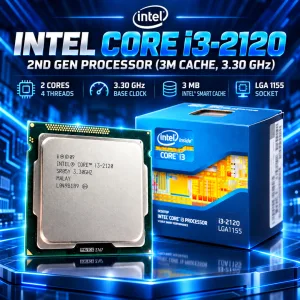
- 2 Cores and 4 Threads with Intel Hyper-Threading Technology
- 3.30 GHz Base Clock Frequency with 3 MB Intel Smart Cache
- Includes Intel HD Graphics 2000 integrated graphics
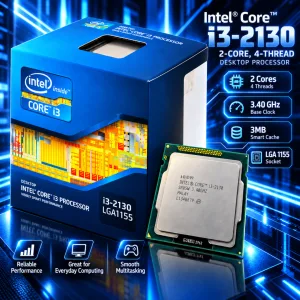
- 2 cores and 4 threads with Intel Hyper-Threading Technology
- 3.40 GHz processor base frequency with 3 MB Intel Smart Cache
- Integrated Intel HD Graphics 2000