

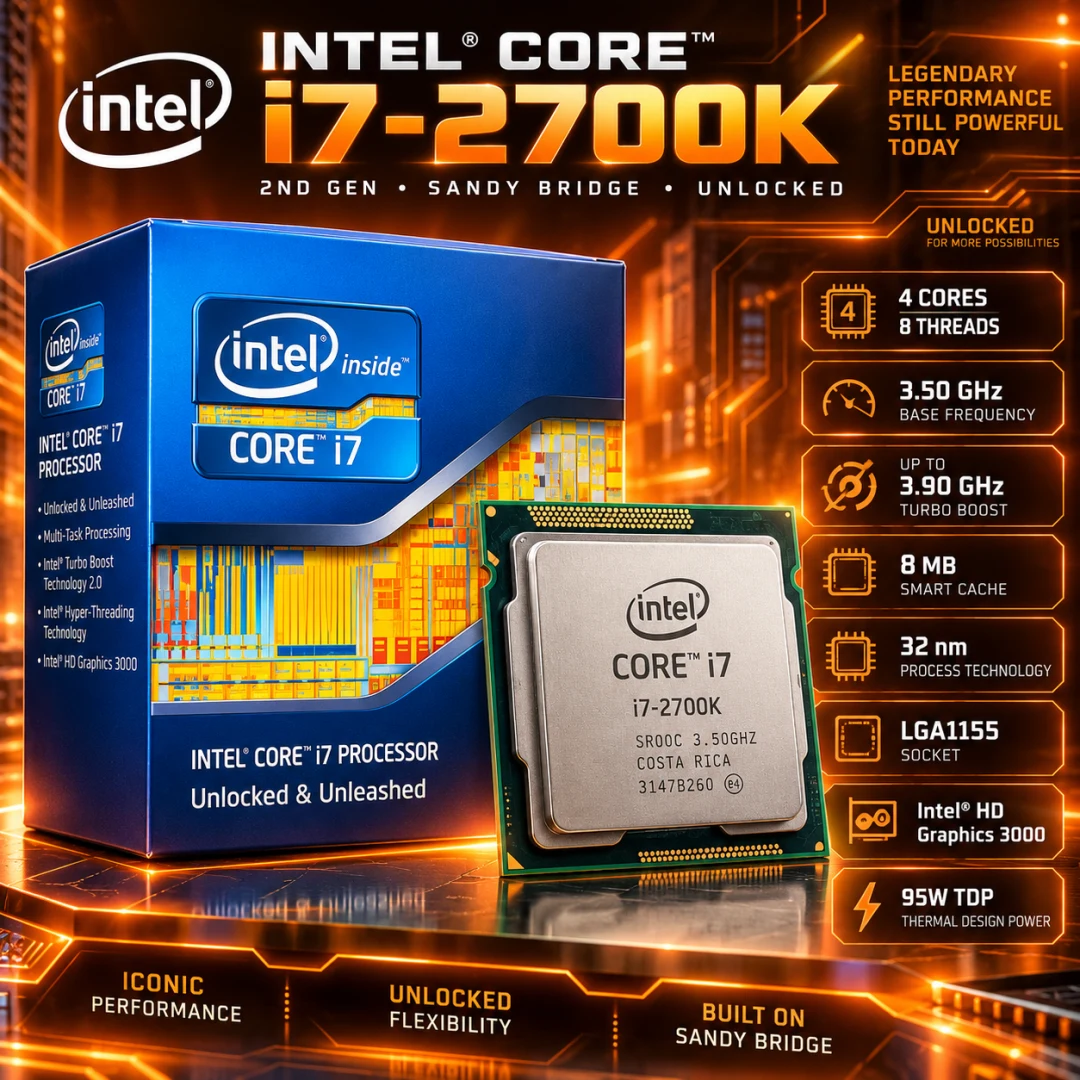
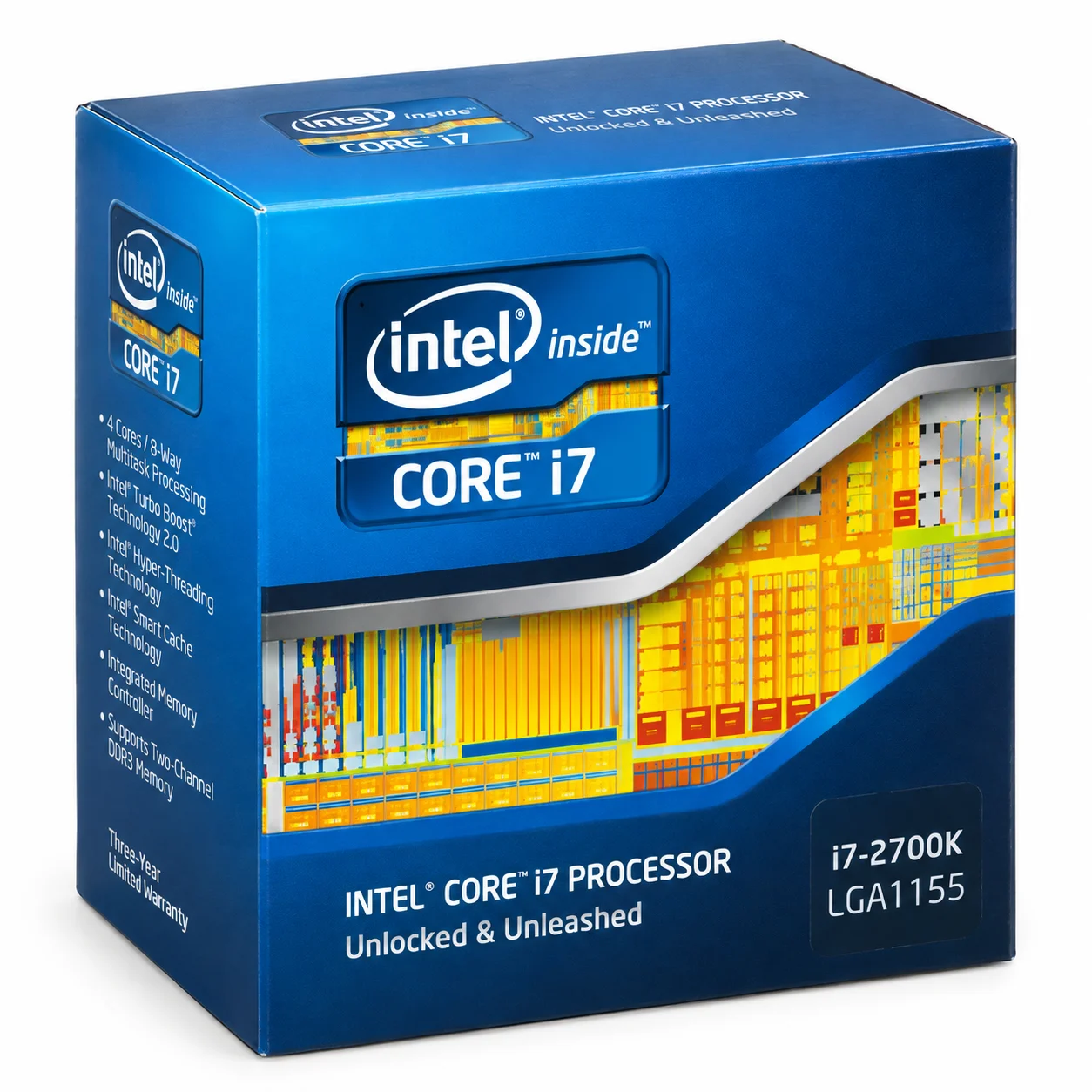
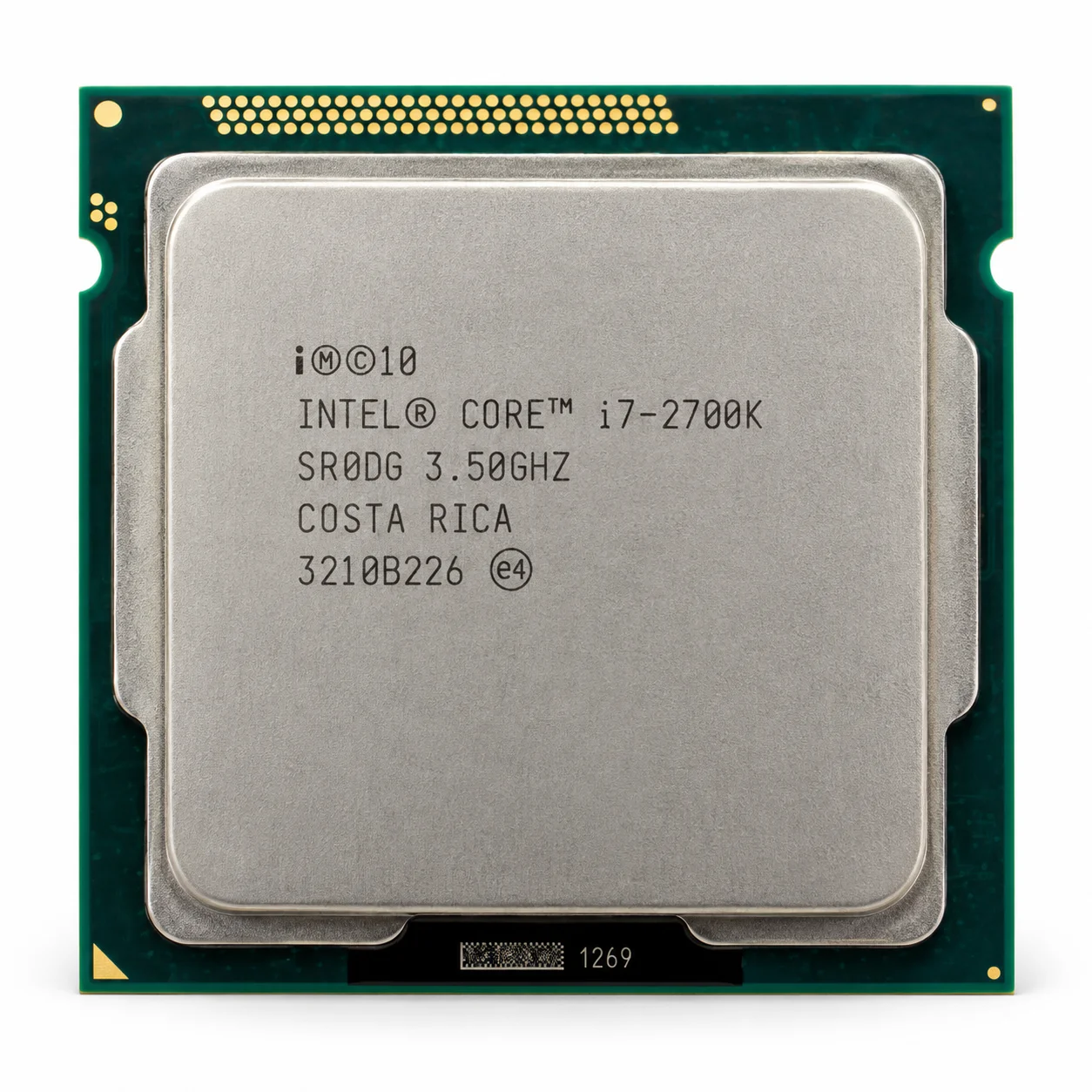
Intel Core i7-2700K Quad-Core 3.5 GHz Desktop Processor
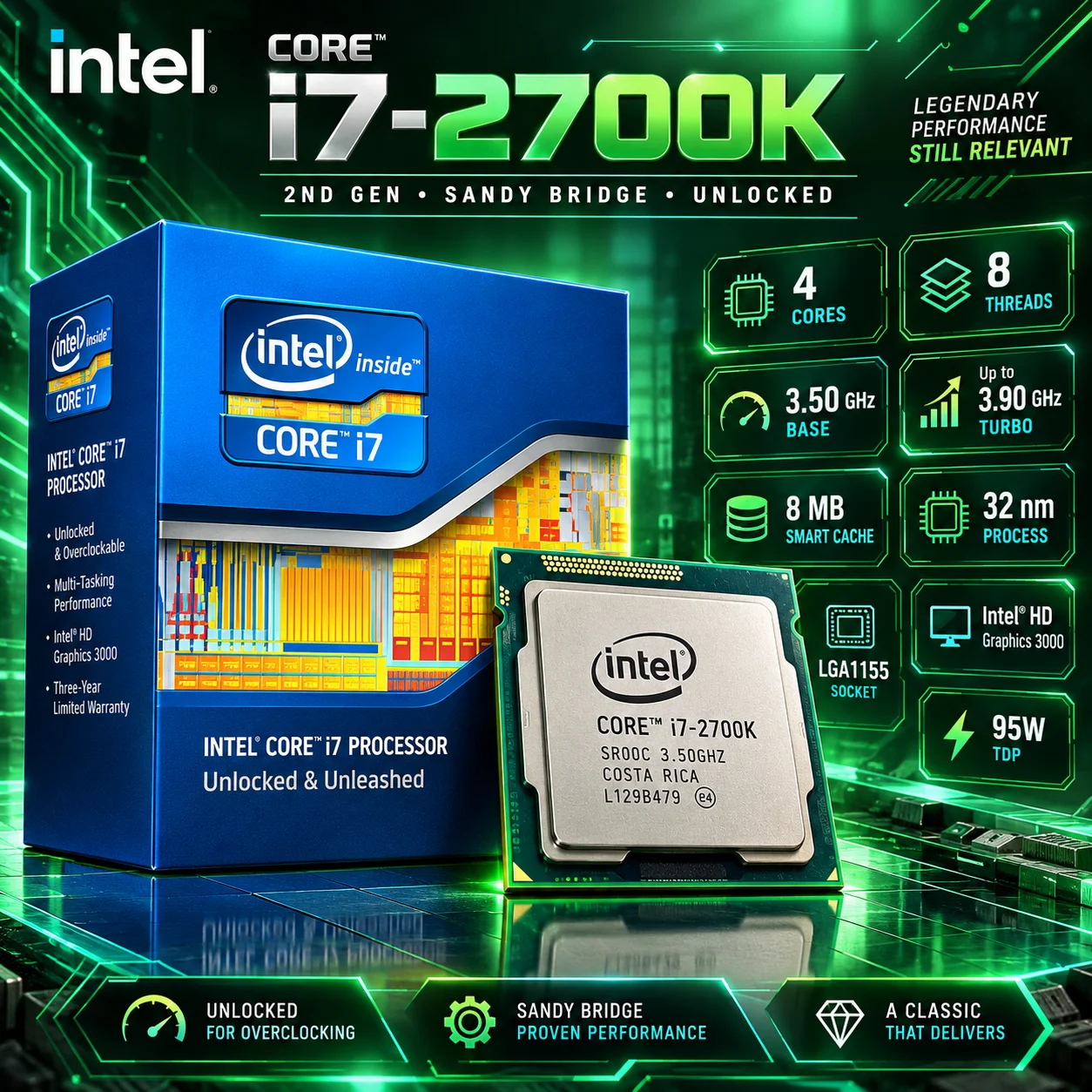
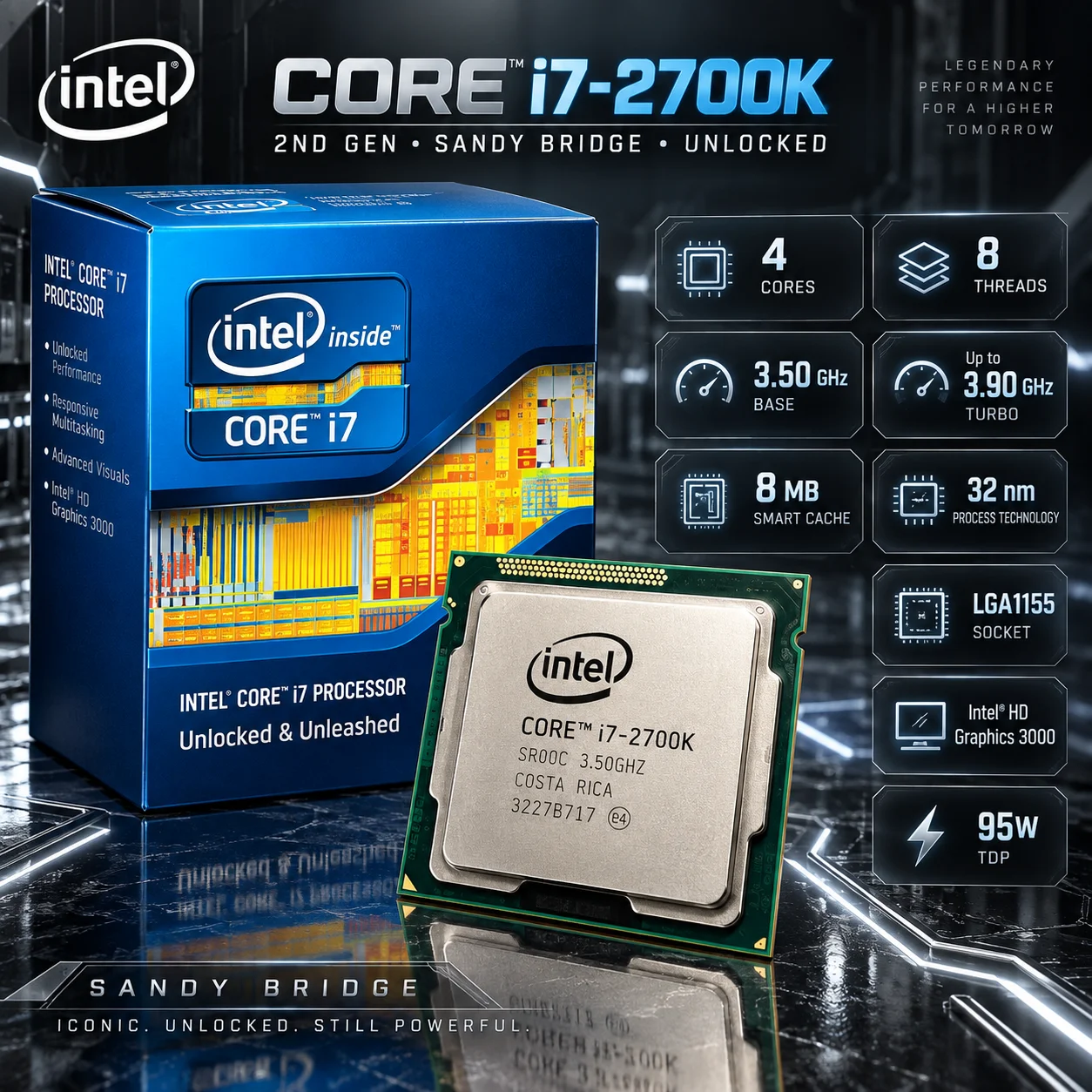
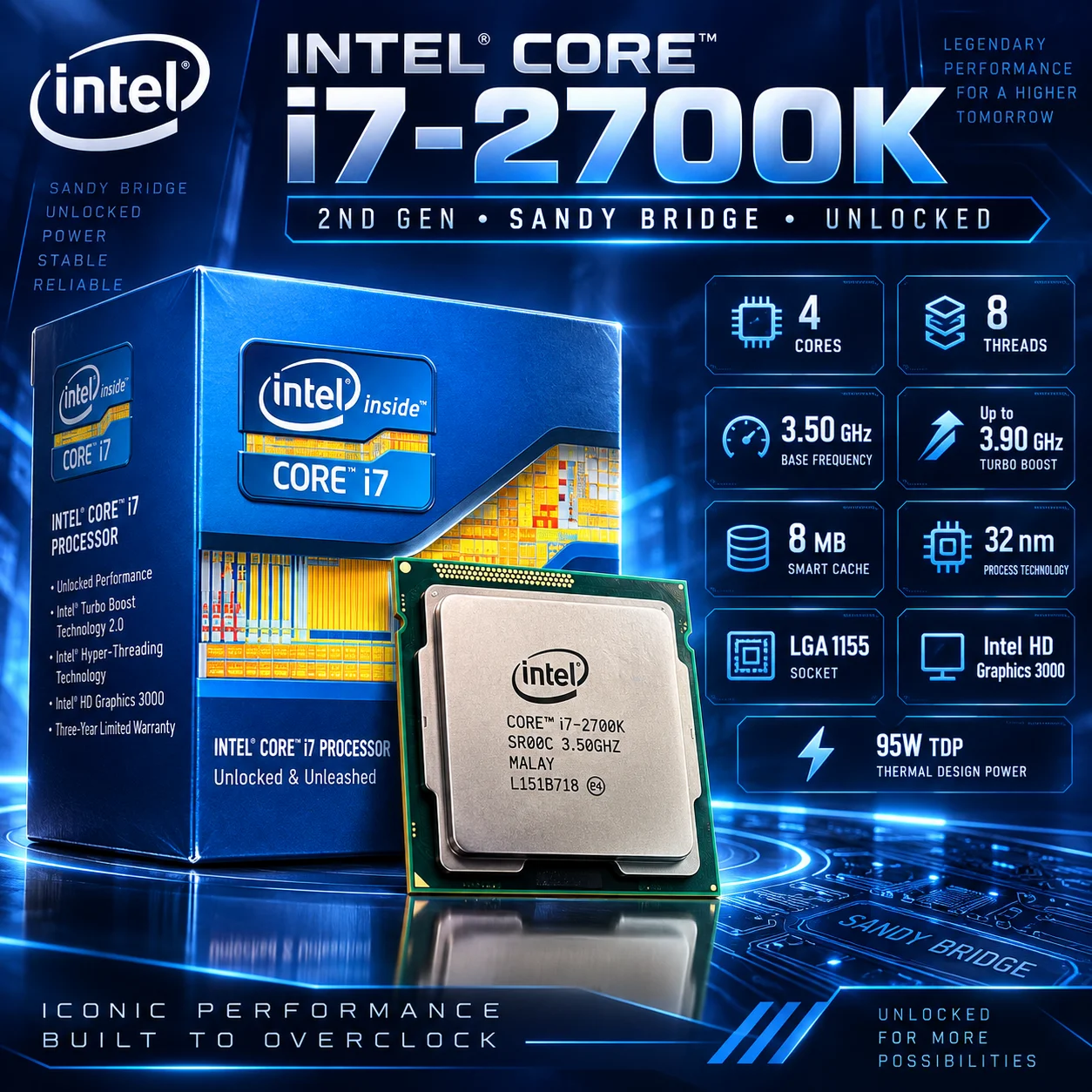
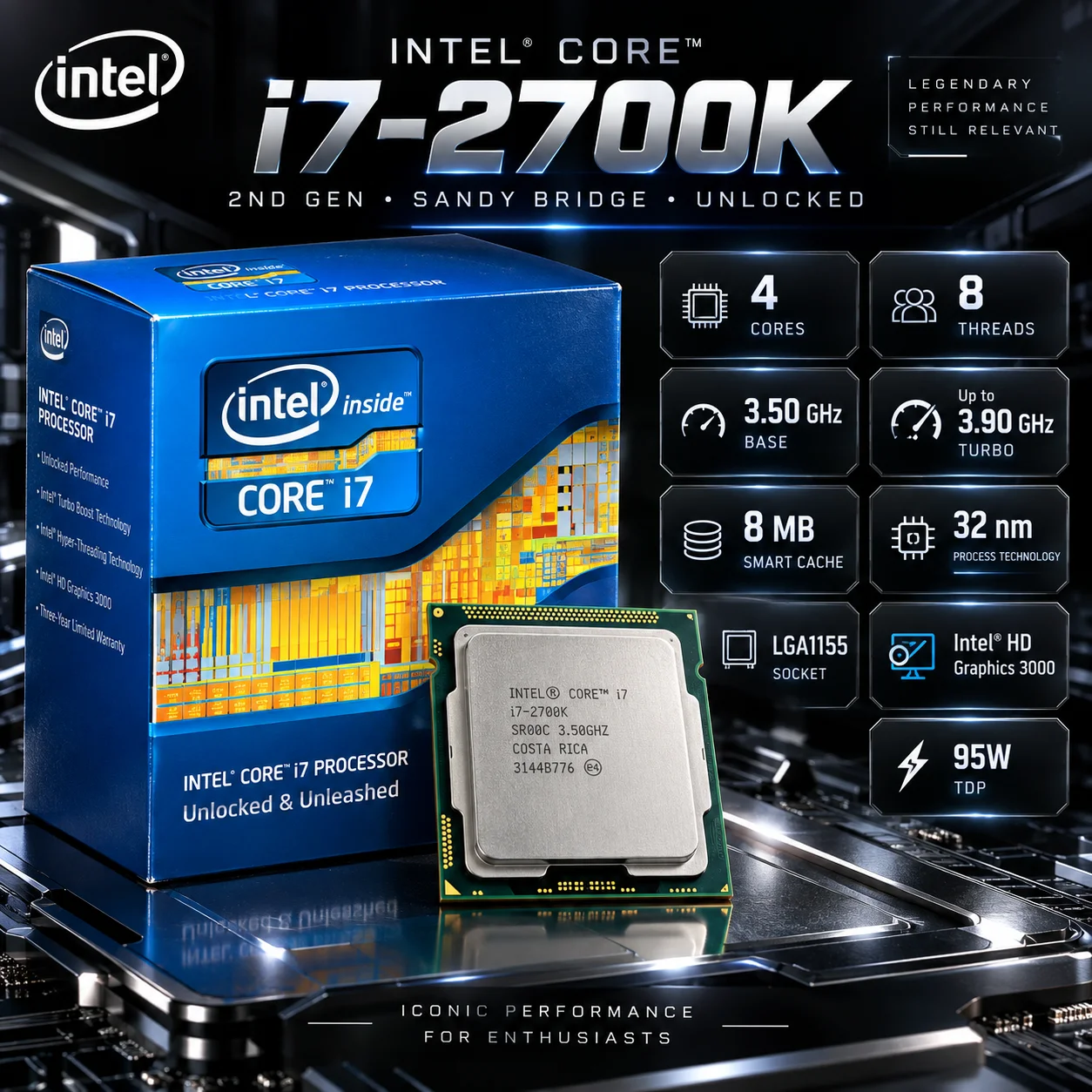
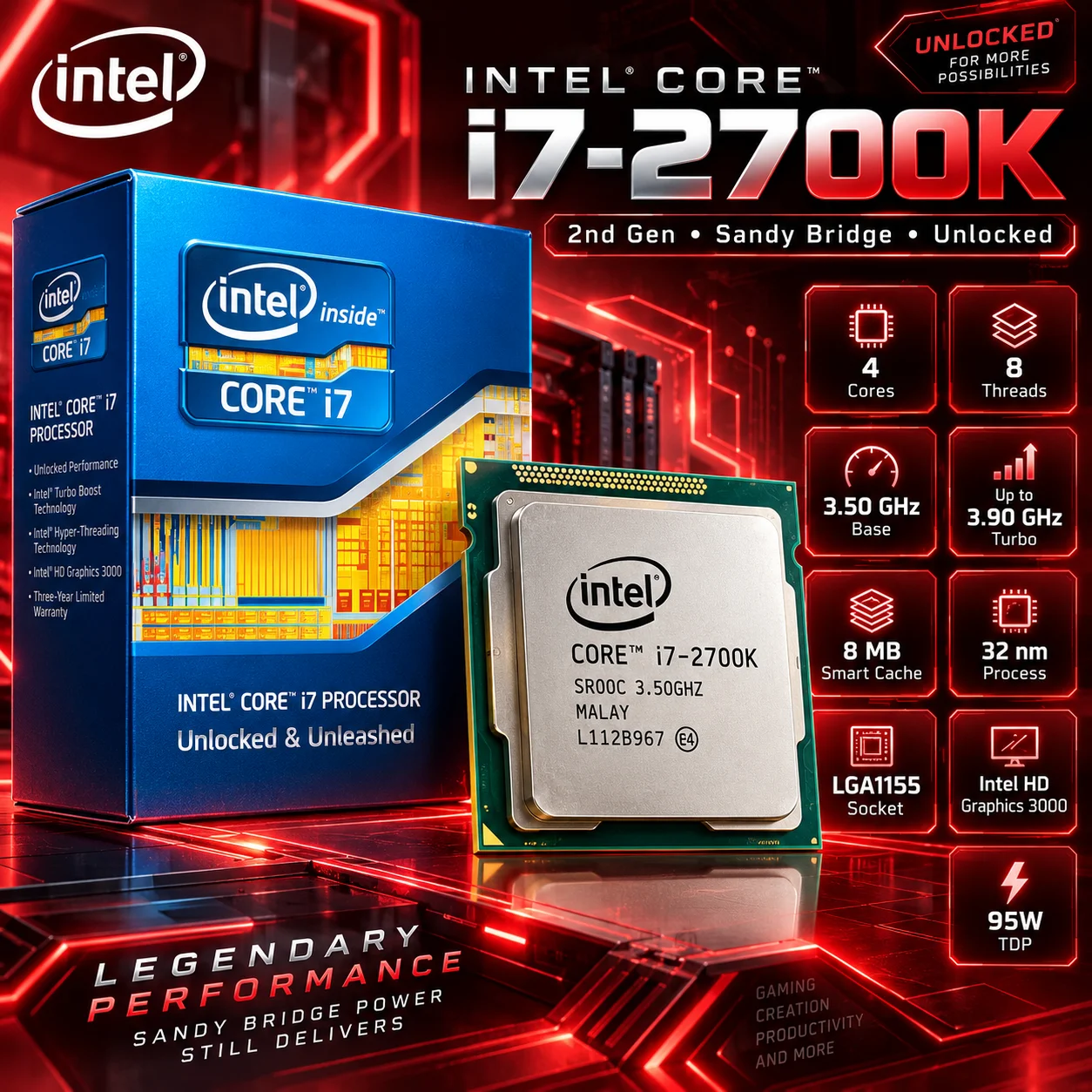
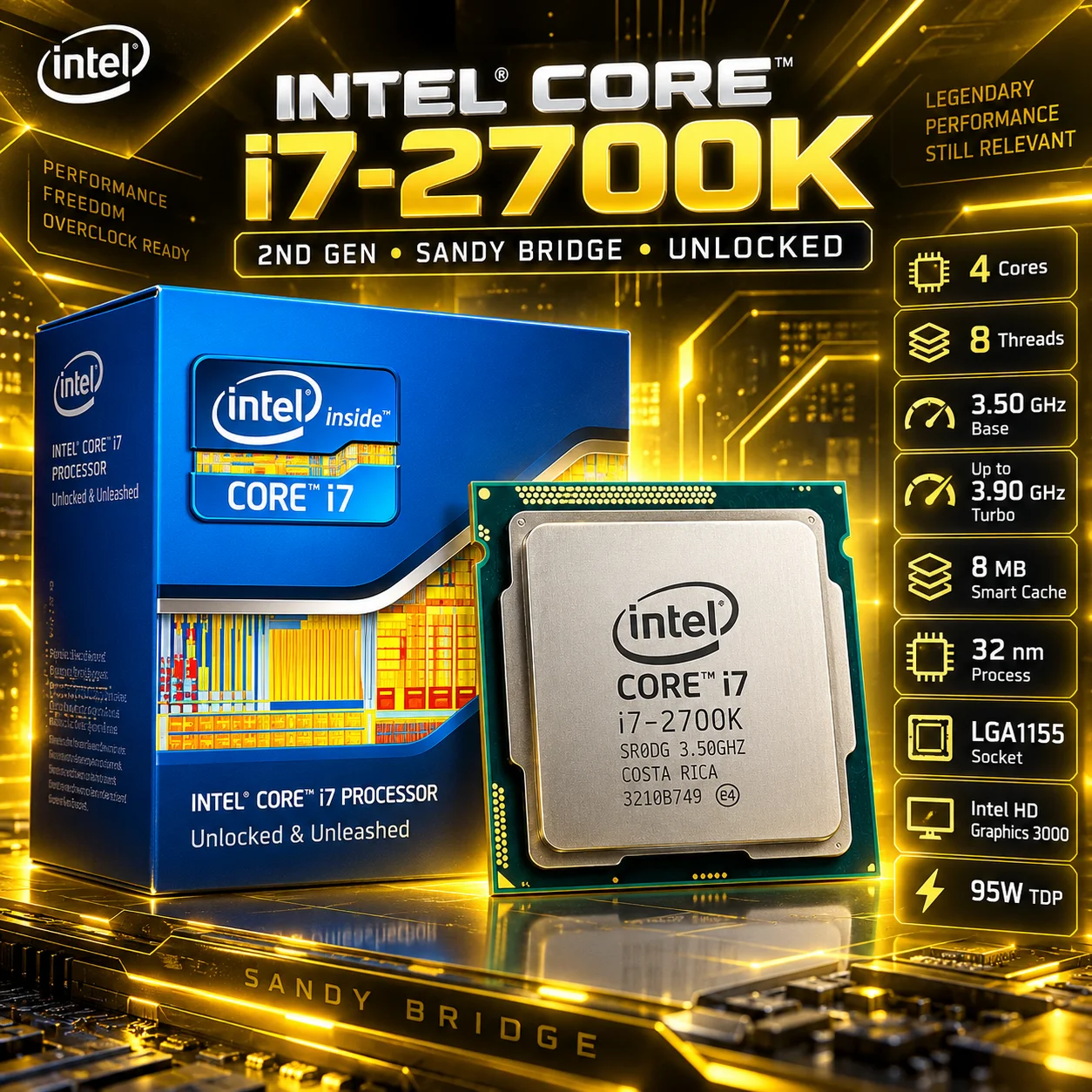
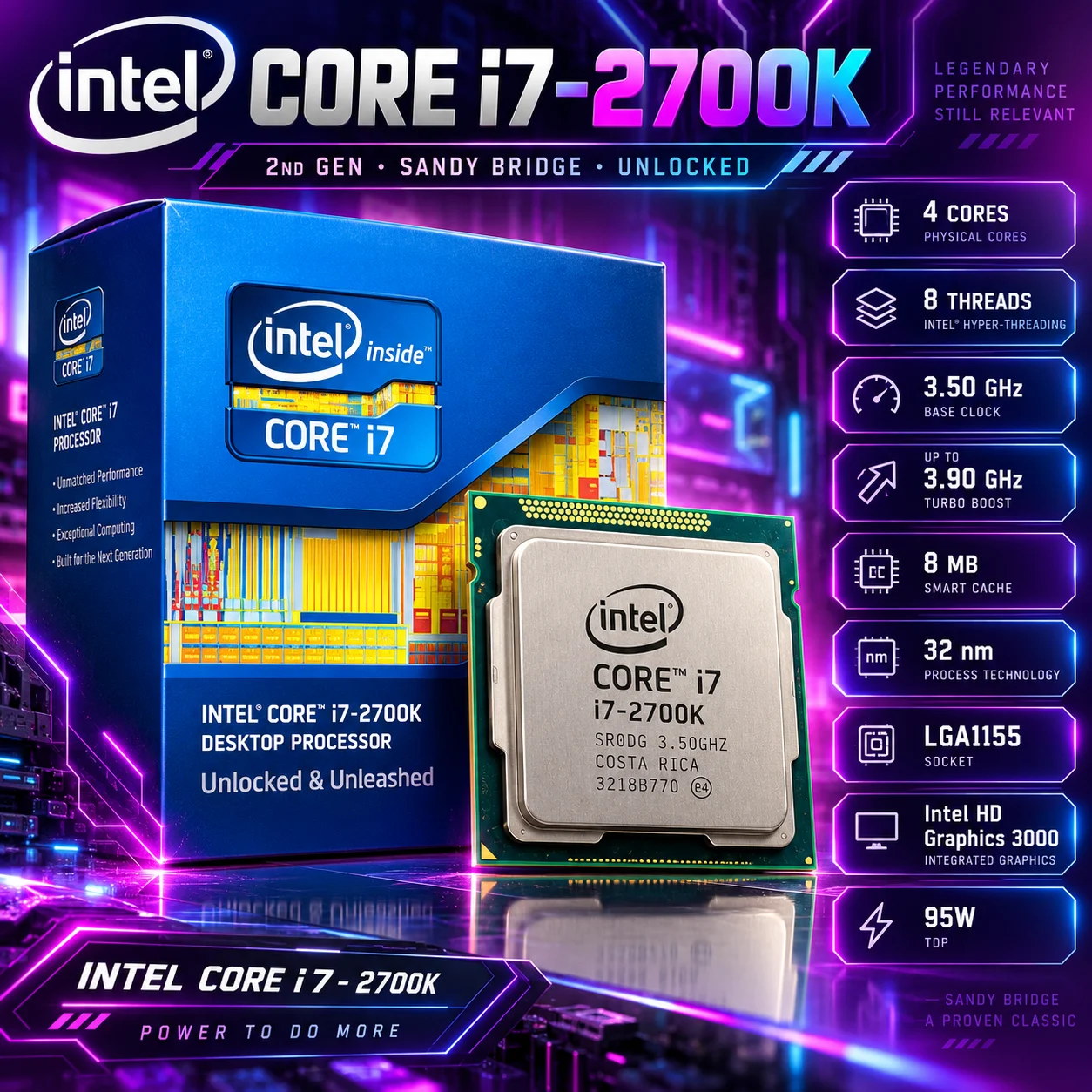
- 4 Cores and 8 Threads with Intel Hyper-Threading Technology
- 3.50 GHz Base Frequency with up to 3.90 GHz Max Turbo Frequency
- Unlocked multiplier for simplified and flexible overclocking
- Includes Intel HD Graphics 3000 integrated graphics solution
*Approximate regional retail guide prices. Pixahunt is an informational catalog.
CPU Benchmark Scores & Performance Analysis
TESTEDCinebench R23, Geekbench 6, PassMark CPU Mark scores & real-world gaming/office suitability tests.
Technical Specifications
Comprehensive hardware architecture and specifications
General
| Series | Core i7 |
| Model | i7-2700K |
| Cpu Cooler | Not Included |
| Code-Name | Sandy Bridge |
| Generation | 2nd Gen |
| Sockets Supported | LGA1155 |
Performance
| Base Frequency | 3.50 GHz |
| Turbo Frequency Max. | 3.90 GHz |
| Core | 4 |
| Threads | 8 |
| CPU Cache | 8 MB L3 Cache |
| L1 Cache | 64 KB per core |
| L2 Cache | 256 KB per core |
| L3 Cache | 8 MB |
| TDP | 95 W |
| Lithography | 32 nm |
| Multiplier | 35.0x |
| Multiplier Unlocked | Yes |
| Processor Type | Core i7 |
Memory Support
| Memory Max. | 32 GB |
| Memory Type | DDR3 |
| Memory Speed | 1066/1333 MT/s |
| Memory Channel | 2 |
| Max Memory Bandwidth | 21 GB/s |
| ECC Memory Supported | No |
Graphics
| Built-in GPU | Yes |
| Processor Graphics | Intel HD Graphics 3000 |
| Graphics Base Frequency | 850 MHz |
| Graphics Dynamic Frequency | 1.35 GHz |
| Graphics Core Count | N/A |
| Max Video Memory | Shared |
| Max Resolution | N/A |
Technical Info
| DirectX Support | 10.1 |
| OpenGL Support | 3.1 |
| Approx. Power Consumption | 95W |
| Compatible Products / Chipsets | Z77, Z75, Q77, H77, Q75, B75, Z68, P67, H67, Q67, B65, H61 |
| PCI Express Version | 2.0 |
| PCI Express Lanes | 16 |
| Thermal Solution (MPK / Box) | Not Included |
| Max. Operating Temperature (Tjmax) | 72.6°C |
Warranty
| Manufacturing Warranty | 3 Years Limited |
Additional Info
| Specialty | Intel Hyper-Threading Technology, Intel Turbo Boost 2.0, Unlocked Multiplier |
| Others | Virtualization (VT-x), AES-NI, AVX instruction set |
| Country Of Origin | USA |
| Made in/ Assemble | Costa Rica / Malaysia |
Editorial Overview & Review
In-depth insights, architecture summary, and performance evaluation
Introduction & Overview
When Intel originally unleashed its 2nd Generation Core architecture—famously codenamed Sandy Bridge—it fundamentally shifted the desktop CPU landscape. At the very pinnacle of that lineup sat the Intel Core i7-2700K. Positioned squarely at enthusiasts, high-end gamers, and power users, the i7-2700K was designed to deliver uncompromised computational muscle right out of the box while offering an unlocked multiplier for those looking to push silicon beyond factory specifications. Built on a robust 32nm lithography process and utilizing the widely adopted LGA1155 socket, this processor quickly established itself as a legendary piece of consumer tech hardware that defined an era of desktop computing.
Architecture, Performance & Key Technologies
Beneath the metal heat spreader lies a quad-core layout enhanced by Intel Hyper-Threading Technology, yielding a total of 8 processing threads to handle heavy parallel workloads effortlessly. Operating at a solid base frequency of 3.50 GHz, the chip utilizes Intel Turbo Boost 2.0 to dynamically scale speeds up to 3.90 GHz when thermal and power headrooms permit.
- Cache Architecture: Equipped with an 8MB L3 Smart Cache, alongside 256 KB of L2 cache and 64 KB of L1 cache per core, ensuring low-latency data access.
- Unlocked Multiplier: The "K" designation signifies that the multiplier is fully unlocked (starting at 35.0x), serving as an open invitation for overclockers to extract even higher clock speeds.
- Integrated Graphics: Features Intel HD Graphics 3000, operating at a base frequency of 850 MHz and scaling up to a dynamic 1.35 GHz for basic display outputs and hardware-accelerated media tasks.
- Instruction Sets & Security: Includes advanced extensions like AVX (Advanced Vector Extensions) and AES-NI for accelerated encryption, alongside Intel Virtualization Technology (VT-x).
With a Thermal Design Power (TDP) of 95W, the processor maintains an efficient balance between raw output and power consumption, though enthusiasts pairing it with demanding overclocks will certainly want to invest in a robust aftermarket CPU cooler, as none is included in the box.
Real-World Use Cases
In the real world, the Intel Core i7-2700K shines as a phenomenal all-rounder for its era. For daily productivity, multitasking between heavy web applications, office suites, and background utilities is seamless, thanks to the combination of four physical cores and eight threads.
Content creators and media professionals benefit significantly from the 8MB L3 cache and AVX instruction set, which accelerate video transcoding, rendering tasks, and photo editing workflows. Meanwhile, gamers find that the strong single-threaded IPC (Instructions Per Clock) of the Sandy Bridge architecture provides stable, high-framerate gaming experiences, especially when paired with a capable discrete graphics card communicating over the processor's 16 PCI Express 2.0 lanes.
Strengths & Potential Considerations
Every piece of hardware has its high points and limitations when evaluated through a modern lens:
- Strengths: Legendary overclocking headroom thanks to the unlocked multiplier; robust quad-core/eight-thread performance; wide compatibility with a plethora of motherboard chipsets (such as Z68, Z77, and P67); reliable memory support for dual-channel DDR3 configurations up to 32 GB.
- Potential Considerations: Native support is capped at PCIe 2.0 and DDR3 memory; integrated graphics are limited to DirectX 10.1 and OpenGL 3.1; lacks modern instruction sets found in much newer generations; thermal limits (Tjmax of 72.6°C) mean adequate cooling is mandatory for aggressive tuning.
Final Buying Verdict
The Intel Core i7-2700K remains an iconic milestone in CPU engineering. For retro-hardware enthusiasts, builders putting together a high-value budget rig using legacy parts, or hobbyists experimenting with extreme overclocking, this processor represents a masterclass in longevity and durable silicon design. While modern entry-level processors easily surpass it in efficiency and feature sets, the i7-2700K holds a revered spot in tech history as a chip that punched well above its weight class and delivered years of faithful service to the PC enthusiast community.
OUR RATING CONSENSUS
The overall rating is based on review by our experts & industry benchmark suites
Quick Snapshot
- Overall Rating
- 5.1 / 10
- Brand
- Intel
- Category
- Processor
- Catalog Model
- i7-2700K
- Status
- Published
Pixahunt Tech Community
Connect with hardware enthusiasts, compare benchmarks, and explore real user setups.
Explore Full Newsfeed →Related Gadgets
- 3.20 GHz Dual-Core Clock Speed for Reliable Everyday Computing
- Intel Hyper-Threading Technology Enabling 4 Parallel Threads
- Built-in Intel HD Graphics for Integrated Display Support
- 2 cores and 4 threads with Intel Hyper-Threading Technology
- 3.10 GHz base processor frequency
- 3 MB Intel Smart Cache
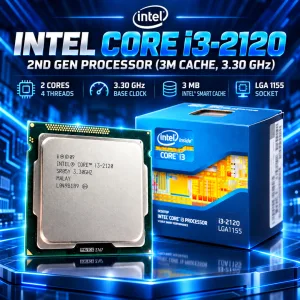
- 2 Cores and 4 Threads with Intel Hyper-Threading Technology
- 3.30 GHz Base Clock Frequency with 3 MB Intel Smart Cache
- Includes Intel HD Graphics 2000 integrated graphics
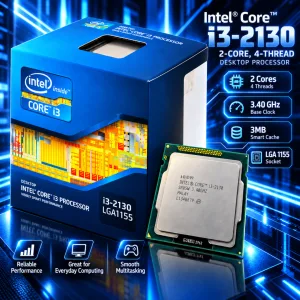
- 2 cores and 4 threads with Intel Hyper-Threading Technology
- 3.40 GHz processor base frequency with 3 MB Intel Smart Cache
- Integrated Intel HD Graphics 2000