

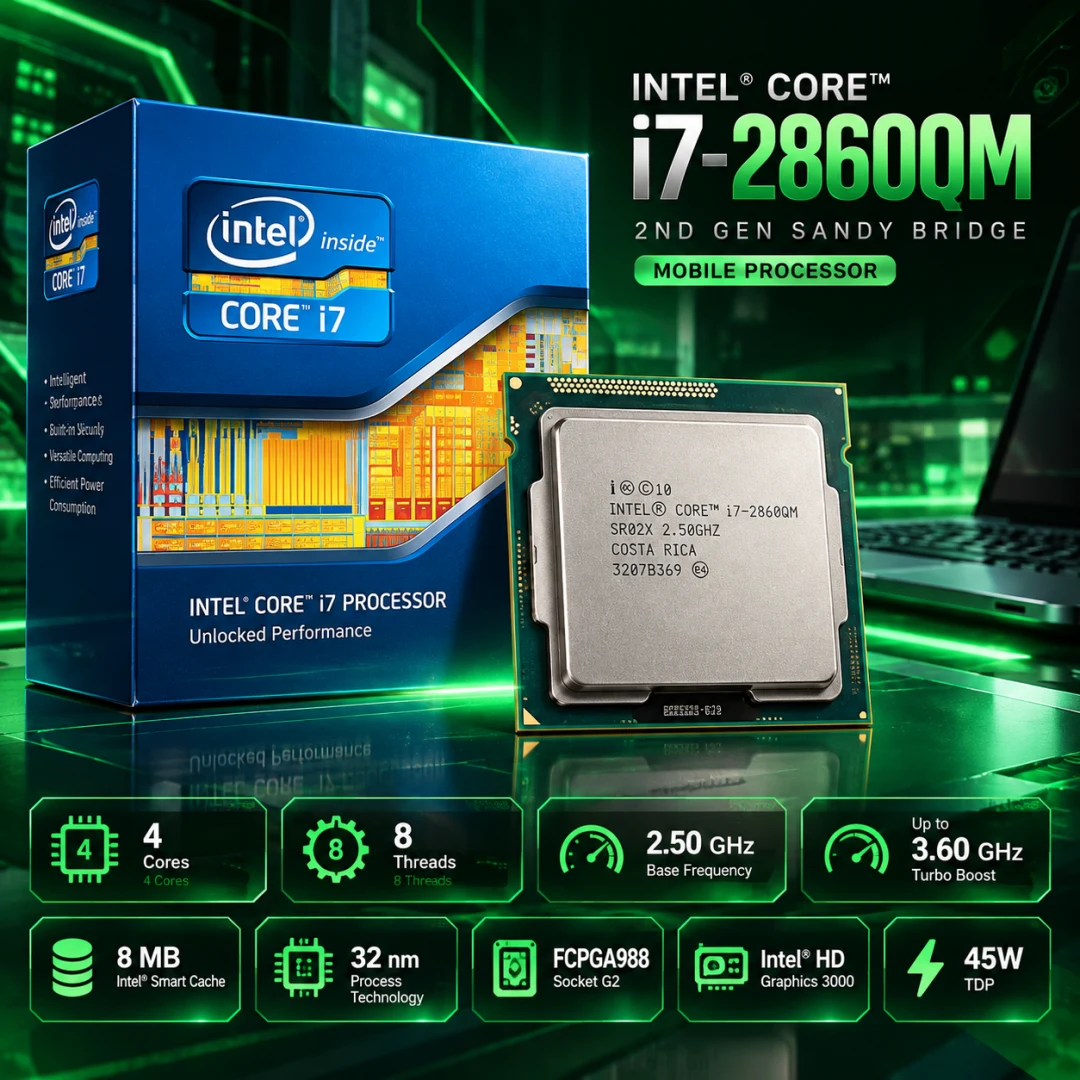
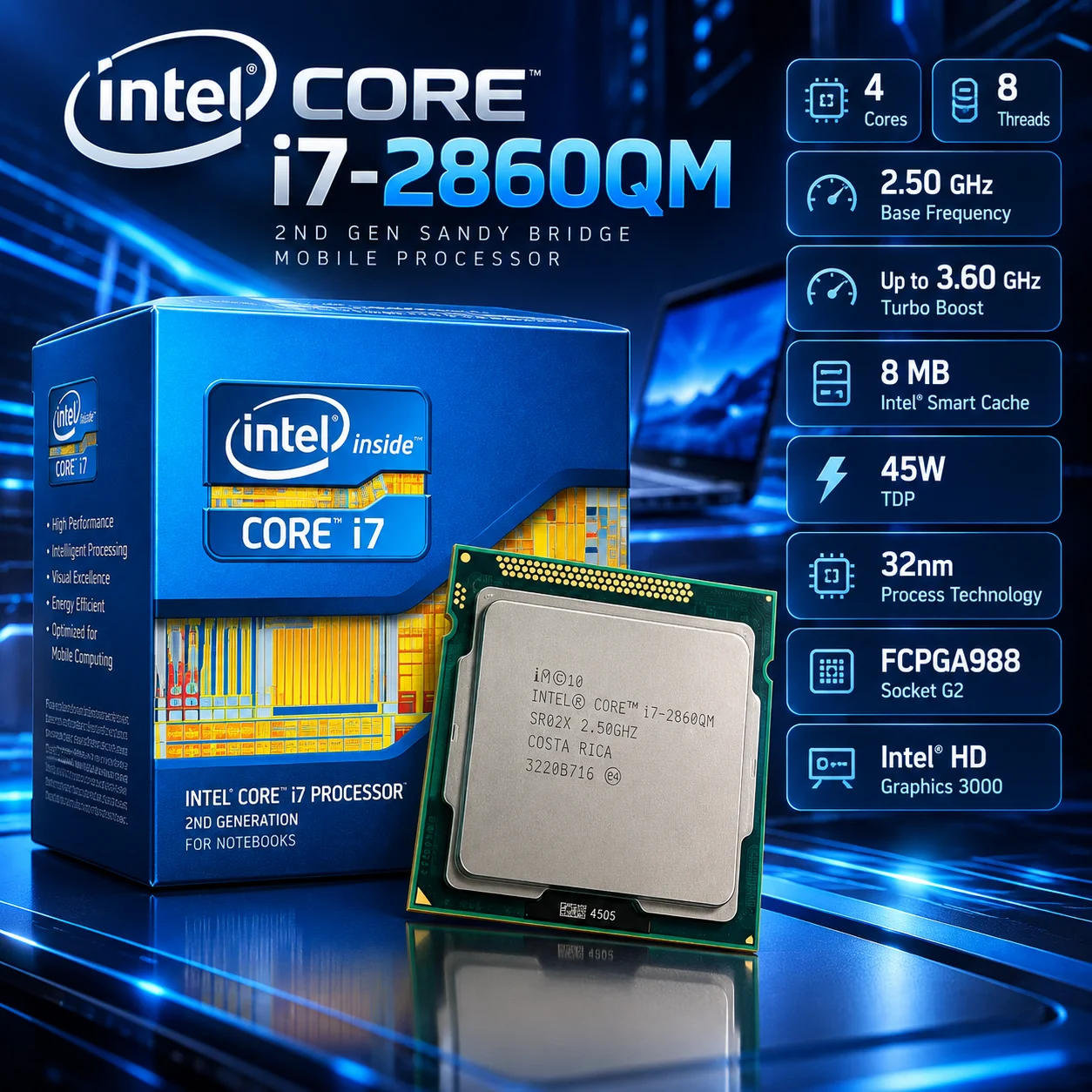
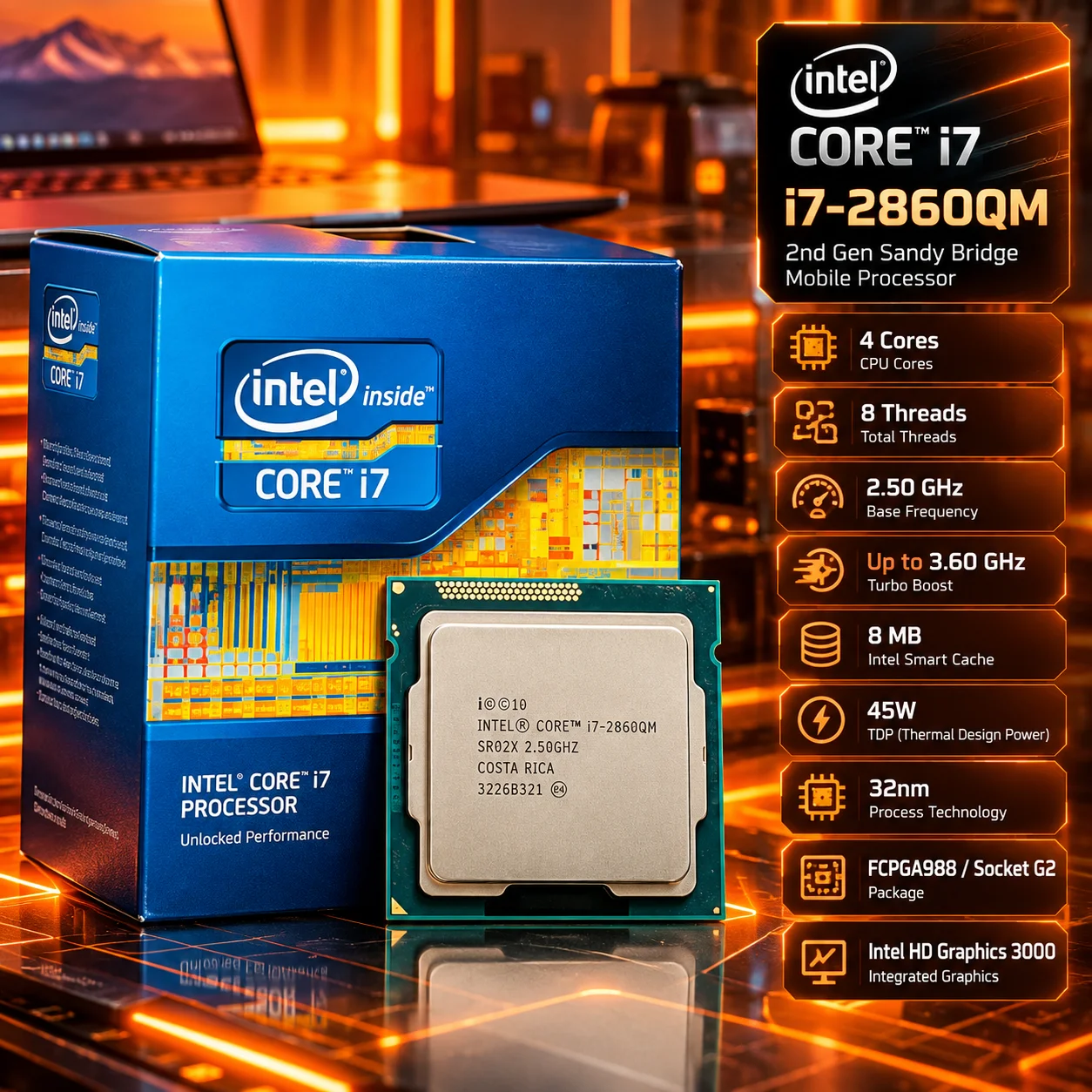
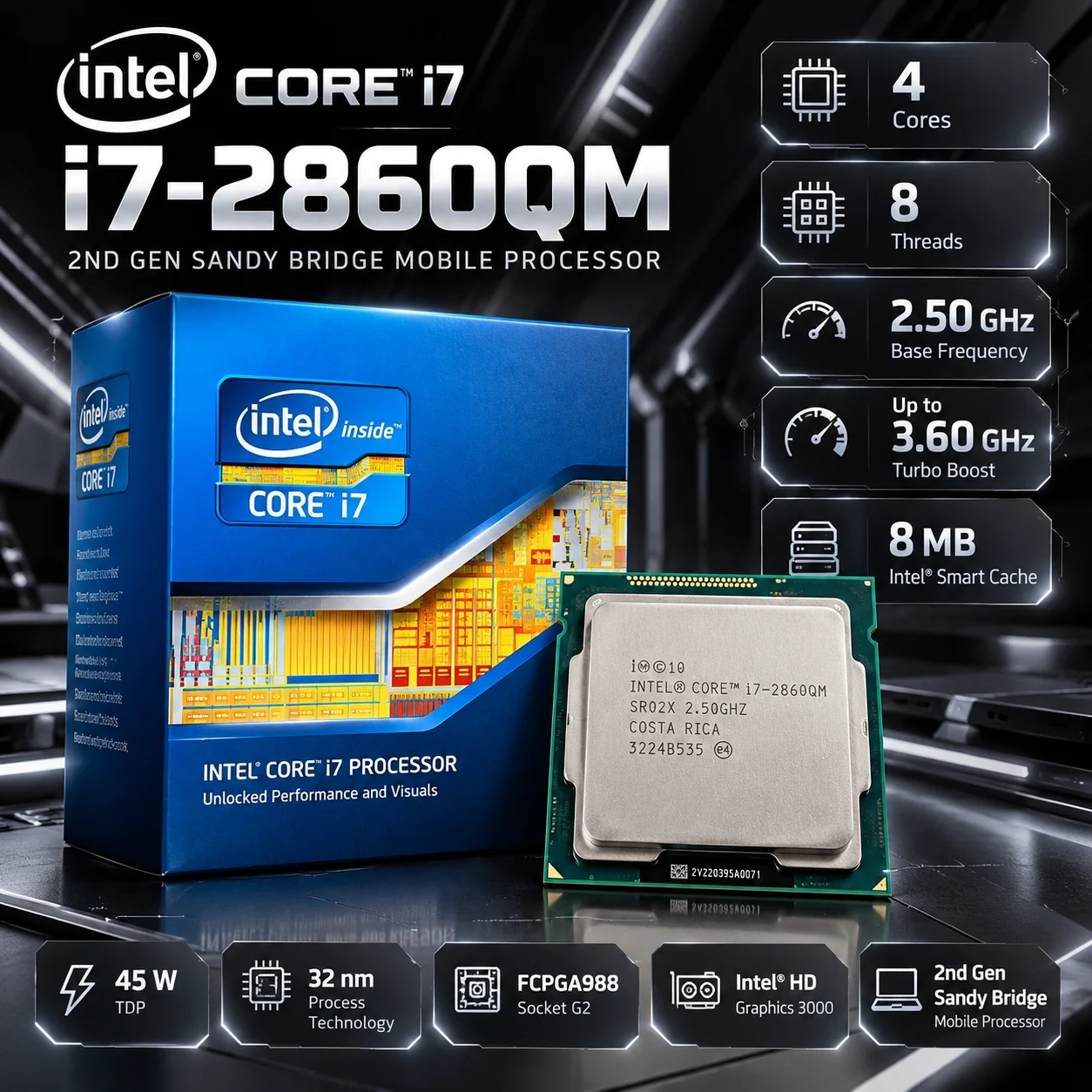
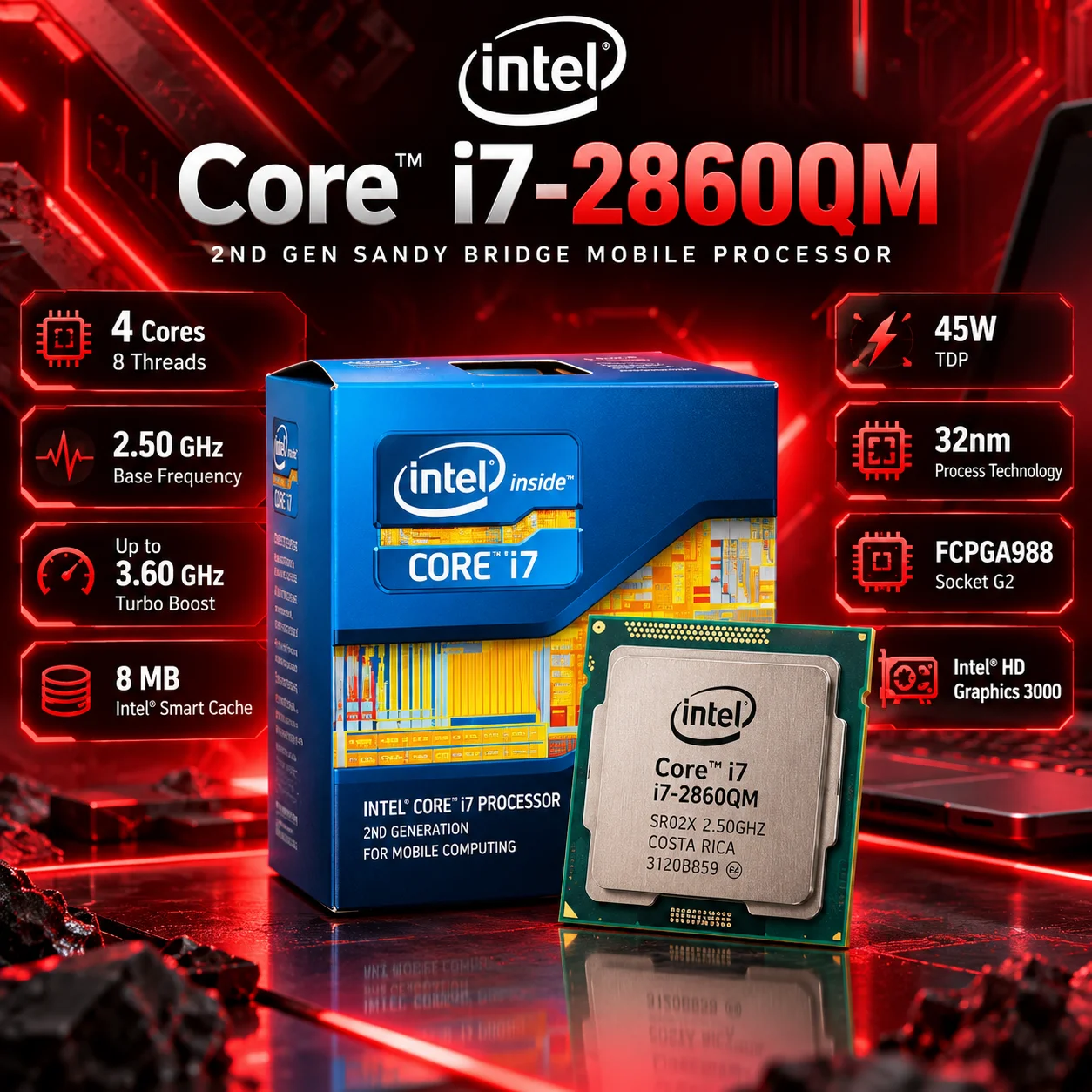
Intel Core i7-2860QM 4-Core, 8-Thread Mobile Processor
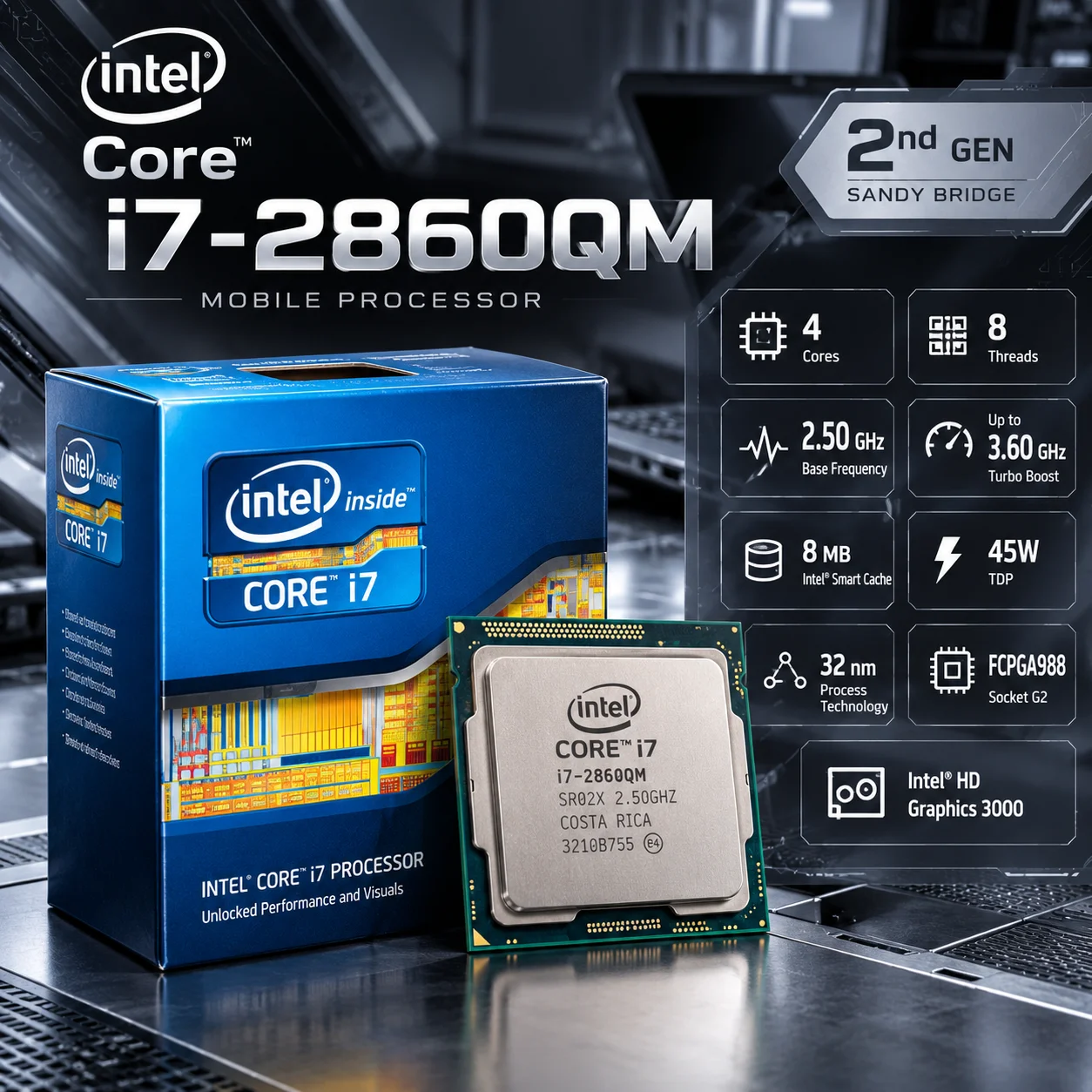
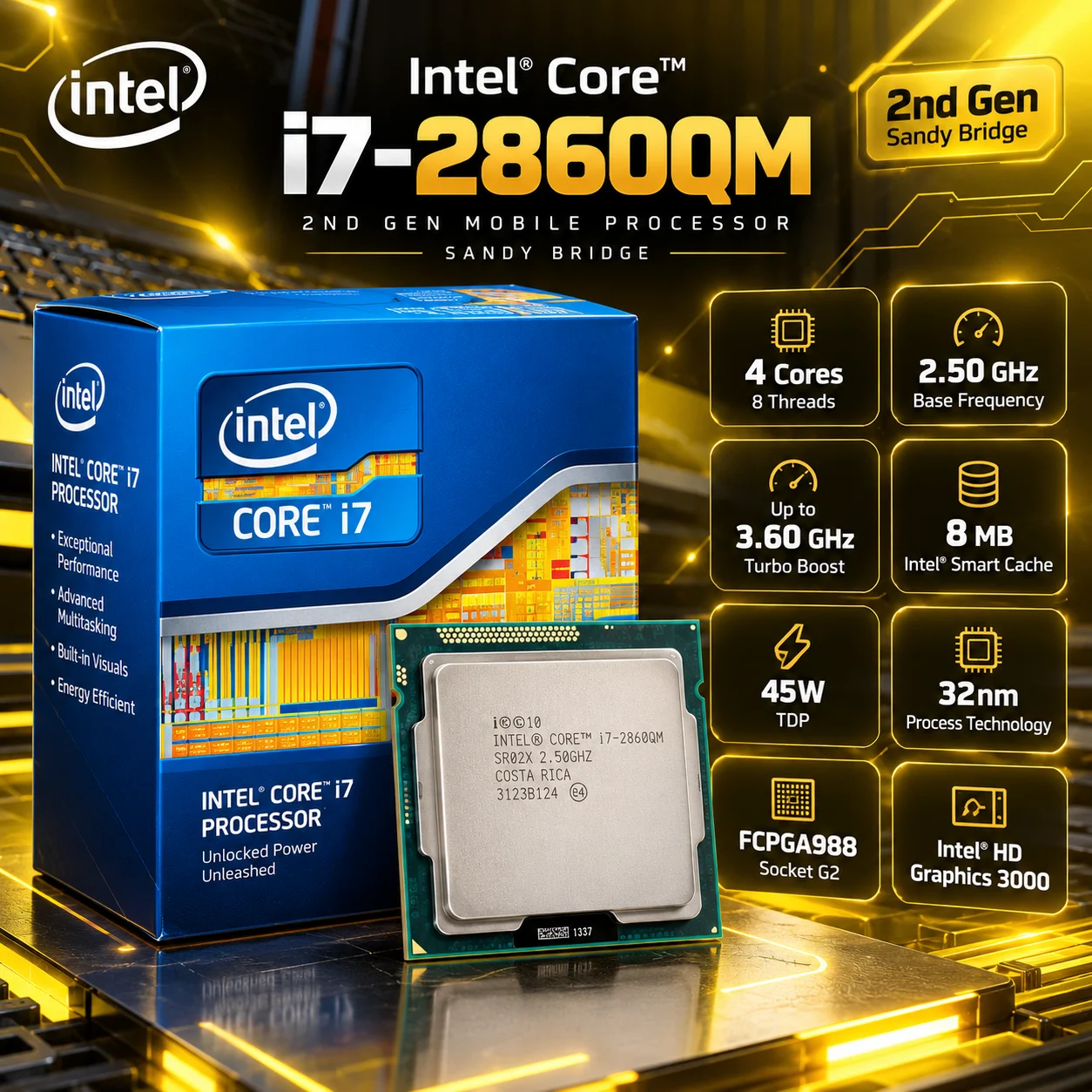
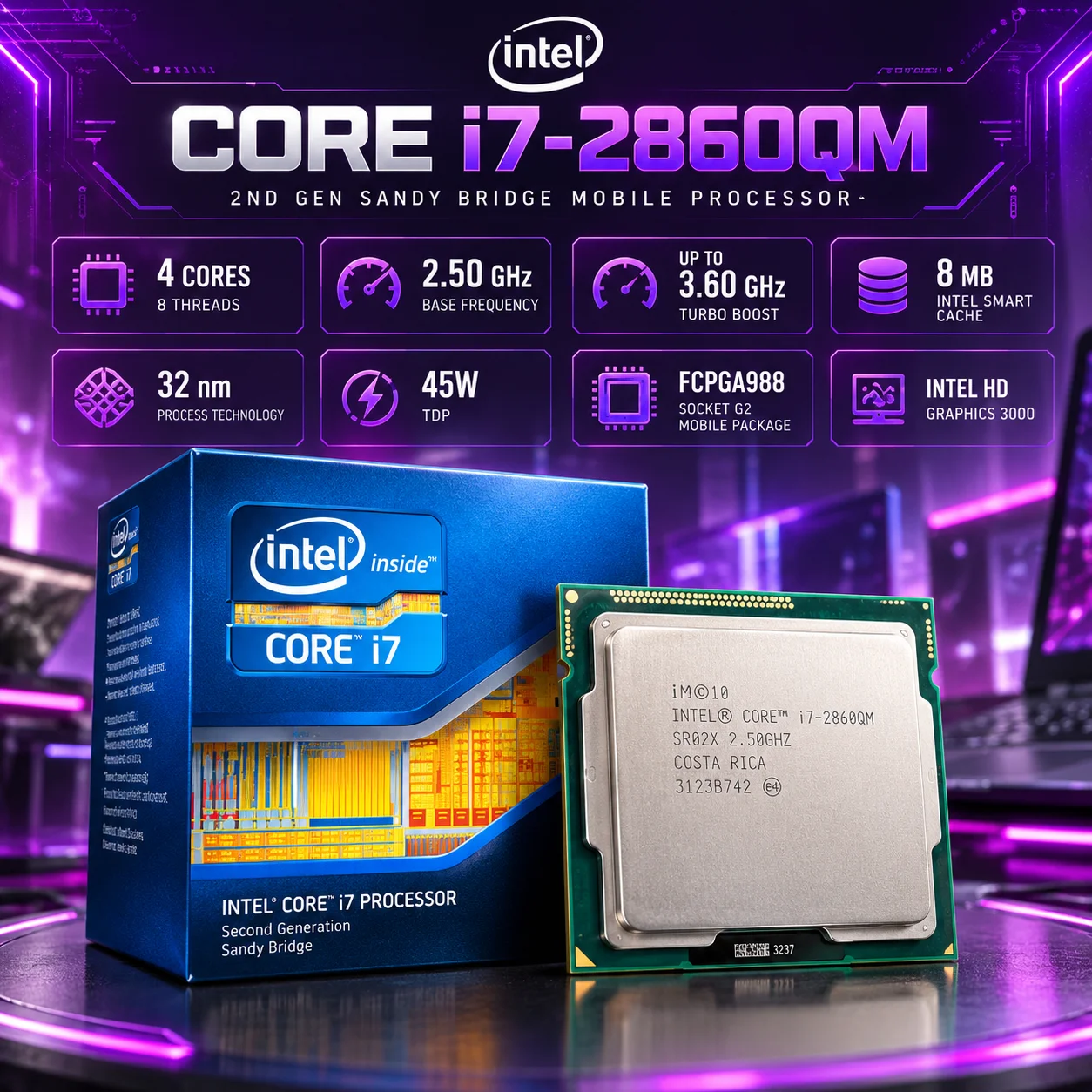
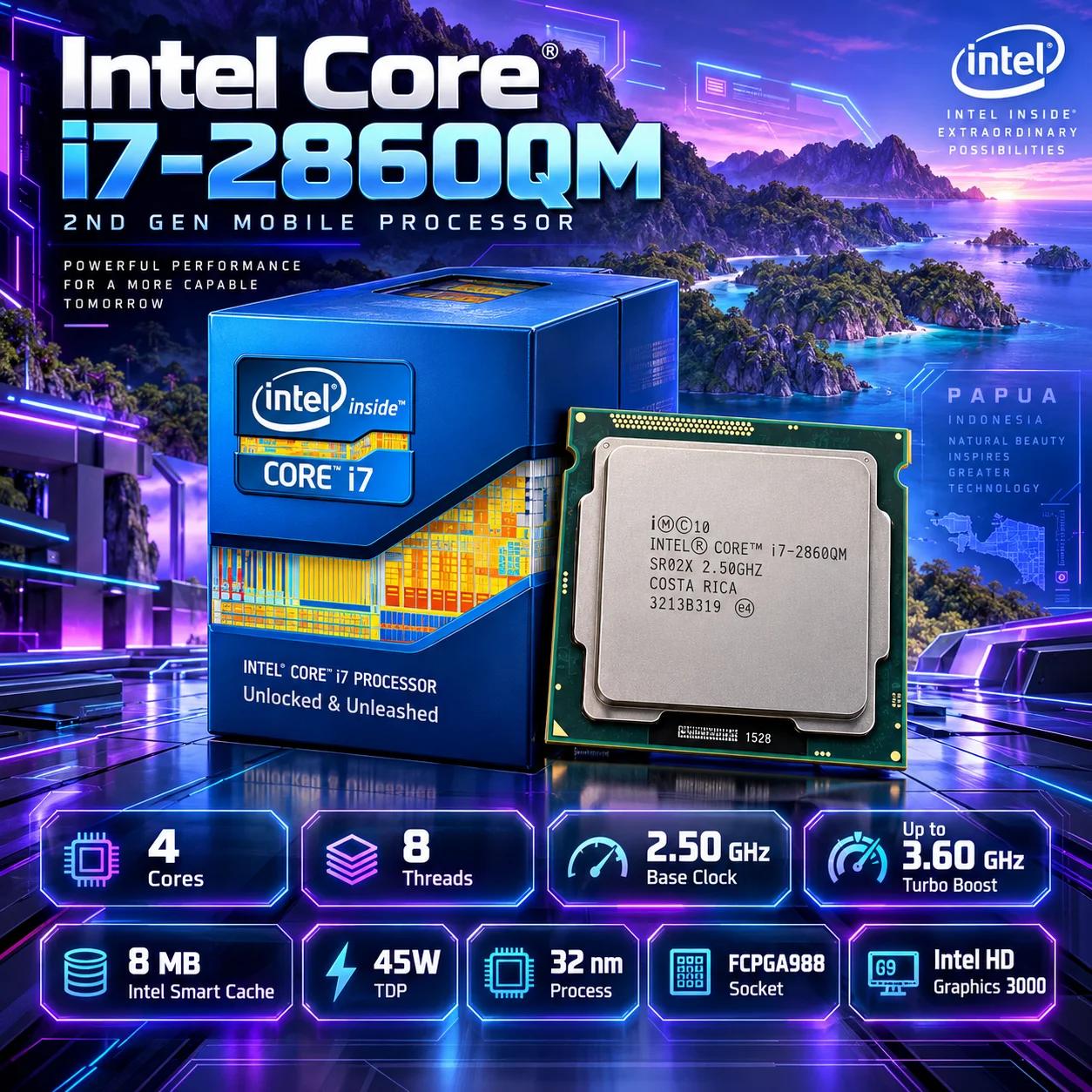
- 4 Cores and 8 Threads with Intel Hyper-Threading Technology
- 2.50 GHz Base Frequency with up to 3.60 GHz Max Turbo Frequency
- 8 MB Intel Smart Cache with a 45W TDP
- Integrated Intel HD Graphics 3000
*Approximate regional retail guide prices. Pixahunt is an informational catalog.
CPU Benchmark Scores & Performance Analysis
TESTEDCinebench R23, Geekbench 6, PassMark CPU Mark scores & real-world gaming/office suitability tests.
Technical Specifications
Comprehensive hardware architecture and specifications
General
| Series | Core i7 |
| Model | i7-2860QM |
| Cpu Cooler | Not Included |
| Code-Name | Sandy Bridge |
| Generation | 2nd Gen |
| Sockets Supported | FCBGA1224, FCPGA988 |
Performance
| Base Frequency | 2.50 GHz |
| Turbo Frequency Max. | 3.60 GHz |
| Core | 4 |
| Threads | 8 |
| CPU Cache | 8 MB L3 Cache |
| L1 Cache | 64 KB per core |
| L2 Cache | 256 KB per core |
| L3 Cache | 8 MB shared |
| TDP | 45W |
| Lithography | 32 nm |
| Multiplier | 25.0x |
| Multiplier Unlocked | No |
| Processor Type | Core i7 |
Memory Support
| Memory Max. | 32 GB |
| Memory Type | DDR3 1066/1333/1600 |
| Memory Speed | Up to 1600 MT/s |
| Memory Channel | 2 |
| Max Memory Bandwidth | 25.6 GB/s |
| ECC Memory Supported | No |
Graphics
| Built-in GPU | Yes |
| Processor Graphics | Intel HD Graphics 3000 |
| Graphics Base Frequency | 650 MHz |
| Graphics Dynamic Frequency | 1.30 GHz |
| Graphics Core Count | N/A |
| Max Video Memory | Shared |
| Max Resolution | eDP/DP/HDMI/SDVO/CRT |
Technical Info
| DirectX Support | 10.1 |
| OpenGL Support | 3.1 |
| Approx. Power Consumption | 45W |
| Compatible Products / Chipsets | Intel Mobile Chipset series |
| PCI Express Version | 2.0 |
| PCI Express Lanes | 16 |
| Thermal Solution (MPK / Box) | Not Included |
| Max. Operating Temperature (Tjmax) | 100°C |
Warranty
| ManufacturingWarranty | Discontinued Product / No Manufacturer Warranty |
Additional Info
| Specialty | Intel Turbo Boost 2.0, Intel Hyper-Threading, Intel VT-x, Intel AES-NI |
| Others | Legacy Mobile Processor |
| Country Of Origin | USA |
| Made in/ Assemble | China / Malaysia |
Editorial Overview & Review
In-depth insights, architecture summary, and performance evaluation
Introduction & Overview
Step back to a time when mobile computing was undergoing a massive paradigm shift, and you will find the Intel Core i7-2860QM standing tall as a testament to engineering excellence of its era. Hailing from Intel's illustrious 2nd Generation "Sandy Bridge" microarchitecture, the i7-2860QM was engineered to sit comfortably at the pinnacle of mobile performance. Positioned firmly in the high-end mobile processor segment, this quad-core powerhouse was designed specifically for power users, mobile workstation professionals, and enthusiasts who refused to compromise on performance when stepping away from the desktop.
While modern silicon has advanced by leaps and bounds, understanding the i7-2860QM requires appreciating how it redefined what was possible within a 45W thermal envelope. Though officially a legacy product in discontinued status, this processor remains an intriguing piece of hardware for budget-conscious tinkerers, retro enthusiasts, and those looking to breathe new life into classic, modular laptop chassis.
Architecture, Performance & Key Technologies
At its core, the i7-2860QM is built on a mature 32nm lithography process, packing an impressive punch across its physical footprint. Supporting FCPGA988 and FCBGA1224 sockets, this processor features 4 physical cores and 8 threads thanks to Intel Hyper-Threading technology, allowing it to expertly slice through multi-threaded workloads.
- Clock Speeds & Boosting: Out of the box, it operates at a stable 2.50 GHz base frequency. However, leveraging Intel Turbo Boost 2.0, it can dynamically scale up to a formidable 3.60 GHz when the workload demands raw single-core speed.
- Cache Architecture: It is equipped with a generous 8 MB of shared L3 cache, complemented by 256 KB of L2 cache and 64 KB of L1 cache per core, drastically reducing latency for frequently accessed data.
- Memory Subsystem: The processor natively supports up to 32 GB of dual-channel DDR3 memory running at speeds up to 1600 MT/s, delivering a maximum memory bandwidth of 25.6 GB/s to keep the CPU fed with data.
- Integrated Graphics: It features Intel HD Graphics 3000, operating at a base frequency of 650 MHz with a dynamic max frequency of 1.30 GHz, capable of handling basic display outputs (eDP/DP/HDMI/SDVO/CRT), DirectX 10.1, and OpenGL 3.1.
- Advanced Instruction Sets: Despite its age, it includes crucial technologies like Intel VT-x for virtualization and Intel AES-NI for accelerated data encryption and decryption.
Real-World Use Cases
How does a legacy 45W processor hold up in practical scenarios? For daily productivity—such as heavy multi-tab web browsing, office suites, document management, and media consumption—the i7-2860QM remains snappy and responsive. Thanks to its quad-core configuration and healthy turbo headroom, basic multitasking rarely breaks a sweat.
When it comes to content creation and legacy professional software, this chip punches above its weight class. Light photo editing in Photoshop, 1080p video rendering, and compiling code on older software environments are well within its wheelhouse, especially when paired with a solid-state drive (SSD) and maxed-out RAM. For gaming, the integrated Intel HD Graphics 3000 is heavily outmatched by modern standards and is strictly limited to retro titles, esports classics (like League of Legends or CS:GO on low settings), and indie games. However, when paired with a compatible discrete GPU in a modular mobile workstation, the CPU can still drive moderate gaming sessions without severe bottlenecks.
Strengths & Potential Considerations
As with any vintage tech enthusiast product, the i7-2860QM comes with a distinct set of advantages and limitations:
- Strengths:
- Strong multi-threaded performance for a legacy mobile CPU.
- Unlocked potential via Turbo Boost 2.0 and high thermal ceiling (Tjmax of 100°C).
- Drop-in upgrade compatibility for many socketed 2nd Gen HM65/QM67 laptops.
- Cost-effective way to max out older, highly repairable enterprise-grade laptops (like ThinkPad T-series or Dell Latitudes).
- Considerations:
- Outdated 32nm lithography results in higher power consumption and heat generation compared to modern microarchitectures.
- PCI Express is limited to version 2.0, which can bottleneck modern high-speed NVMe drives or external GPUs.
- Integrated graphics lack modern API support (DirectX 11/12), making it useless for modern gaming without a dedicated GPU.
- Discontinued product with no manufacturer warranty; availability is restricted to the used and secondary market.
Final Buying Verdict
The Intel Core i7-2860QM is no longer a viable processor for cutting-edge computing, professional AAA gaming, or heavy modern video production. However, it is far from obsolete in the right context. For retro hardware enthusiasts, budget hobbyists, and digital preservationists looking to fully upgrade an older socketed laptop, this chip represents the absolute ceiling of what Sandy Bridge mobile architecture could achieve.
If you find one at a bargain price and enjoy breathing new life into classic, modular hardware, dropping an i7-2860QM into a compatible machine is a deeply satisfying project. For anyone else seeking a reliable daily driver for modern workflows, your money is better spent on a more contemporary system.
OUR RATING CONSENSUS
The overall rating is based on review by our experts & industry benchmark suites
Quick Snapshot
- Overall Rating
- 4.5 / 10
- Brand
- Intel
- Category
- Processor
- Catalog Model
- i7-2860QM
- Status
- Published
Pixahunt Tech Community
Connect with hardware enthusiasts, compare benchmarks, and explore real user setups.
Explore Full Newsfeed →Related Gadgets
- 3.20 GHz Dual-Core Clock Speed for Reliable Everyday Computing
- Intel Hyper-Threading Technology Enabling 4 Parallel Threads
- Built-in Intel HD Graphics for Integrated Display Support
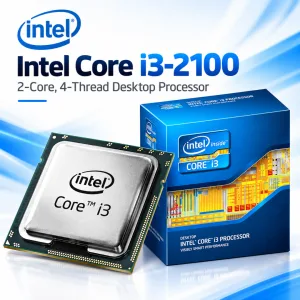
- 2 cores and 4 threads with Intel Hyper-Threading Technology
- 3.10 GHz base processor frequency
- 3 MB Intel Smart Cache
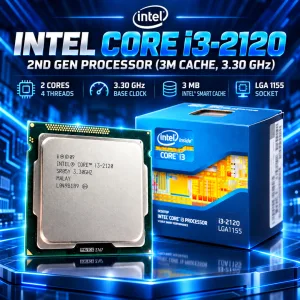
- 2 Cores and 4 Threads with Intel Hyper-Threading Technology
- 3.30 GHz Base Clock Frequency with 3 MB Intel Smart Cache
- Includes Intel HD Graphics 2000 integrated graphics
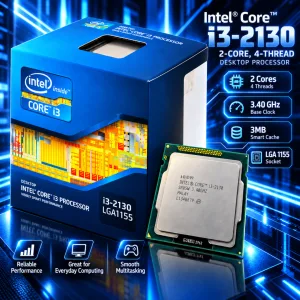
- 2 cores and 4 threads with Intel Hyper-Threading Technology
- 3.40 GHz processor base frequency with 3 MB Intel Smart Cache
- Integrated Intel HD Graphics 2000