

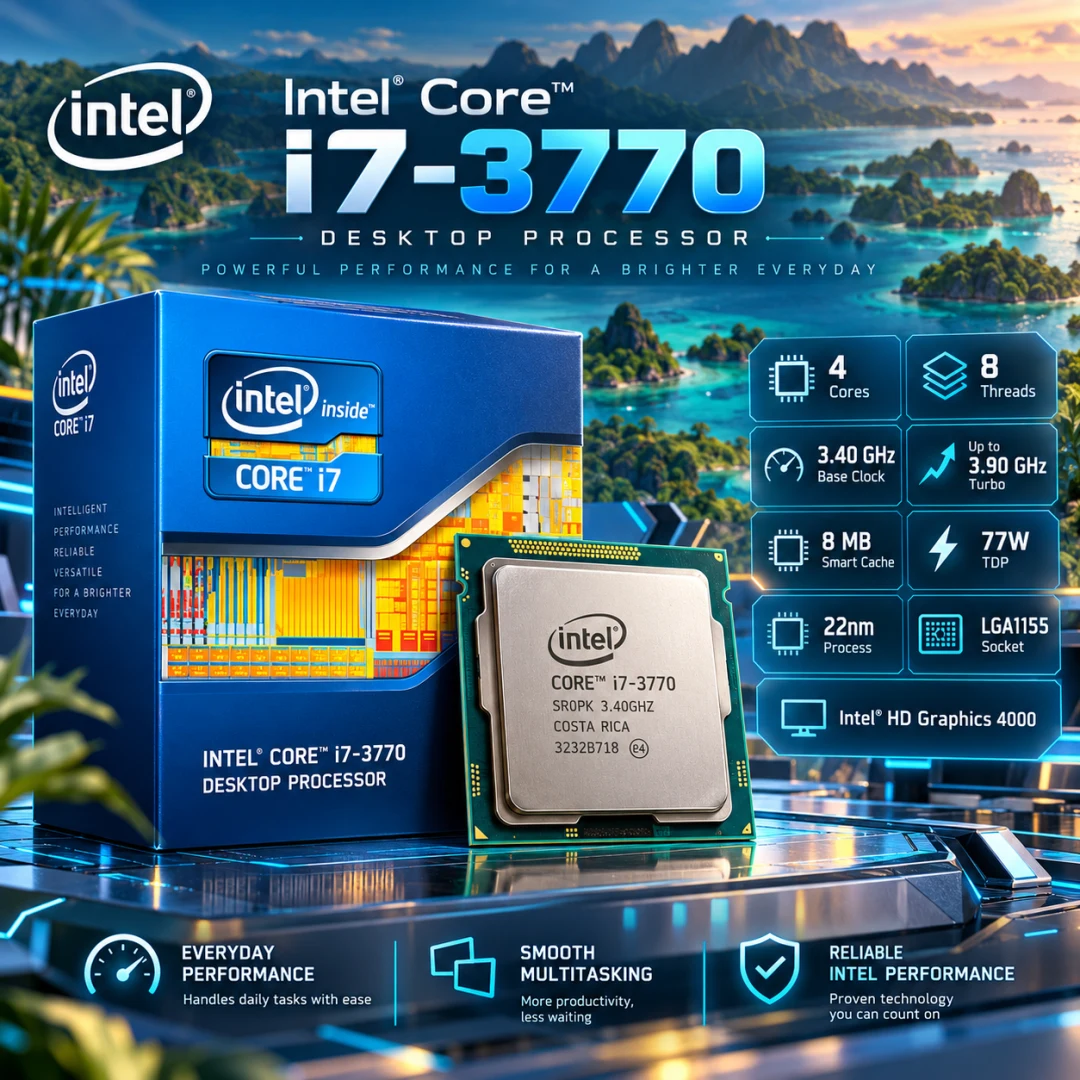
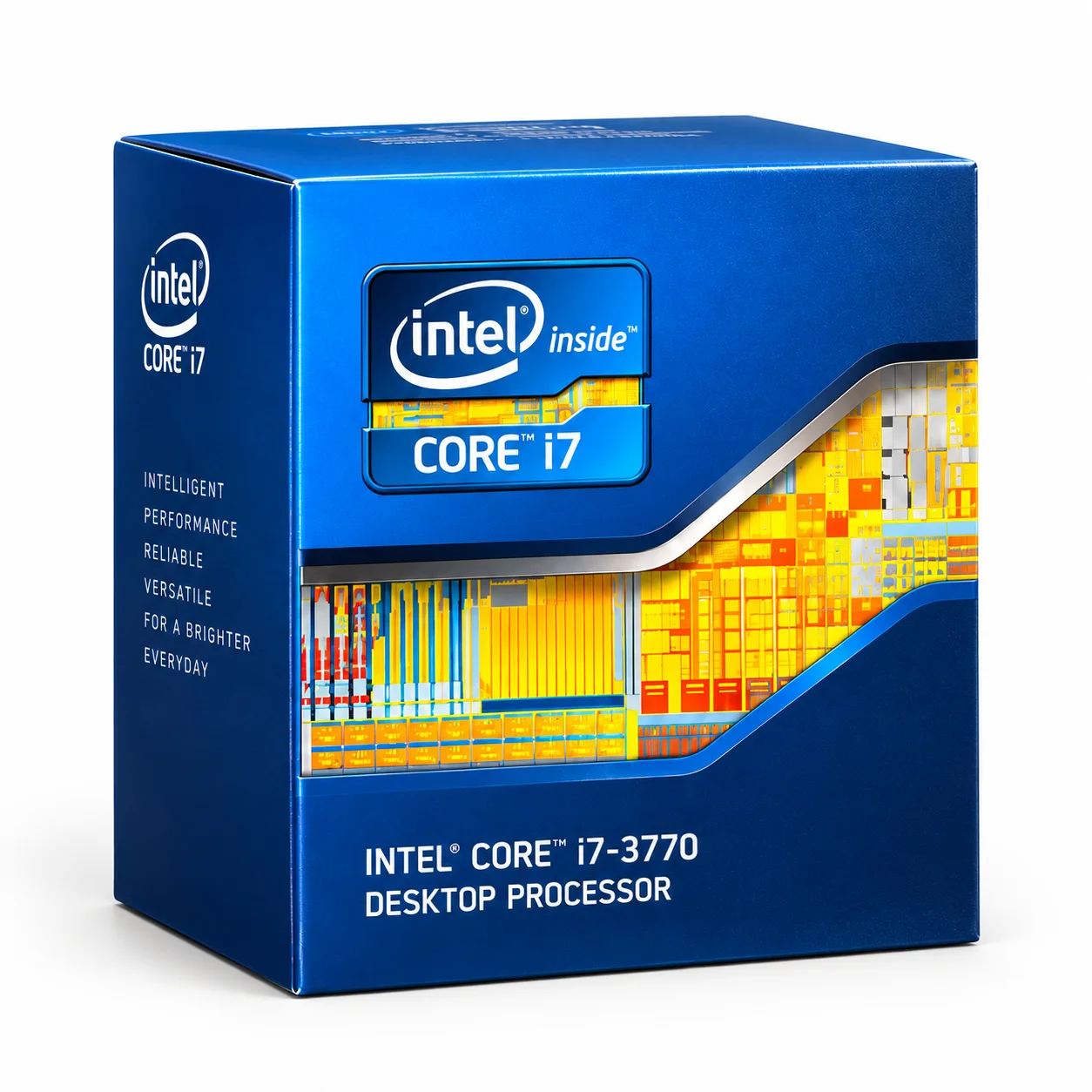
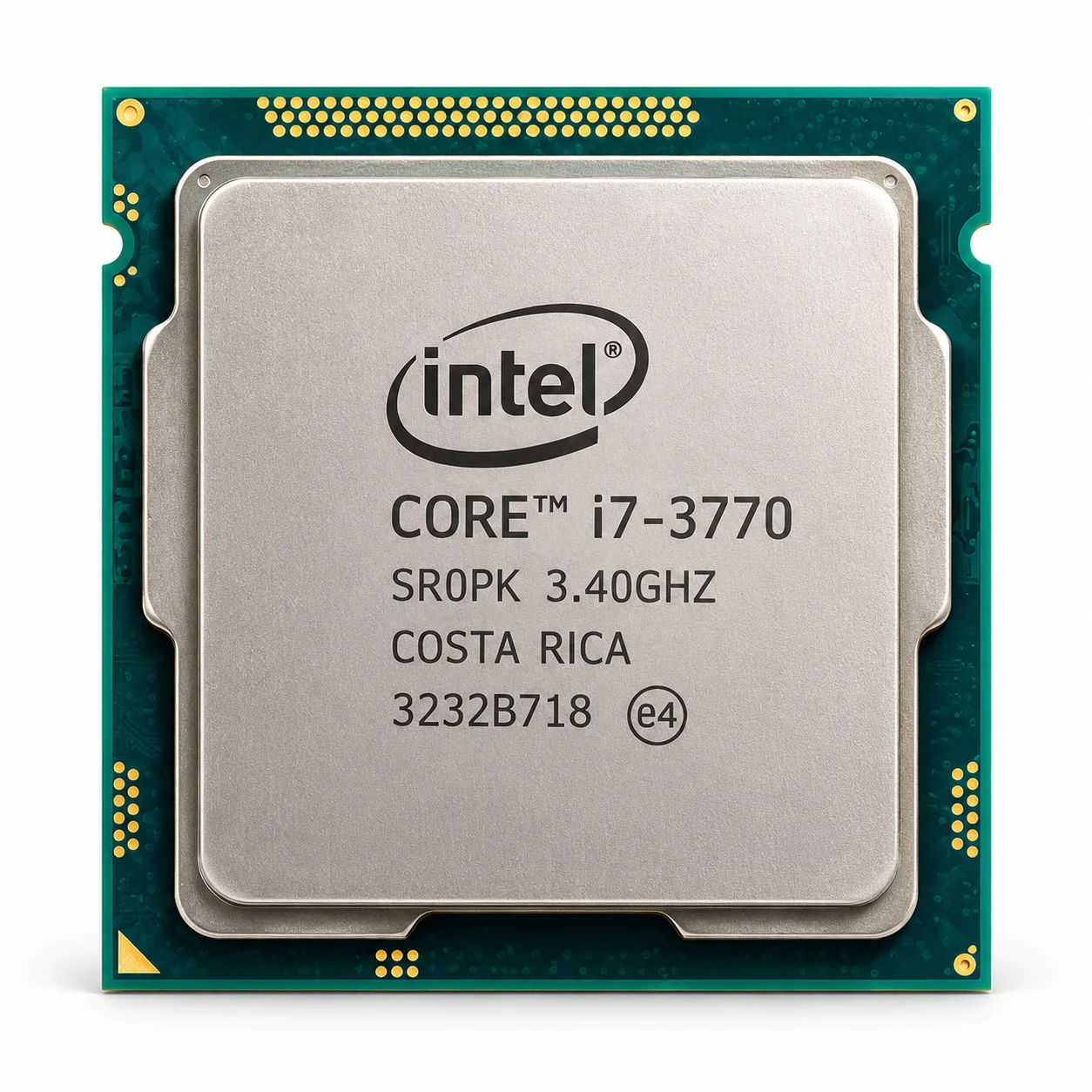
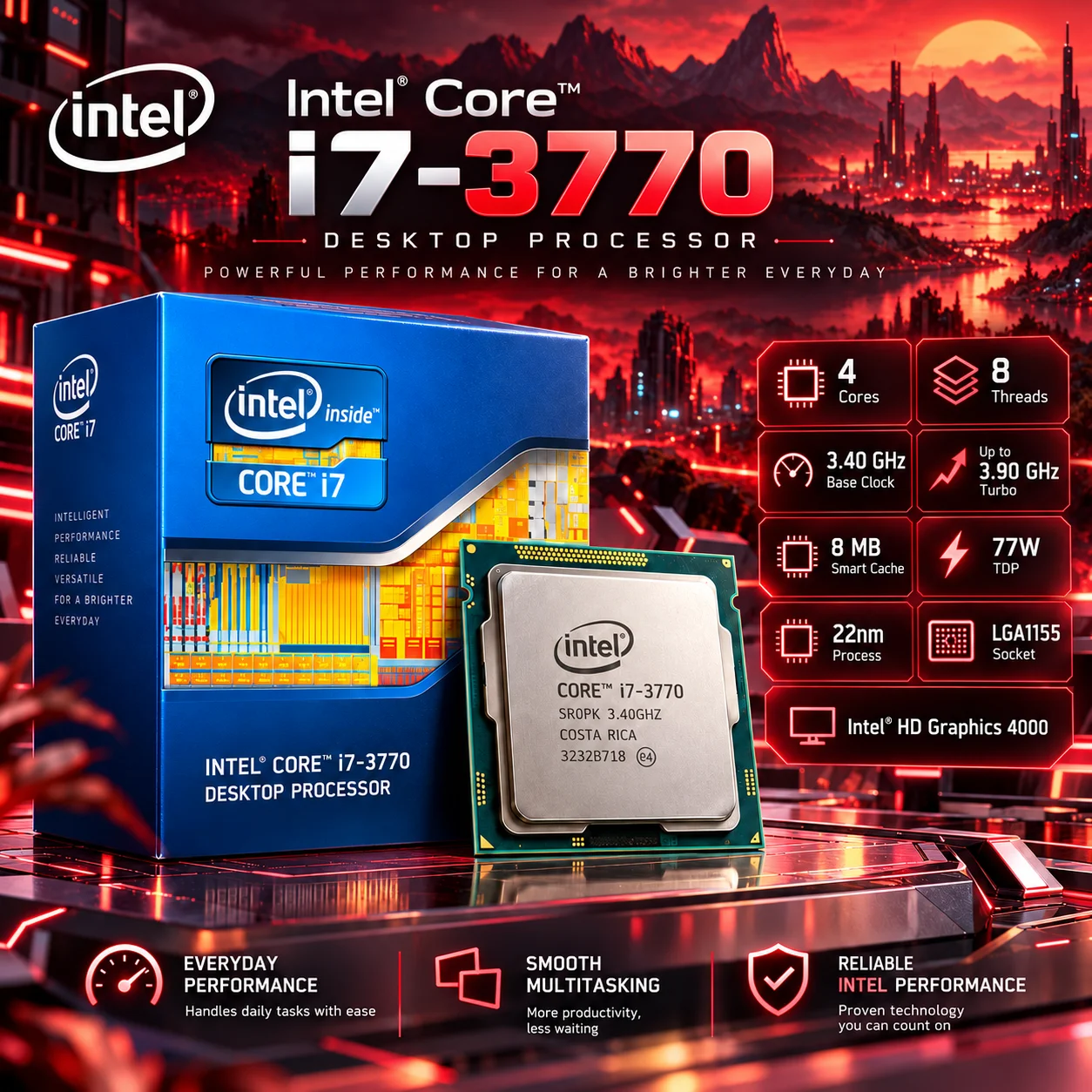
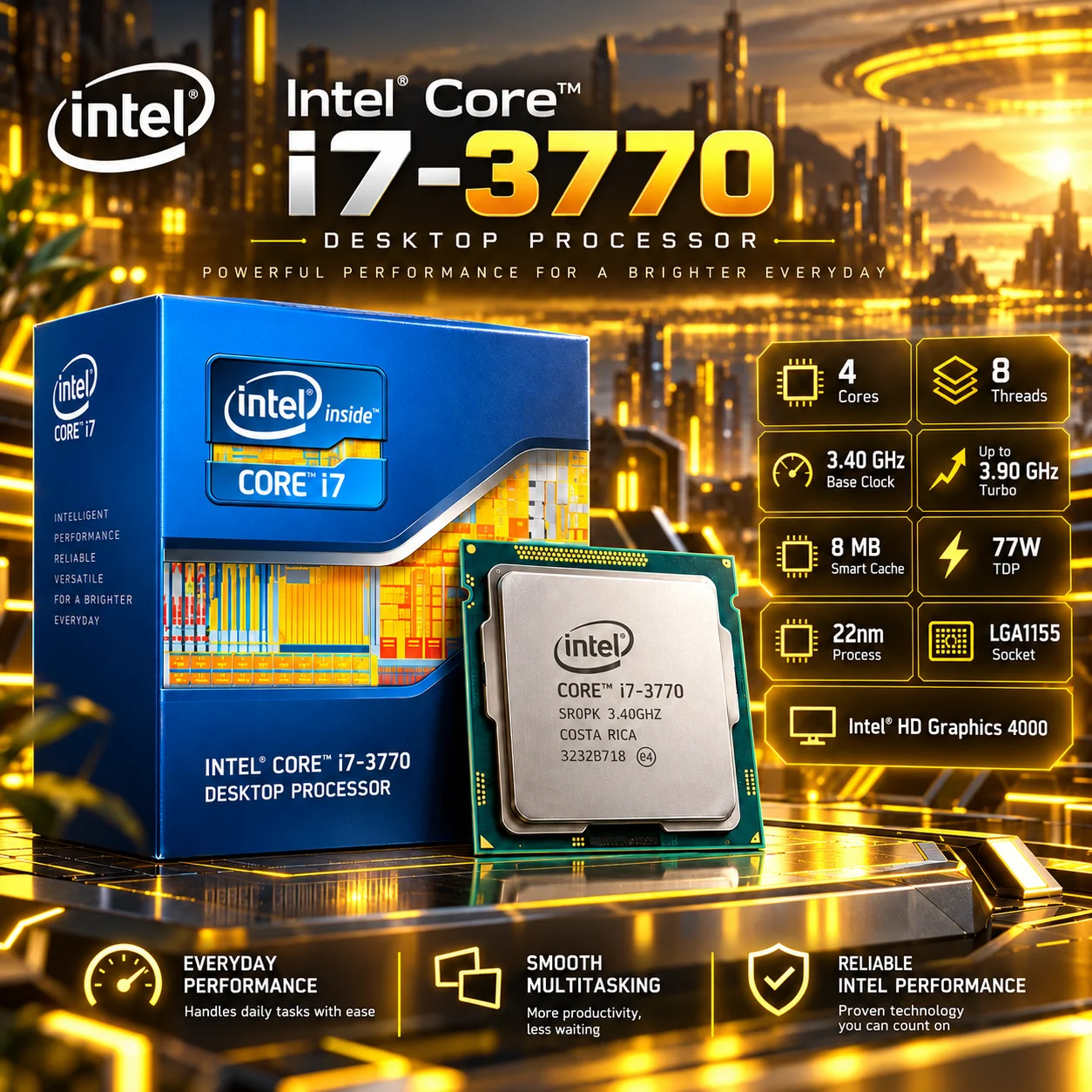
Intel Core i7-3770 3.40 GHz Quad-Core Desktop Processor
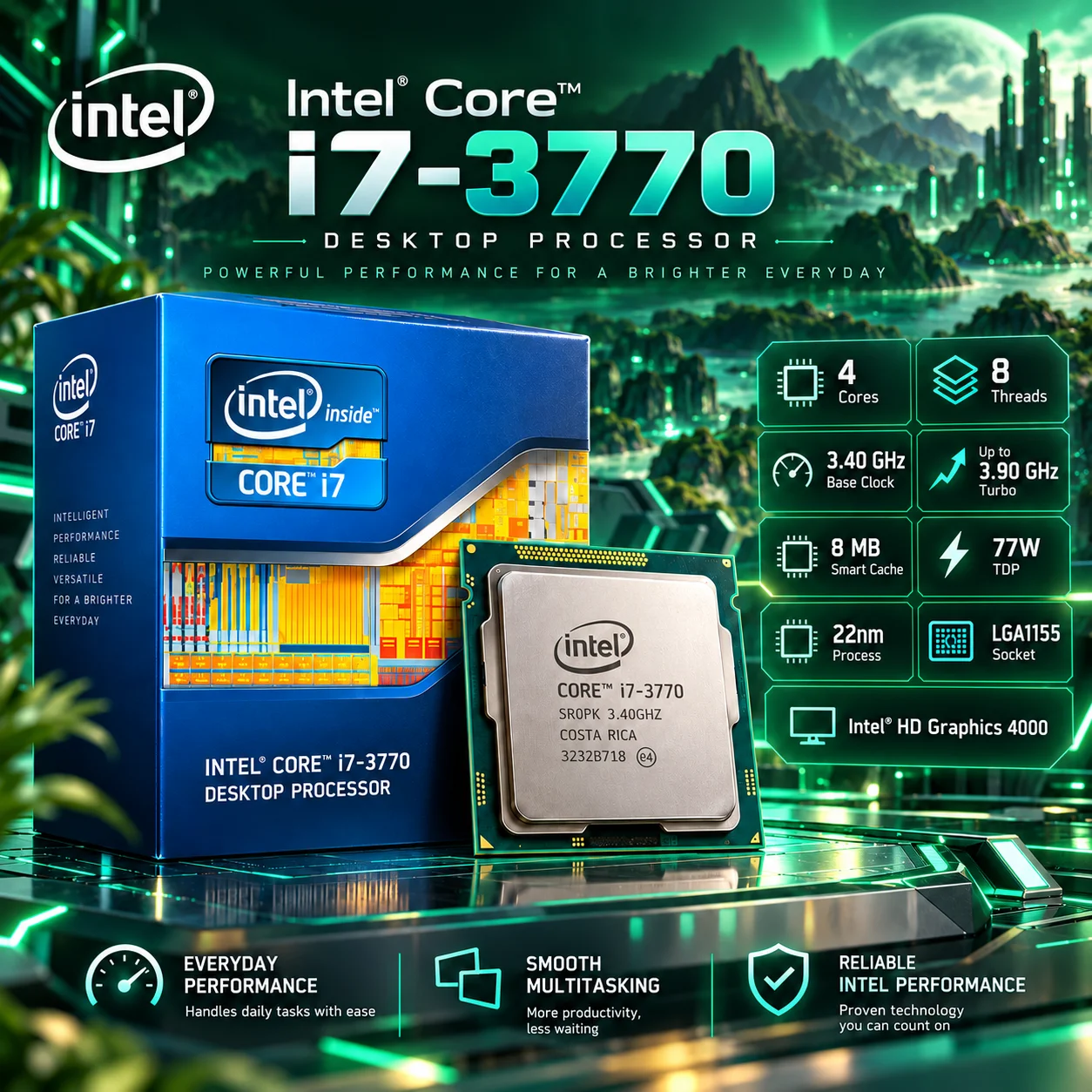
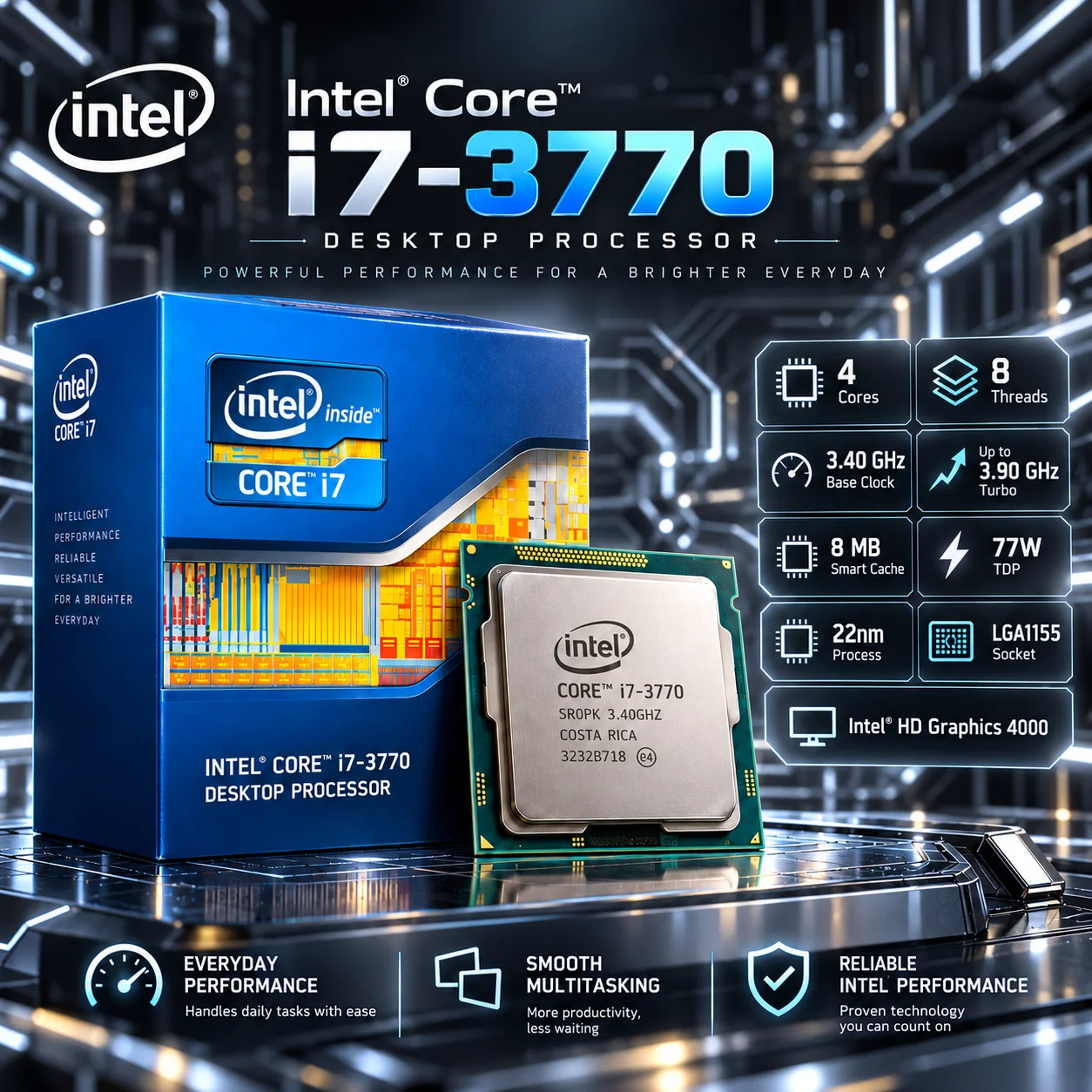
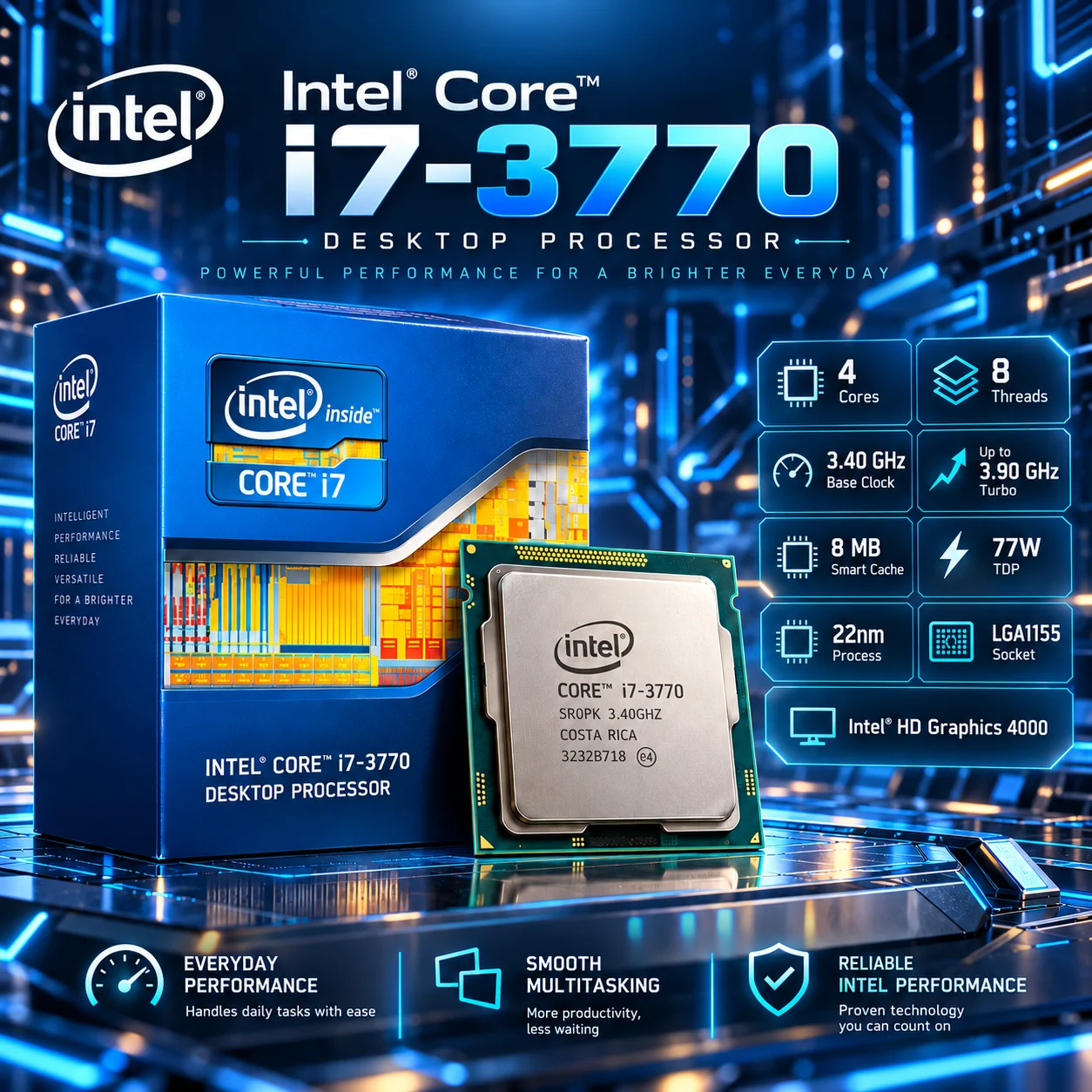
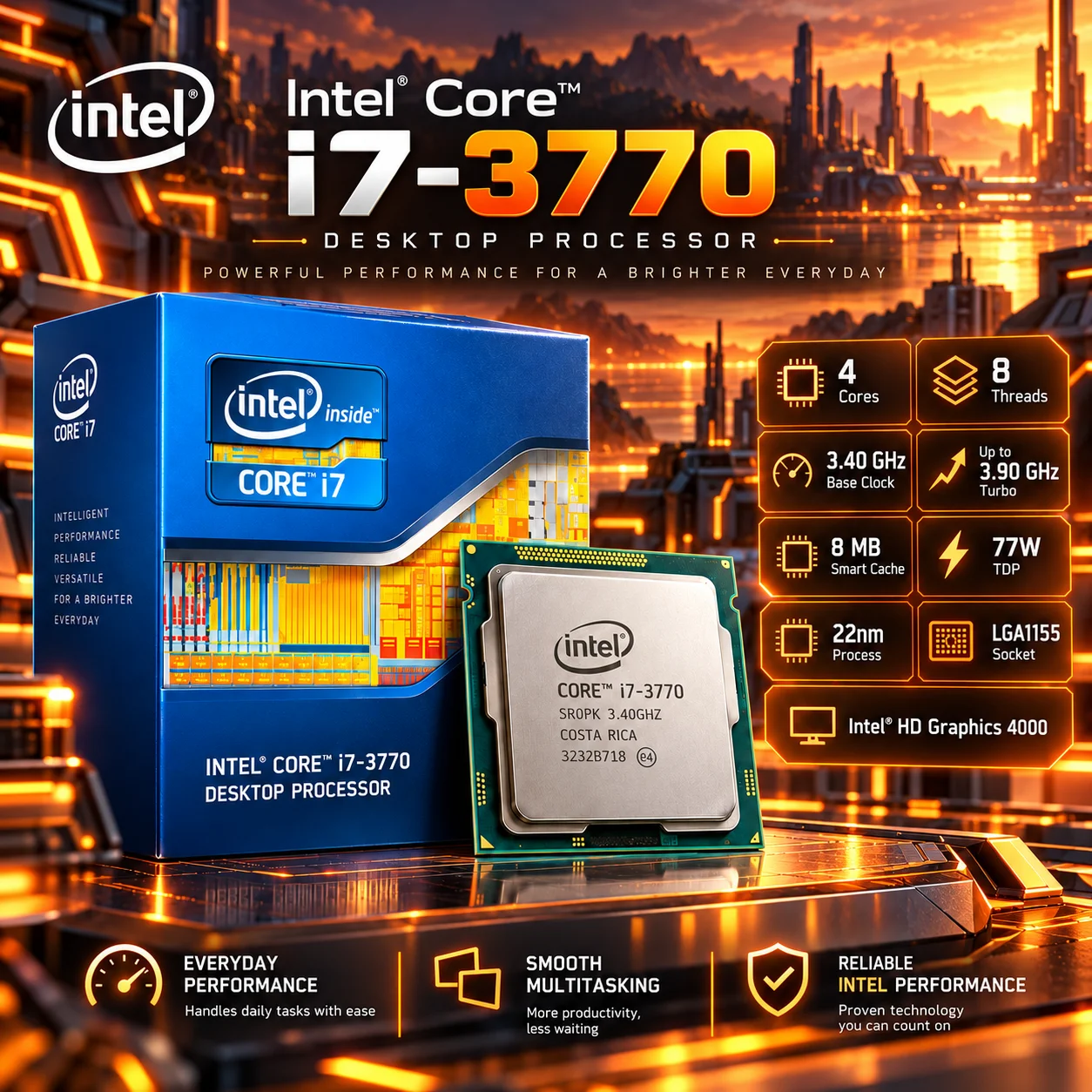
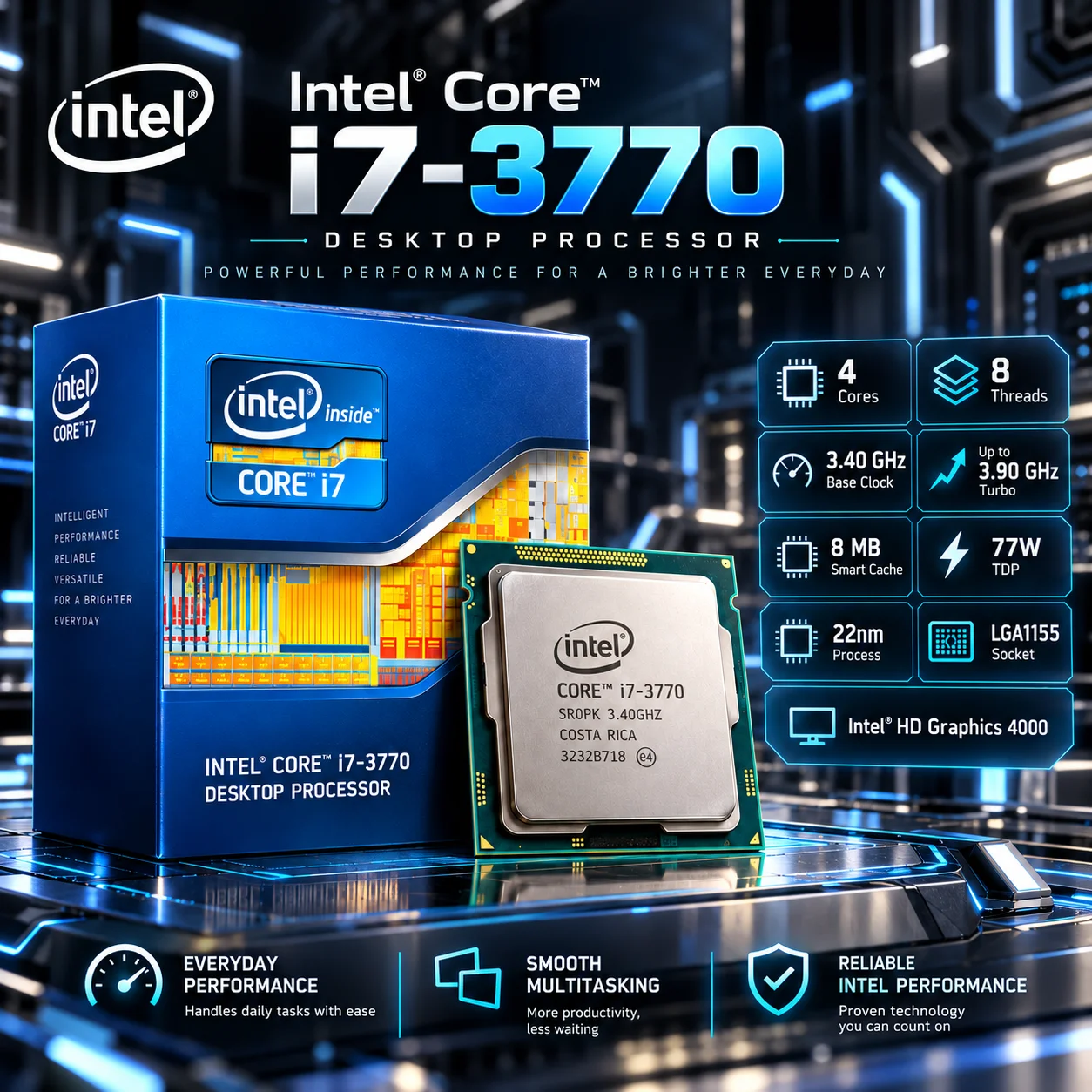
- 4 cores and 8 threads with Hyper-Threading technology
- 3.40 GHz base frequency with up to 3.90 GHz max turbo frequency
- Intel HD Graphics 4000 integrated graphics support
- 77W TDP optimized for mainstream desktop systems
*Approximate regional retail guide prices. Pixahunt is an informational catalog.
CPU Benchmark Scores & Performance Analysis
TESTEDCinebench R23, Geekbench 6, PassMark CPU Mark scores & real-world gaming/office suitability tests.
Technical Specifications
Comprehensive hardware architecture and specifications
General
| Series | Core i7 |
| Model | i7-3770 |
| Cpu Cooler | Not Included |
| Code-Name | Ivy Bridge |
| Generation | 3rd Gen |
| Sockets Supported | FCLGA1155 |
Performance
| Base Frequency | 3.40 GHz |
| Turbo Frequency Max. | 3.90 GHz |
| Core | 4 |
| Threads | 8 |
| CPU Cache | 8 MB Intel Smart Cache |
| L1 Cache | 256 KB |
| L2 Cache | 1 MB |
| L3 Cache | 8 MB |
| TDP | 77 W |
| Lithography | 22 nm |
| Multiplier | 34.0x |
| Multiplier Unlocked | No |
| Processor Type | Core i7 |
Memory Support
| Memory Max. | 32 GB |
| Memory Type | DDR3 1333/1600 |
| Memory Speed | 1600 MT/s |
| Memory Channel | 2 |
| Max Memory Bandwidth | 25.6 GB/s |
| ECC Memory Supported | No |
Graphics
| Built-in GPU | Yes |
| Processor Graphics | Intel HD Graphics 4000 |
| Graphics Base Frequency | 650 MHz |
| Graphics Dynamic Frequency | 1.15 GHz |
| Graphics Core Count | N/A |
| Max Video Memory | N/A |
| Max Resolution | N/A |
Technical Info
| DirectX Support | 11 |
| OpenGL Support | 4.0 |
| Approx. Power Consumption | 77 W |
| Compatible Products / Chipsets | Intel 6 Series, Intel 7 Series |
| PCI Express Version | 3.0 |
| PCI Express Lanes | Up to 16 |
| Thermal Solution (MPK / Box) | N/A |
| Max. Operating Temperature (Tjmax) | 105°C |
Warranty
| Manufacturing Warranty | 3 Years Limited |
Additional Info
| Specialty | Intel Turbo Boost Technology 2.0, Intel Hyper-Threading Technology, Intel Virtualization Technology (VT-x) |
| Others | Discontinued Product |
| Country Of Origin | USA |
| Made in/ Assemble | China / Malaysia |
Editorial Overview & Review
In-depth insights, architecture summary, and performance evaluation
1. Introduction & Overview
The Intel Core i7-3770 stands as one of the quintessential highlights of Intel’s historic "tick-tock" silicon development model. Built on the 3rd Generation "Ivy Bridge" architecture, this processor represented a major milestone for desktop computing by transitioning to a 22nm manufacturing process featuring revolutionary 3D Tri-Gate transistors. Positioned at the top tier of Intel’s mainstream consumer lineup during its launch, the i7-3770 was targeted at demanding power users, workstation professionals, and enthusiasts seeking desktop-class multi-threaded horsepower without diving into the complexity or cost of enthusiast platform sockets.
Designed for the popular FCLGA1155 socket and compatible with Intel 6 and 7 Series chipsets, the Core i7-3770 offered a sweet spot of aggressive clock speeds and efficient power delivery. While its locked multiplier distinguishes it from its overclocking-focused sibling (the i7-3770K), the standard i7-3770 delivered identical stock performance out of the box. Today, while officially discontinued, it remains a famous legacy CPU that frequently powers low-cost office refurbishments, retro gaming rigs, and secondary home servers.
2. Architecture, Performance & Key Technologies
At the heart of the Core i7-3770 is the 22nm Ivy Bridge microarchitecture. By moving down from the 32nm Sandy Bridge die, Intel achieved higher transistor density and dramatically enhanced power efficiency. The chip operates at a 3.40 GHz base frequency and scales dynamically up to a impressive 3.90 GHz via Intel Turbo Boost Technology 2.0. Featuring a core configuration of 4 physical cores and 8 logical threads courtesy of Intel Hyper-Threading Technology, it excels at distributing concurrent compute tasks across its pipeline.
The processor is equipped with 8 MB of Intel Smart Cache (L3 cache), which allows unified allocation across all four cores to reduce memory latency. Efficiency is a standout attribute here: despite boasting heavy multi-threaded output, the i7-3770 operates at a modest Thermal Design Power (TDP) of 77 Watts, running noticeably cooler and drawing less energy under load than previous-generation 95W flagship chips.
For graphical capabilities, the i7-3770 features integrated Intel HD Graphics 4000 with dynamic frequency scaling from 650 MHz to 1.15 GHz. While designed primarily for standard display output and basic media playback with support for DirectX 11 and OpenGL 4.0, it provided a functional onboard display solution without forcing users to buy a dedicated GPU immediately. On the system memory and expansion front, the integrated memory controller supports dual-channel DDR3 memory up to 1600 MT/s (max 32 GB capacity at 25.6 GB/s bandwidth), while offering natively supported PCI Express 3.0 with up to 16 lanes for high-bandwidth dedicated graphics cards.
3. Real-World Use Cases
In real-world deployment, the Intel Core i7-3770 delivers dependable, resilient performance across several primary scenarios:
- Everyday Multitasking & Productivity: For web browsing with dozens of open tabs, document processing, database navigation, and heavy office software, the CPU's high single-core clocks paired with 8 threads keep Windows desktop environments responsive and snappy.
- Budget & Legacy Gaming: When paired with an entry-level modern discrete graphics card (such as a GTX 1650 or RX 580), the i7-3770 can still handle eSports titles (CS:GO, Valorant, Rocket League) and light 1080p gaming with consistent frame rates, making it a favorite for ultra-budget gaming builds.
- Home Media Servers & NAS: Thanks to its native virtualization support (Intel VT-x) and efficient 77W thermal envelope, the i7-3770 serves as a capable brain for lightweight home servers, Plex media centers, and NAS operating systems requiring multi-stream media transcode capabilities.
4. Strengths & Potential Considerations
Strengths:
- Strong Multi-Threaded Foundation: 4 cores and 8 threads offer surprising longevity for basic contemporary workloads.
- Excellent Thermal Efficiency: Low 77W TDP ensures easy cooling with modest, low-cost thermal solutions.
- PCIe 3.0 Support: Up to 16 lanes of Gen 3 PCIe allows full-bandwidth operation for many mid-range dedicated GPUs.
- Integrated HD Graphics 4000: Reliable onboard display engine for troubleshooting and display output without a discrete GPU.
Potential Considerations:
- Discontinued & Legacy Socket: Platform expansion is limited by obsolete LGA1155 motherboards and the legacy DDR3 memory standard.
- Locked Multiplier: Unlike the 'K' series model, the base multiplier (34.0x) is locked against traditional manual overclocking.
- Missing Modern Instruction Sets: Lacks hardware support for modern CPU instruction sets like AVX2 and lacks official compatibility with newer operating systems like Windows 11.
5. Final Buying Verdict
The Intel Core i7-3770 represents an iconic chapter in x86 computing history. In its prime, it was a tour de force of silicon engineering, offering high clock speeds, stellar efficiency, and robust 8-thread multi-tasking capabilities on the consumer desktop market.
If you are building a new modern computer from scratch, purchasing a legacy platform like Ivy Bridge is generally not recommended due to modern platform requirements and software shifts. However, if you are looking to upgrade an existing, older LGA1155 system on a strict budget, or assembling a low-cost secondary server or entry-level retro gaming PC, the i7-3770 remains a surprisingly usable piece of hardware that delivers incredible value on the pre-owned market.
OUR RATING CONSENSUS
The overall rating is based on review by our experts & industry benchmark suites
Quick Snapshot
- Overall Rating
- 5.0 / 10
- Brand
- Intel
- Category
- Processor
- Catalog Model
- i7-3770
- Status
- Published
- Release Date
- Oct 10, 2026
Pixahunt Tech Community
Connect with hardware enthusiasts, compare benchmarks, and explore real user setups.
Explore Full Newsfeed →Related Gadgets
- 3.20 GHz Dual-Core Clock Speed for Reliable Everyday Computing
- Intel Hyper-Threading Technology Enabling 4 Parallel Threads
- Built-in Intel HD Graphics for Integrated Display Support
- 2 cores and 4 threads with Intel Hyper-Threading Technology
- 3.10 GHz base processor frequency
- 3 MB Intel Smart Cache
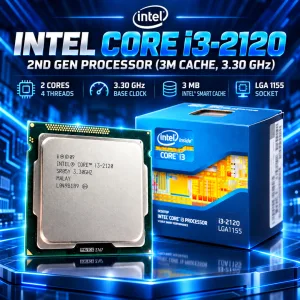
- 2 Cores and 4 Threads with Intel Hyper-Threading Technology
- 3.30 GHz Base Clock Frequency with 3 MB Intel Smart Cache
- Includes Intel HD Graphics 2000 integrated graphics
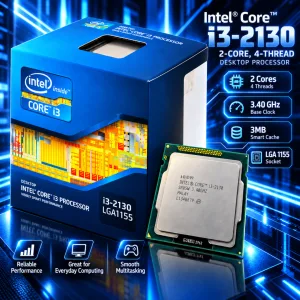
- 2 cores and 4 threads with Intel Hyper-Threading Technology
- 3.40 GHz processor base frequency with 3 MB Intel Smart Cache
- Integrated Intel HD Graphics 2000