

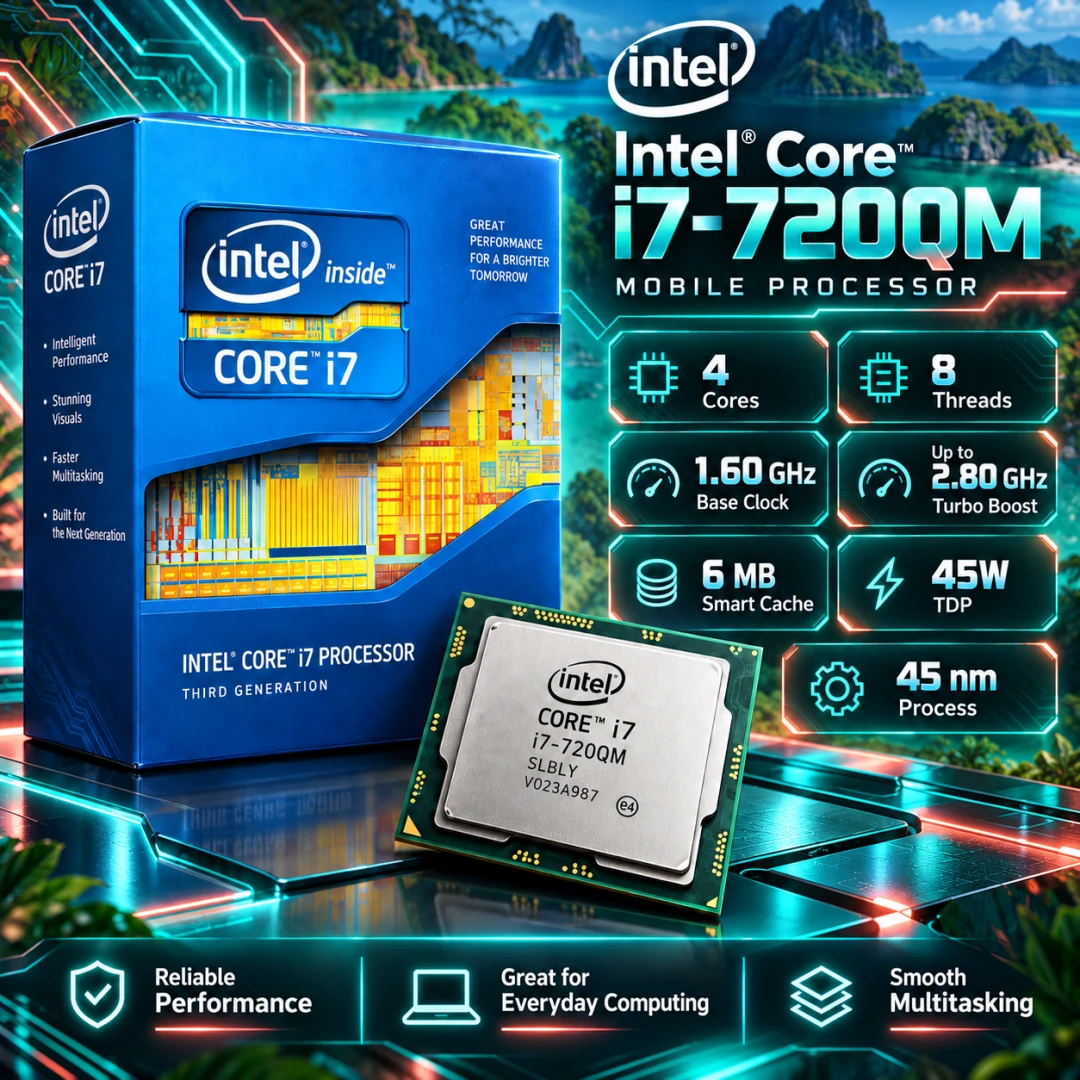
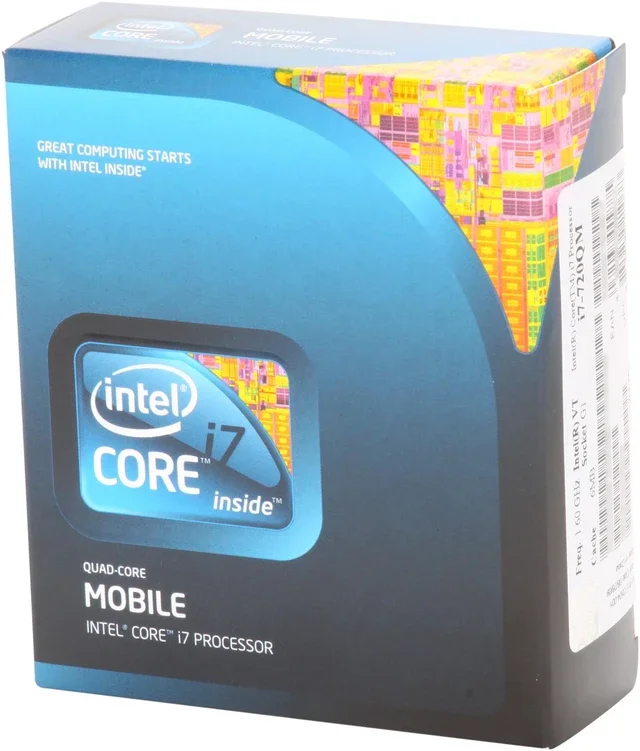
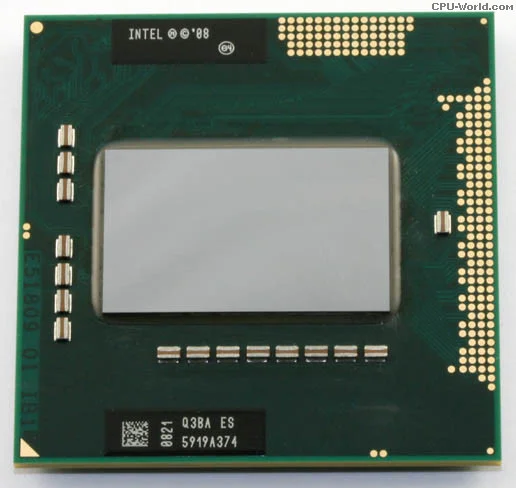
Intel Core i7-720QM Quad-Core Mobile Processor
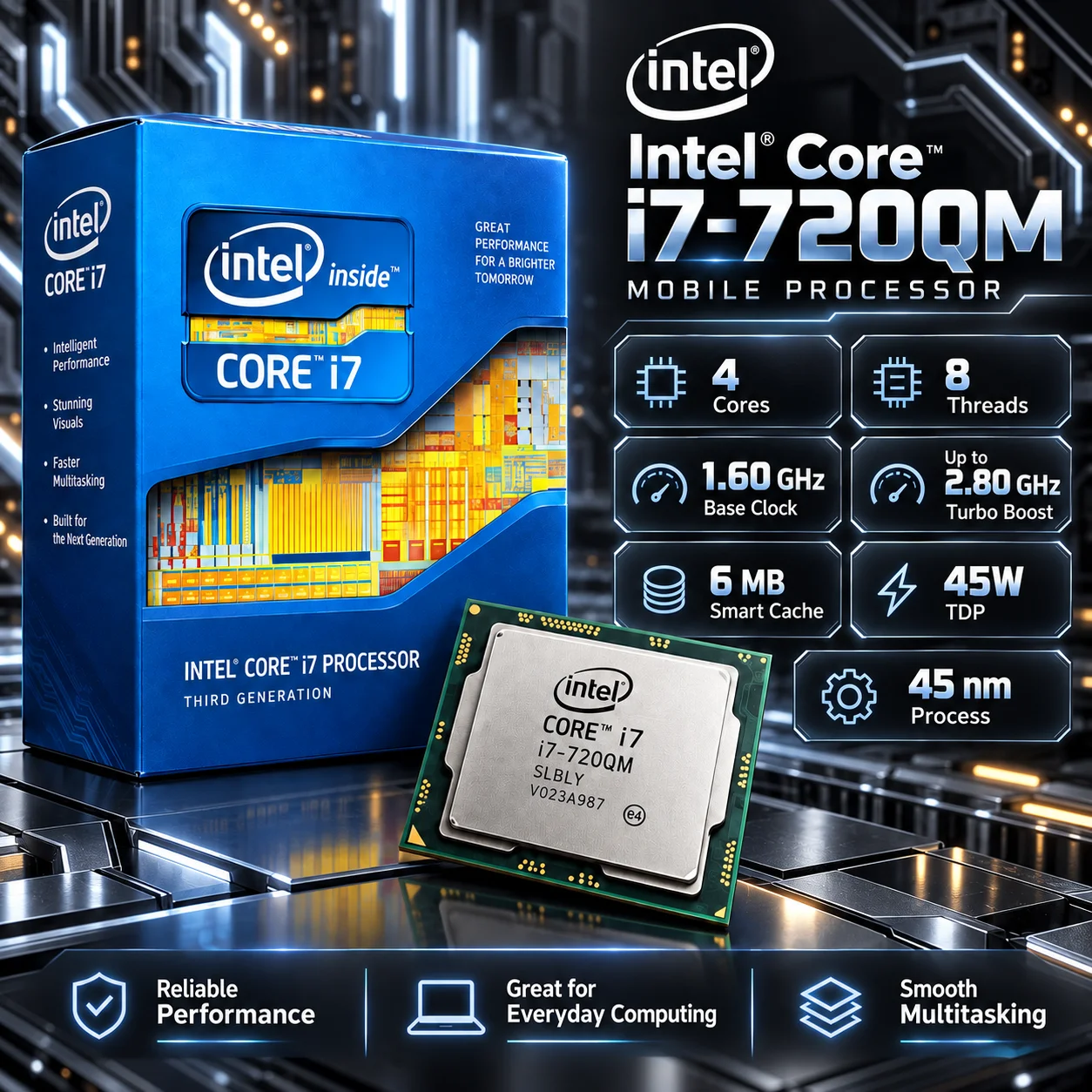
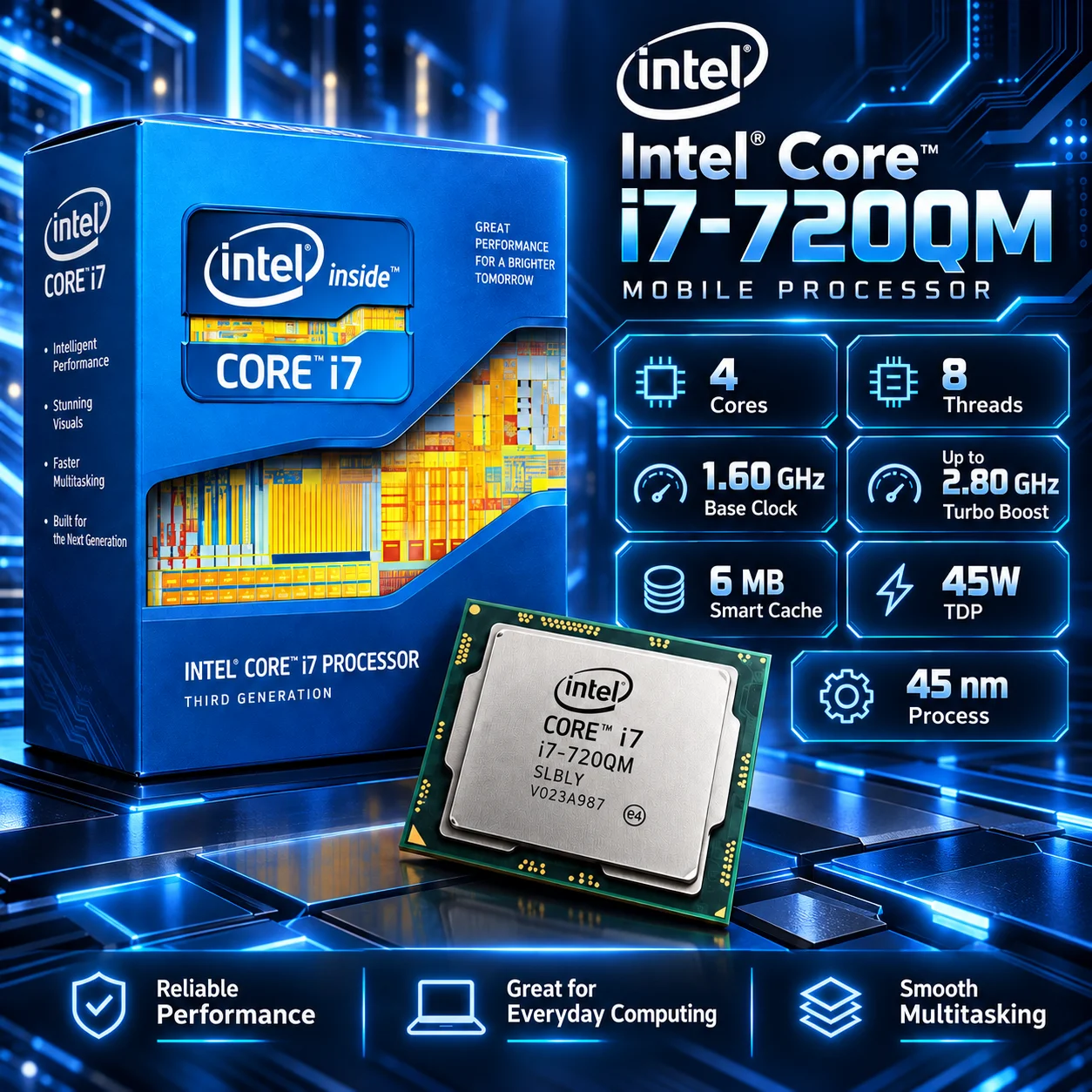
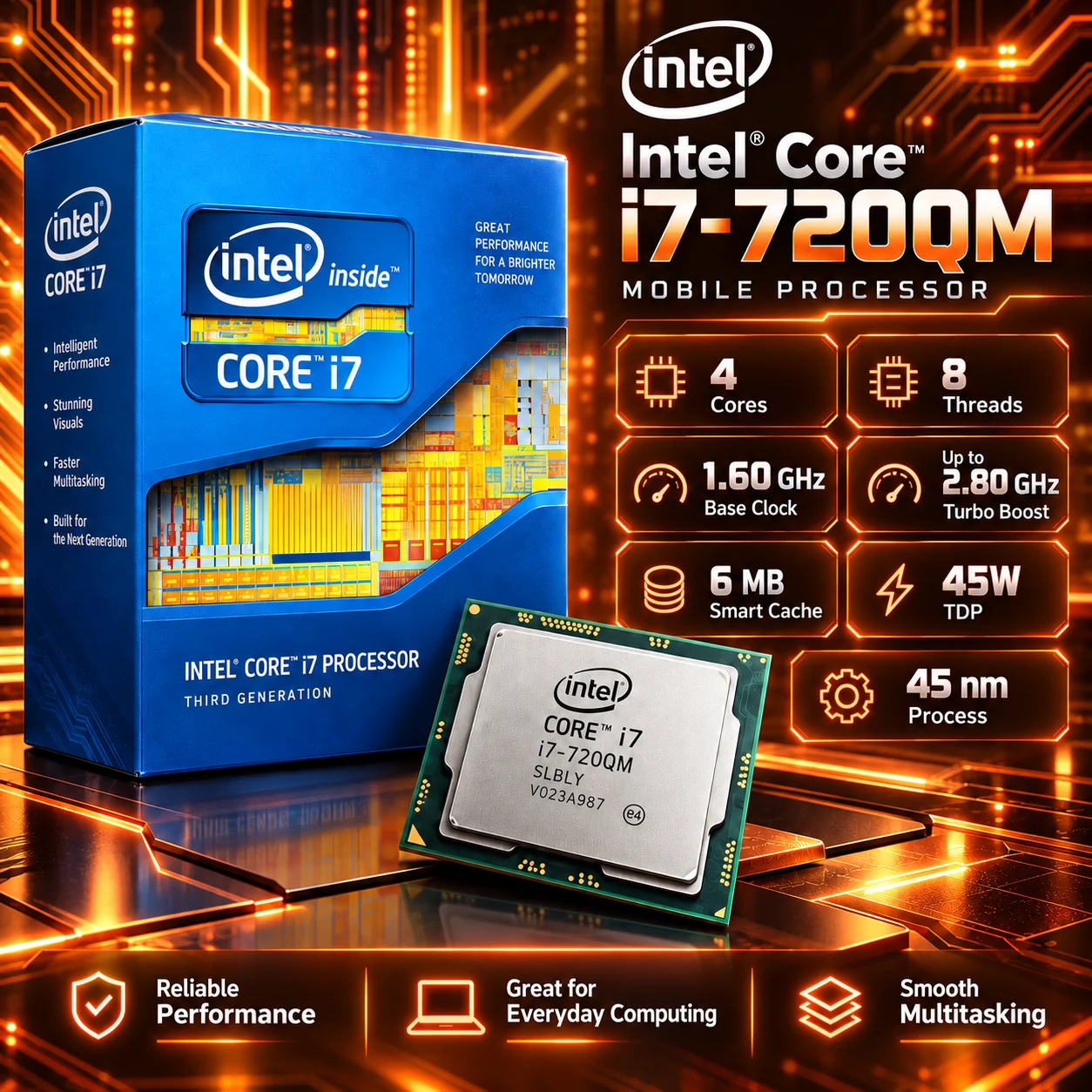
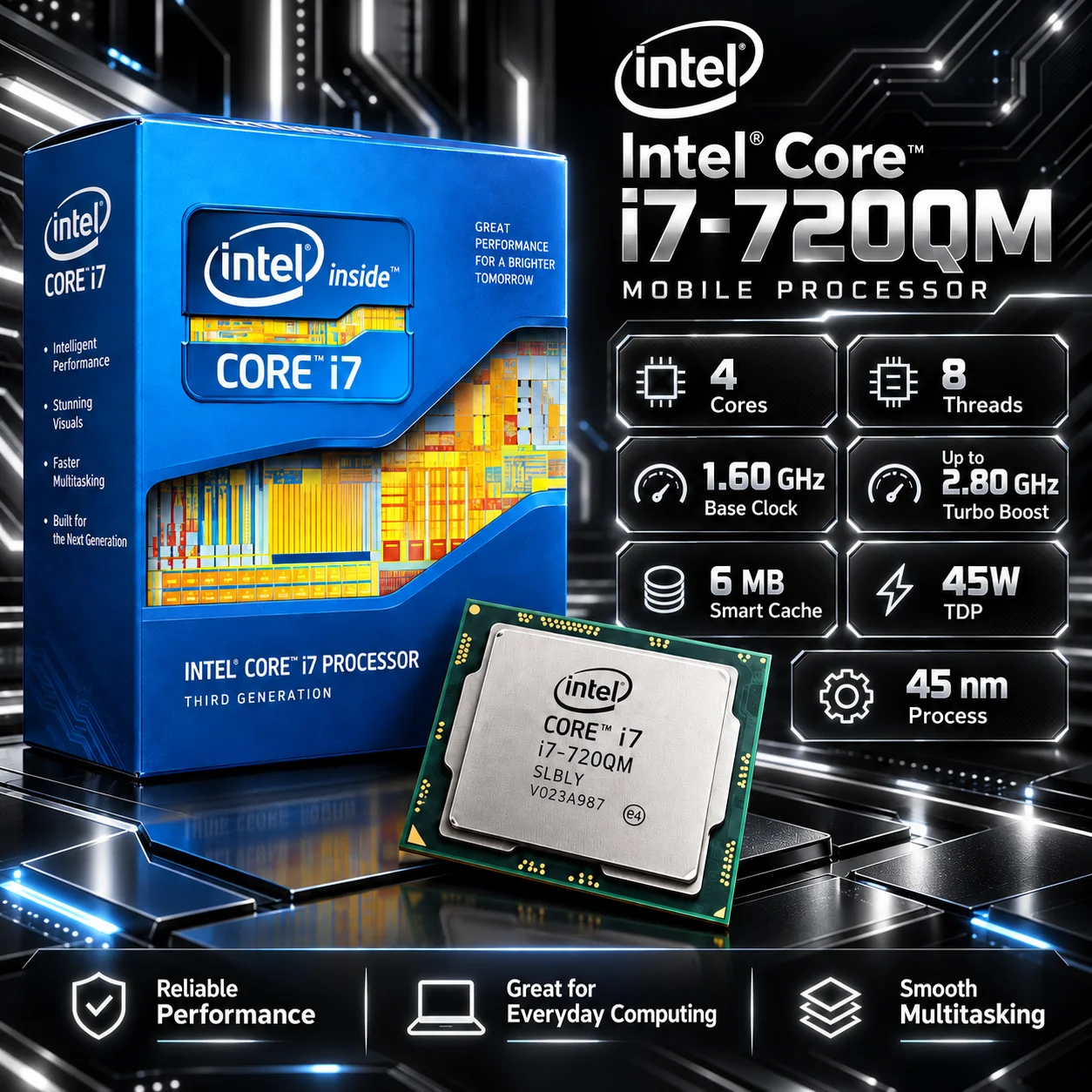
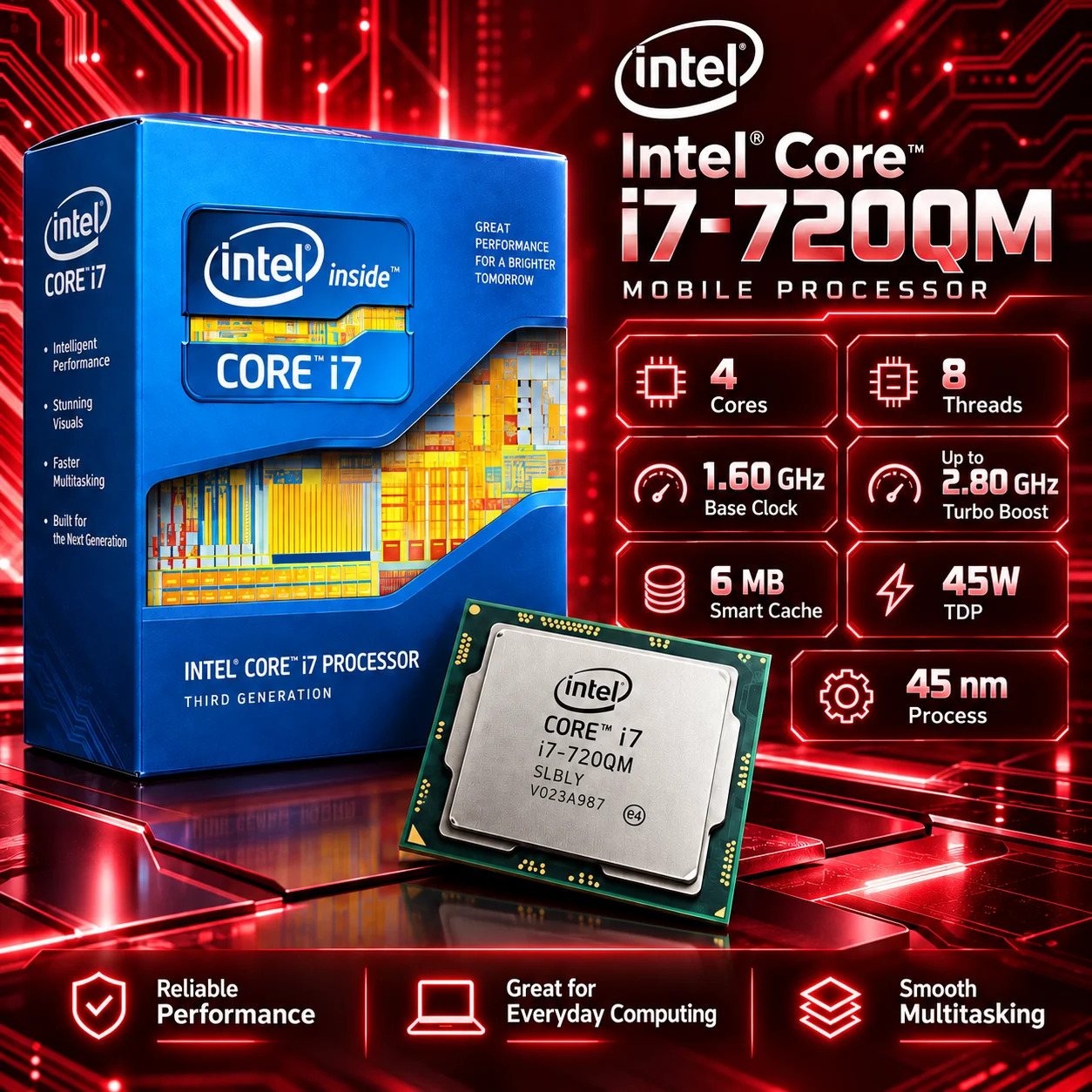
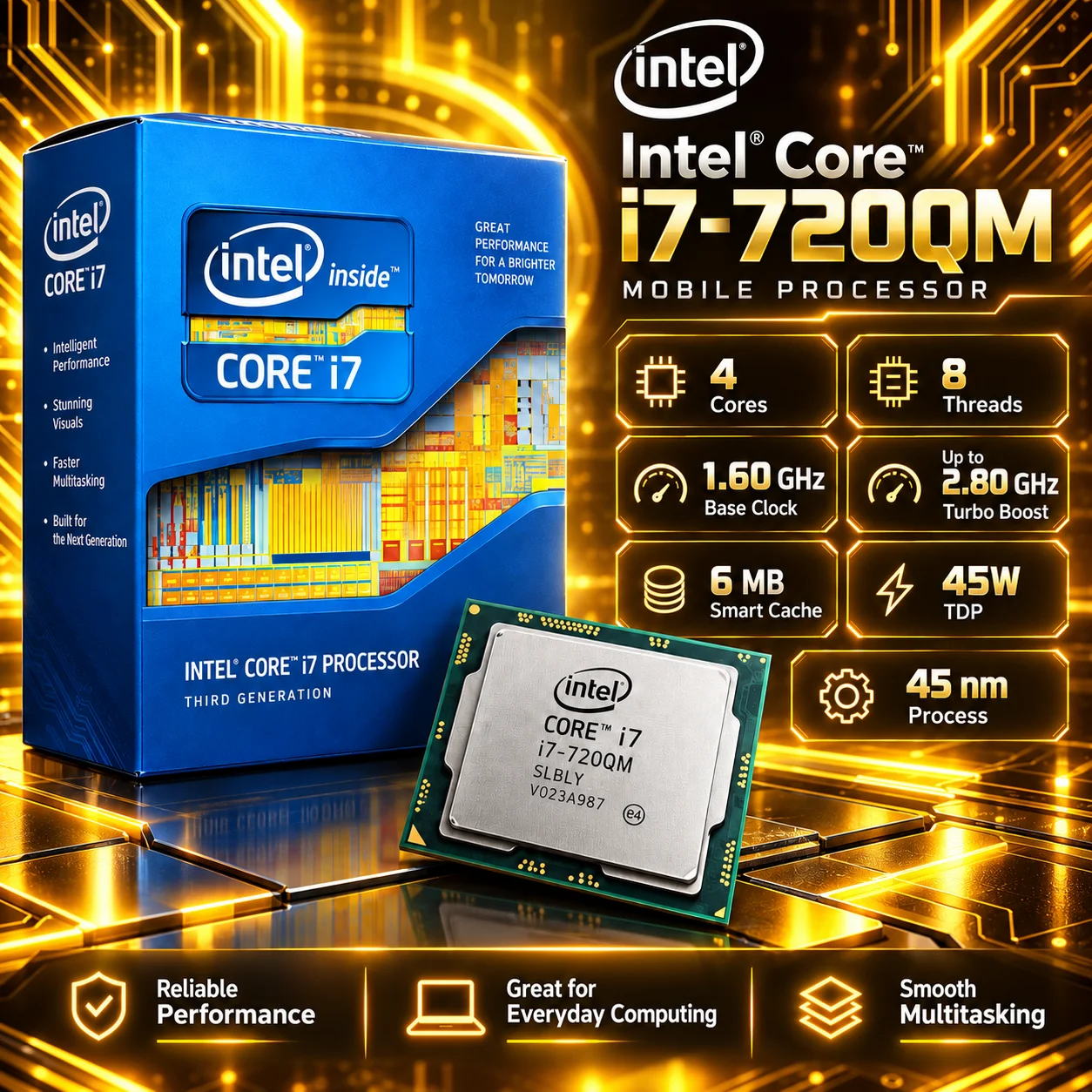
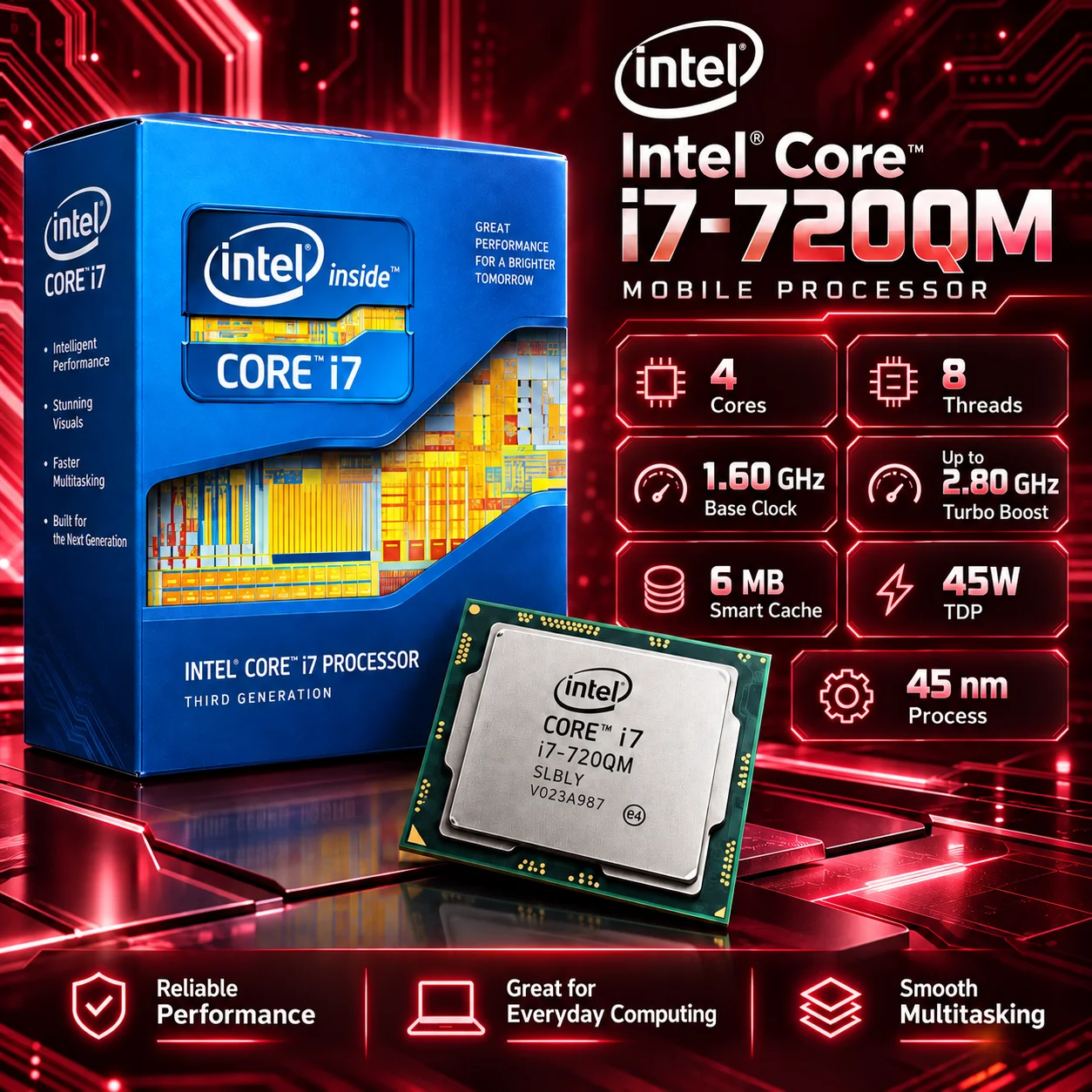
- 4 cores and 8 threads with Intel Hyper-Threading Technology
- Base frequency of 1.60 GHz with max turbo frequency up to 2.80 GHz
- 6 MB of L3 Smart Cache
- 45W TDP optimized for mobile workstations
*Approximate regional retail guide prices. Pixahunt is an informational catalog.
CPU Benchmark Scores & Performance Analysis
TESTEDCinebench R23, Geekbench 6, PassMark CPU Mark scores & real-world gaming/office suitability tests.
Technical Specifications
Comprehensive hardware architecture and specifications
General
| Series | Core i7 (Clarksfield) |
| Model | i7-720QM |
| Cpu Cooler | Not Included |
| Code-Name | Clarksfield |
| Generation | 1st Gen |
| Sockets Supported | Socket G1 (rPGA988B) |
Performance
| Base Frequency | 1.60 GHz |
| Turbo Frequency Max. | 2.80 GHz |
| Core | 4 |
| Threads | 8 |
| CPU Cache | 6 MB L3 Cache |
| L1 Cache | 64 KB per core |
| L2 Cache | 256 KB per core |
| L3 Cache | 6 MB shared |
| TDP | 45W |
| Lithography | 45 nm |
| Multiplier | 12.0x |
| Multiplier Unlocked | No |
| Processor Type | Core i7 Mobile |
Memory Support
| Memory Max. | 8 GB |
| Memory Type | DDR3 |
| Memory Speed | Up to 1333 MT/s |
| Memory Channel | Dual-channel |
| Max Memory Bandwidth | 21.3 GB/s |
| ECC Memory Supported | No |
Graphics
| Built-in GPU | No |
| Processor Graphics | N/A |
| Graphics Base Frequency | N/A |
| Graphics Dynamic Frequency | N/A |
| Graphics Core Count | N/A |
| Max Video Memory | N/A |
| Max Resolution | N/A |
Technical Info
| DirectX Support | N/A |
| OpenGL Support | N/A |
| Approx. Power Consumption | 45W |
| Compatible Products / Chipsets | PM55, HM55, QM57, HM57 |
| PCI Express Version | PCIe 2.0 |
| PCI Express Lanes | 16 Lanes |
| Thermal Solution (MPK / Box) | Not Included |
| Max. Operating Temperature (Tjmax) | 100°C |
Warranty
| Manufacturing Warranty | Discontinued Product (End of Life) |
Additional Info
| Specialty | Intel Hyper-Threading Technology, Intel Turbo Boost Technology 1.0, Intel VT-x, Intel VT-d |
| Others | Mobile Processor |
| Country Of Origin | N/A |
| Made in/ Assemble | N/A |
Editorial Overview & Review
In-depth insights, architecture summary, and performance evaluation
Introduction & Overview: The Quad-Core Mobile Pioneer
When Intel first unleashed the Core i7-720QM processor built on the Clarksfield architecture back in the era of 1st Generation Core processors, it fundamentally reshaped what users could expect from a portable computer. Coded for the mobile workstation and desktop-replacement market, this processor was designed for power users, enthusiast gamers, and mobile professionals who refused to compromise on processing muscle just to gain portability. Occupying the Socket G1 (rPGA988B) infrastructure, the i7-720QM bridged the gap between stationary desktop performance and the constraints of laptop engineering, laying the vital groundwork for the high-performance mobile computing standards we rely on today.
Architecture, Performance & Key Technologies: Engineering the Clarksfield Beast
At its core, the Intel Core i7-720QM is a masterclass in early mobile multi-core scaling. Fabricated on a 45nm lithography process, this 45W TDP processor packs a serious punch:
- Cores and Threads: Features 4 physical cores and 8 threads via Intel Hyper-Threading Technology, allowing for exceptional concurrent task execution.
- Clock Speeds: Operates at a modest base frequency of 1.60 GHz, but leverages early Intel Turbo Boost Technology 1.0 to dynamically scale up to a formidable 2.80 GHz when demanding workloads call for it.
- Cache Hierarchy: Equipped with a generous 6 MB of shared L3 cache, alongside dedicated L1 (64 KB per core) and L2 (256 KB per core) caches to minimize latency.
- Memory Interface: Supports dual-channel DDR3 memory running at speeds up to 1333 MT/s, delivering up to 21.3 GB/s of maximum memory bandwidth (with an official ceiling of 8 GB max memory).
- Platform & Expansion: Pairs with chipsets such as the PM55, HM55, QM57, and HM57, offering 16 lanes of PCIe 2.0 connectivity for discrete GPUs and high-speed peripherals.
Crucially, the i7-720QM leaves out integrated graphics (Built-in GPU: No), meaning laptops built around this chip invariably relied on discrete graphics cards—a deliberate design choice catering directly to performance-hungry graphics workloads rather than energy-sipping ultraportables.
Real-World Use Cases: Powering the Mobile Workstation
Back in its heyday—and even as a legacy powerhouse—the i7-720QM excelled in scenarios that choked lesser dual-core mobile CPUs of its era. Thanks to its quad-core layout and Hyper-Threading, heavy multi-threaded applications like video rendering, CAD modeling, and compiling code saw massive speed boosts. In daily productivity workflows, it sliced effortlessly through massive spreadsheet calculations while handling dozens of browser tabs and background utilities simultaneously. For gaming, when paired with a capable period-accurate discrete GPU, it provided a rock-solid foundation that kept frame pacing stable in demanding titles, ensuring that "desktop replacement" wasn't just a marketing buzzword.
Strengths & Potential Considerations
Evaluating a legacy piece of hardware requires looking at both its historical triumphs and its modern limitations:
- Pros:
- True quad-core performance with 8 threads in a mobile form factor.
- Early implementation of Turbo Boost and Hyper-Threading for dynamic scaling.
- Robust hardware virtualization support (Intel VT-x, Intel VT-d).
- Substantial 6 MB L3 cache for rapid data retrieval.
- Cons:
- Dated 45nm lithography results in higher power draw and heat generation compared to modern nodes (45W TDP).
- Maximum memory cap of 8 GB limits heavy modern multitasking and modern software overhead.
- Lack of integrated graphics requires a power-hungry discrete GPU.
- Officially classified as a Discontinued (End of Life) product.
Final Buying Verdict: A Legacy Milestone
The Intel Core i7-720QM is no longer a viable option for modern, cutting-edge computing needs, having been superseded by generations of vastly more efficient and powerful mobile silicon. However, as a historical milestone in mobile architecture, it remains an impressive feat of engineering. For retro enthusiasts, hobbyists restoring vintage mobile workstations, or those tinkering with legacy software environments, the i7-720QM represents a fascinating era when quad-core processing first truly broke free from the desktop tower.
OUR RATING CONSENSUS
The overall rating is based on review by our experts & industry benchmark suites
Quick Snapshot
- Overall Rating
- 5.3 / 10
- Brand
- Intel
- Category
- Processor
- Catalog Model
- i7-720QM
- Status
- Published
- Release Date
- Oct 10, 2026
Pixahunt Tech Community
Connect with hardware enthusiasts, compare benchmarks, and explore real user setups.
Explore Full Newsfeed →Related Gadgets
- 3.20 GHz Dual-Core Clock Speed for Reliable Everyday Computing
- Intel Hyper-Threading Technology Enabling 4 Parallel Threads
- Built-in Intel HD Graphics for Integrated Display Support
- 2 cores and 4 threads with Intel Hyper-Threading Technology
- 3.10 GHz base processor frequency
- 3 MB Intel Smart Cache
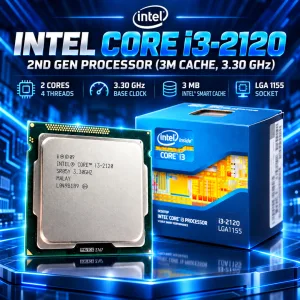
- 2 Cores and 4 Threads with Intel Hyper-Threading Technology
- 3.30 GHz Base Clock Frequency with 3 MB Intel Smart Cache
- Includes Intel HD Graphics 2000 integrated graphics
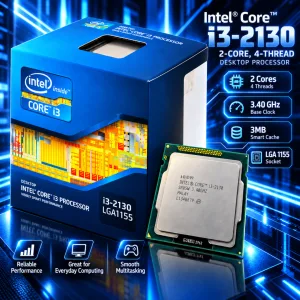
- 2 cores and 4 threads with Intel Hyper-Threading Technology
- 3.40 GHz processor base frequency with 3 MB Intel Smart Cache
- Integrated Intel HD Graphics 2000