

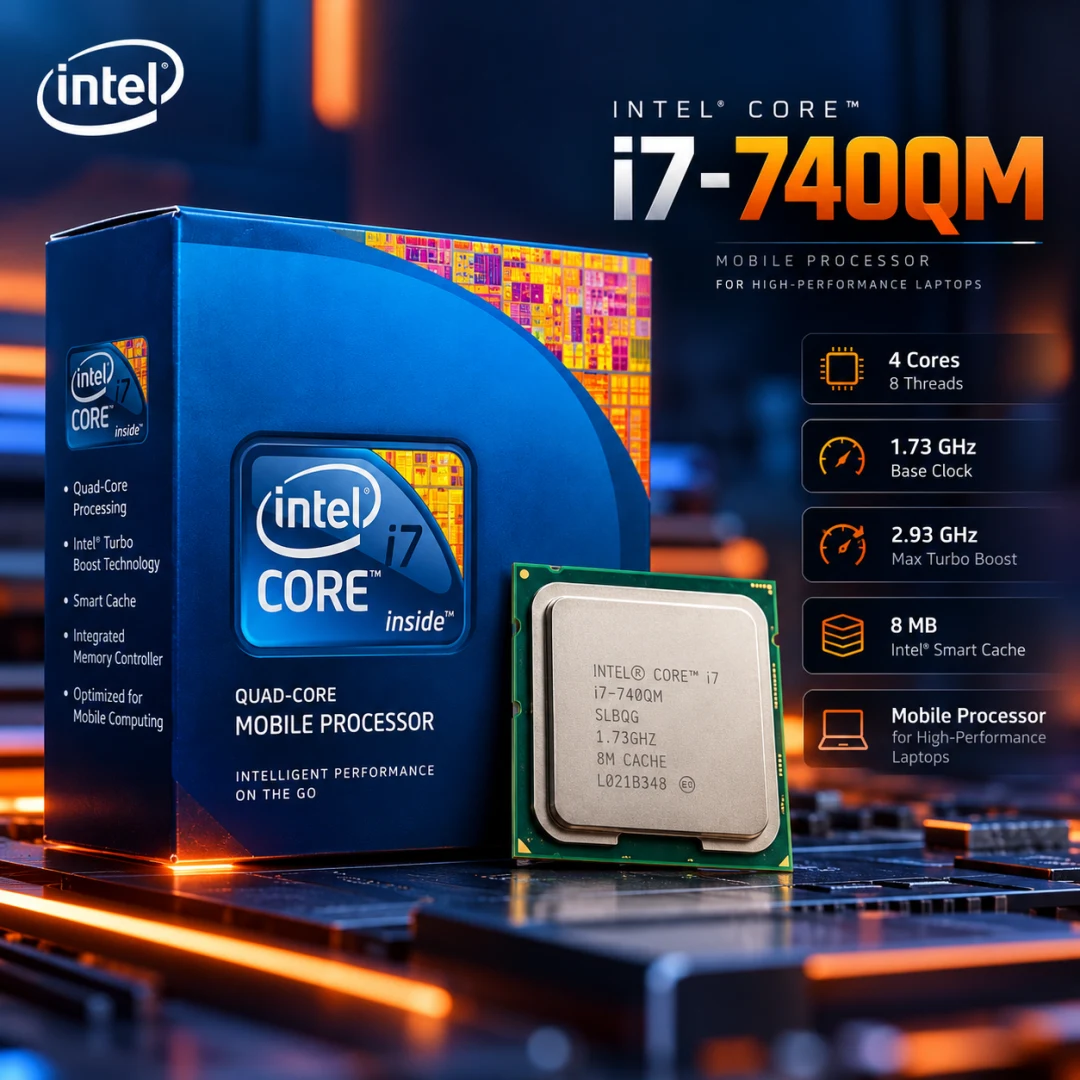
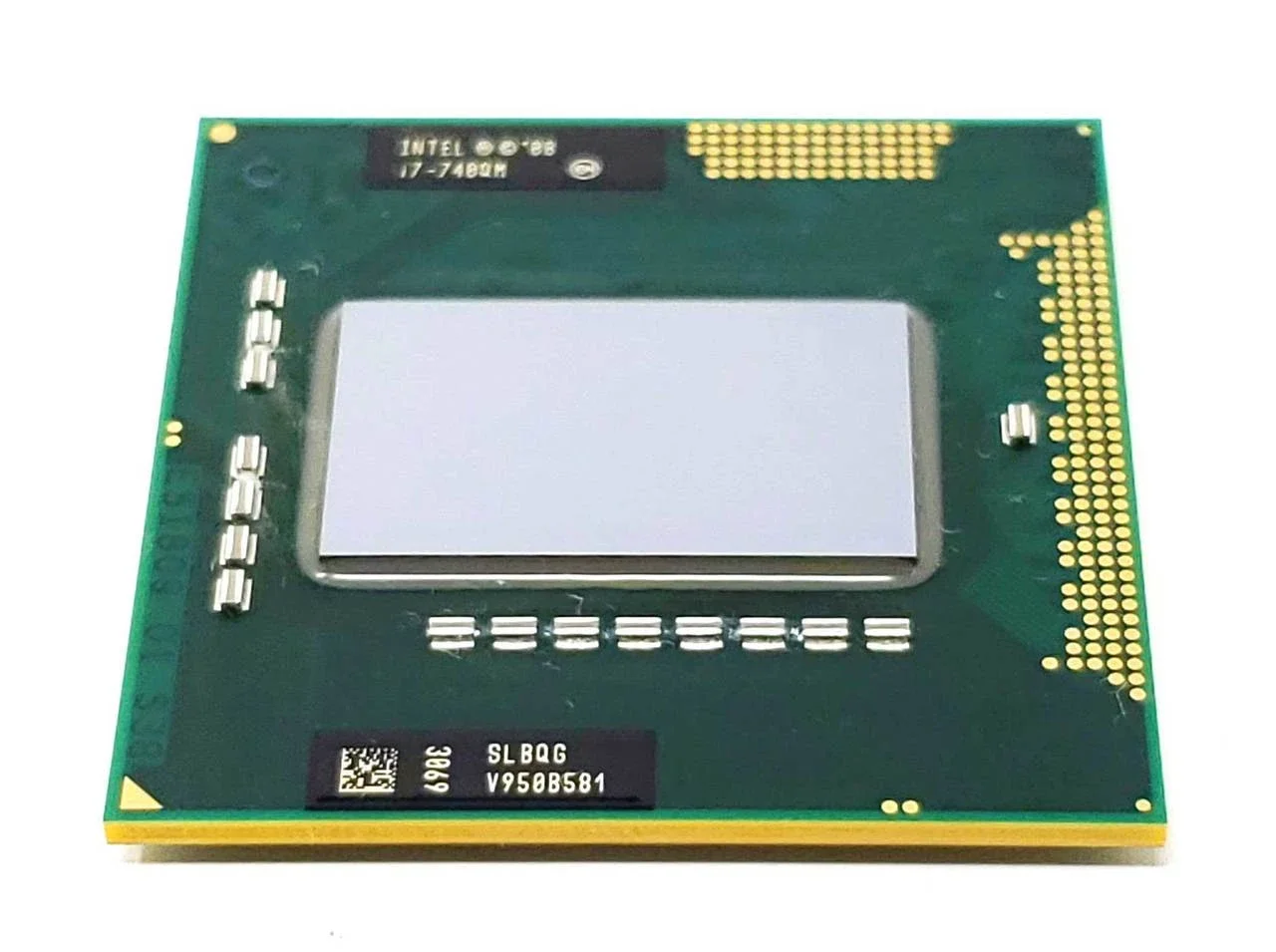
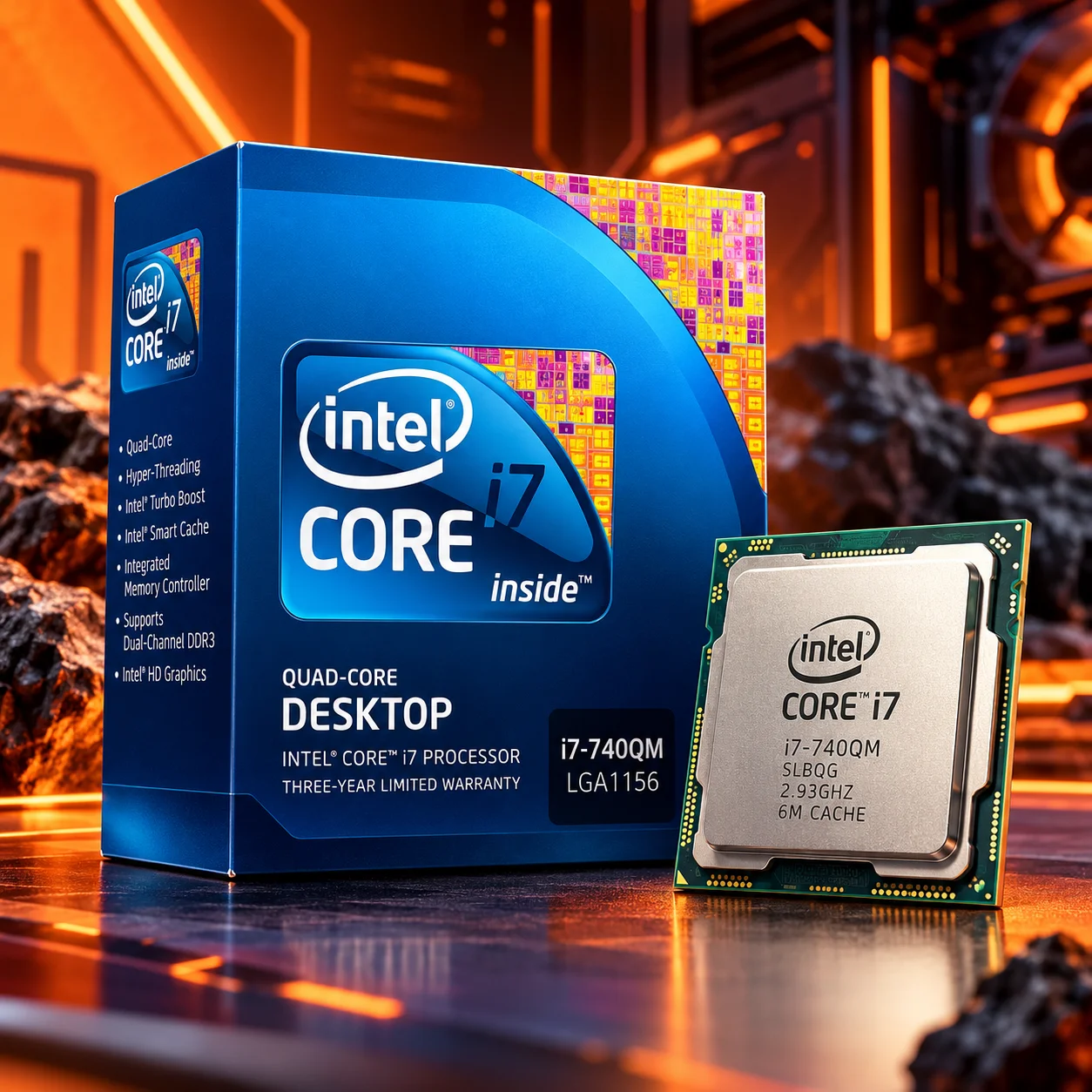
Intel Core i7-740QM 4-Core, 8-Thread Mobile Processor
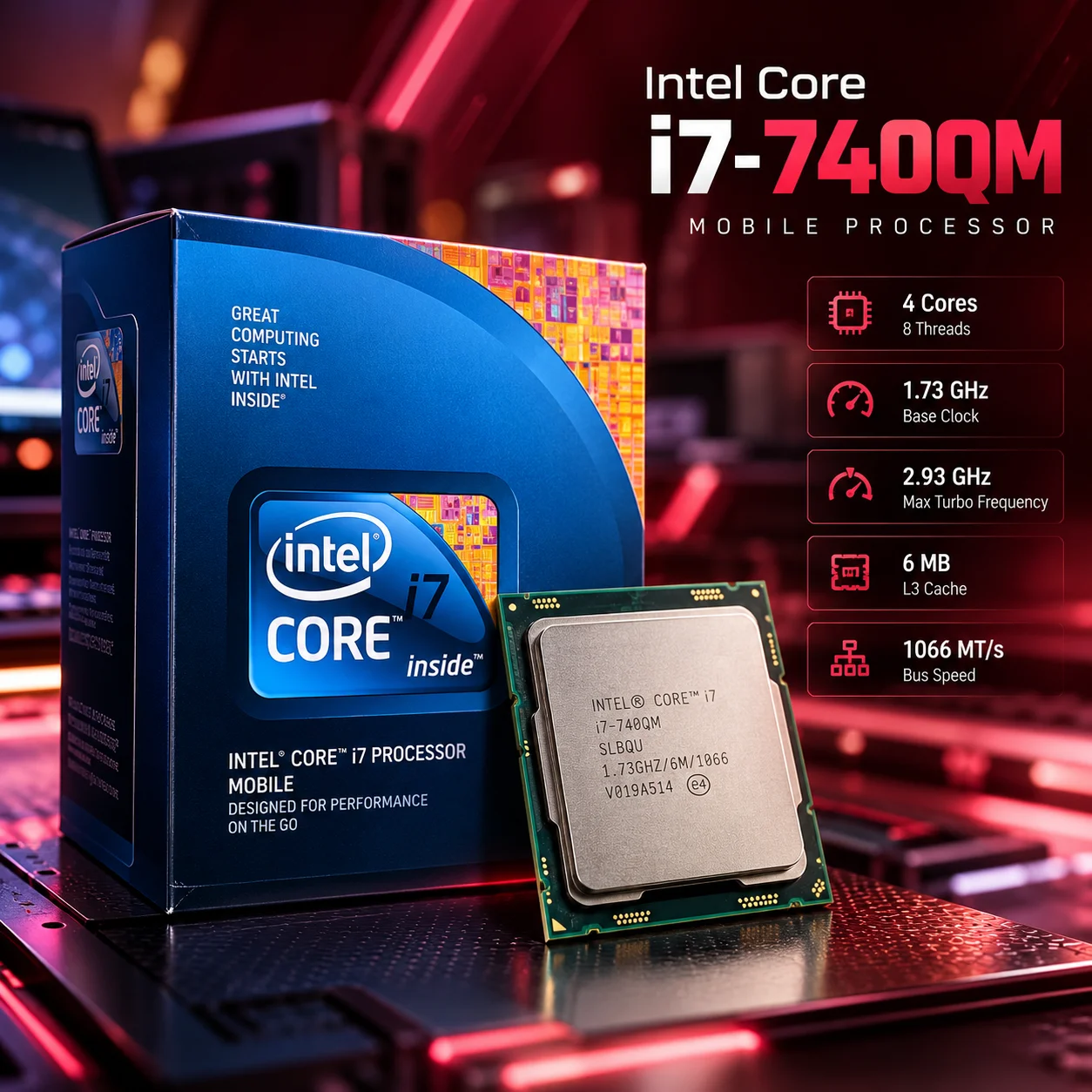
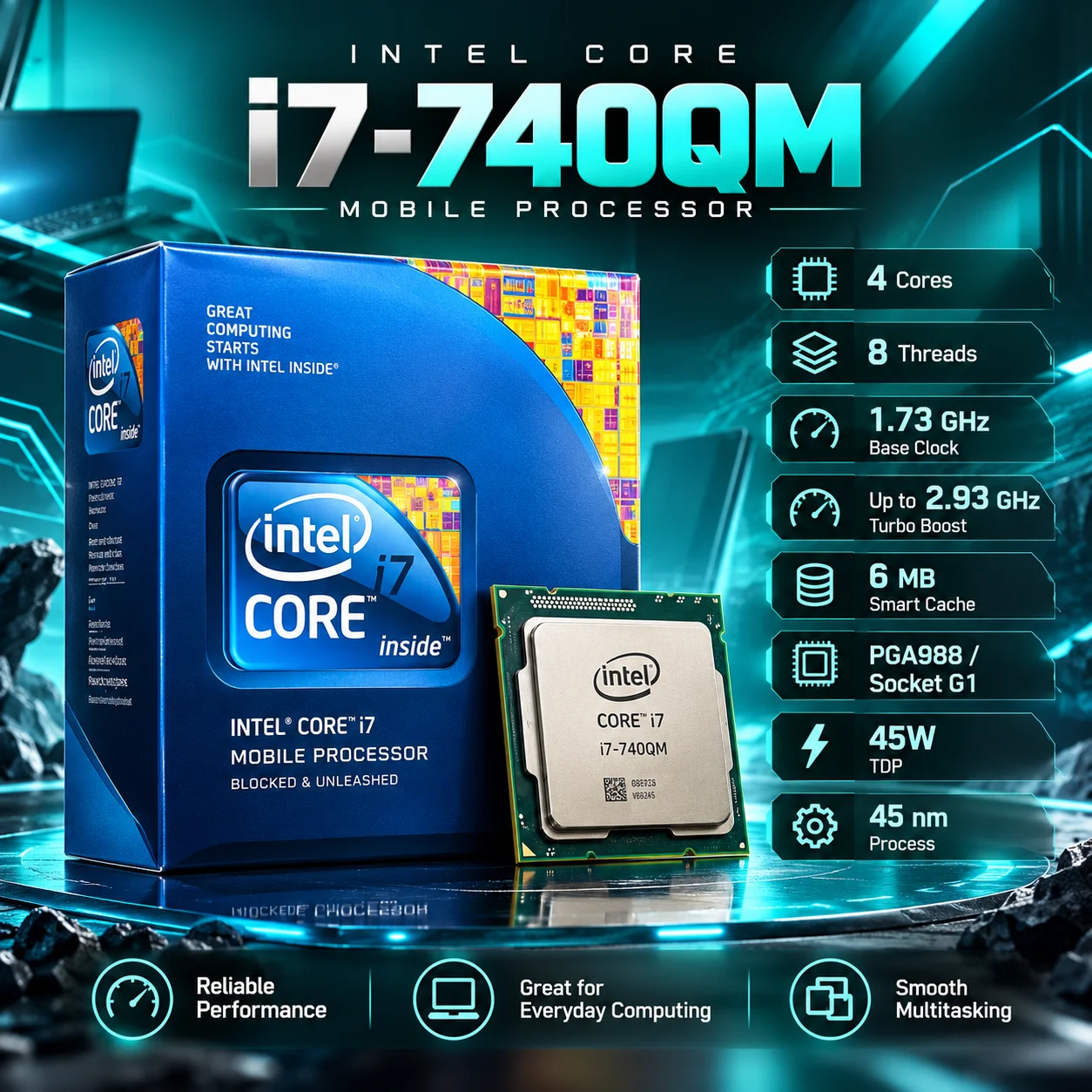
- 4 cores and 8 threads with Intel Hyper-Threading technology
- 1.73 GHz base frequency with up to 2.93 GHz max turbo frequency
- 6 MB of shared L3 cache and a 45 W TDP
- Supports dual-channel DDR3 memory up to 1333 MT/s
*Approximate regional retail guide prices. Pixahunt is an informational catalog.
CPU Benchmark Scores & Performance Analysis
TESTEDCinebench R23, Geekbench 6, PassMark CPU Mark scores & real-world gaming/office suitability tests.
Technical Specifications
Comprehensive hardware architecture and specifications
General
| Series | Core i7 |
| Model | i7-740QM |
| Cpu Cooler | Not Included |
| Code-Name | Clarksfield |
| Generation | 1st Gen |
| Sockets Supported | Socket G1 |
Performance
| Base Frequency | 1.73 GHz |
| Turbo Frequency Max. | 2.93 GHz |
| Core | 4 |
| Threads | 8 |
| CPU Cache | 6 MB L3 Cache |
| L1 Cache | 64 KB per core |
| L2 Cache | 256 KB per core |
| L3 Cache | 6 MB |
| TDP | 45 W |
| Lithography | 45 nm |
| Multiplier | 13.0x |
| Multiplier Unlocked | No |
| Processor Type | Core i7 |
Memory Support
| Memory Max. | N/A |
| Memory Type | DDR3 |
| Memory Speed | 1333 MT/s |
| Memory Channel | Dual-channel |
| Max Memory Bandwidth | 21.3 GB/s |
| ECC Memory Supported | No |
Graphics
| Built-in GPU | No |
| Processor Graphics | N/A |
| Graphics Base Frequency | N/A |
| Graphics Dynamic Frequency | N/A |
| Graphics Core Count | N/A |
| Max Video Memory | N/A |
| Max Resolution | N/A |
Technical Info
| DirectX Support | N/A |
| OpenGL Support | N/A |
| Approx. Power Consumption | 45 W |
| Compatible Products / Chipsets | PM55, HM55, QM57, HM57 |
| PCI Express Version | Gen 2 |
| PCI Express Lanes | 16 Lanes |
| Thermal Solution (MPK / Box) | None |
| Max. Operating Temperature (Tjmax) | 100°C |
Warranty
| Manufacturing Warranty | N/A |
Additional Info
| Specialty | Intel Hyper-Threading, VT-x, VT-d |
| Others | Mobile Processor, End-of-life |
| Country Of Origin | N/A |
| Made in/ Assemble | N/A |
Editorial Overview & Review
In-depth insights, architecture summary, and performance evaluation
Introduction & Overview: The Mobile Quad-Core Pioneer
Step back in time to the dawn of true mobile workstation computing, an era where the Intel Core i7-740QM reigned supreme as a gateway to uncompromised portable performance. Coded-named Clarksfield and belonging to Intel’s pioneering 1st Generation Core family, this mobile processor was engineered specifically for power users, mobile professionals, and gaming enthusiasts who demanded desktop-class muscle inside a laptop chassis.
Positioned firmly in the high-performance tier of its generation, the i7-740QM targeted users who were willing to trade off ultra-thin portability and battery life for raw, unadulterated processing capability. While modern ultra-books prioritize featherlight designs, this processor represents an era of heavy-duty mobile computing where performance took center stage.
Architecture, Performance & Key Technologies
Beneath its 45nm lithography exterior lies a formidable engineering feat built upon the Socket G1 platform. The i7-740QM features 4 physical cores and 8 threads, powered by Intel's Hyper-Threading technology, allowing it to seamlessly slice through heavily multithreaded workloads.
- Clock Speeds: Operates at a modest base frequency of 1.73 GHz, but thanks to Intel Turbo Boost technology, it can dynamically scale up to an impressive 2.93 GHz when extra muscle is required.
- Cache & Memory: Equipped with a generous 6 MB L3 Cache, alongside dedicated L1 (64 KB per core) and L2 (256 KB per core) caches. It pairs with dual-channel DDR3 memory running at speeds up to 1333 MT/s, delivering a robust maximum memory bandwidth of 21.3 GB/s.
- Power & Thermal Profile: Carrying a Thermal Design Power (TDP) and approximate power consumption rating of 45 W, it required substantial cooling solutions from laptop manufacturers. Its maximum operating temperature (Tjmax) is rated at a safe 100°C.
- Advanced Features: Includes critical virtualization and security instruction sets like Intel VT-x and VT-d, alongside PCI Express Gen 2 support with 16 lanes, making it exceptionally versatile for its time. Note that this processor lacks an integrated GPU, meaning laptops utilizing it relied entirely on dedicated, discrete graphics cards.
Real-World Use Cases
During its prime, the Intel Core i7-740QM was the beating heart of desktop replacement laptops and heavy mobile workstations. How did it translate into day-to-day operations?
- Productivity & Multitasking: With 8 threads at its disposal, office power users could effortlessly run heavy spreadsheets, maintain dozens of browser tabs, and manage virtual machines without breaking a sweat.
- Content Creation & Rendering: Video editors, 3D modelers, and digital artists leveraged the quad-core architecture to drastically reduce render times in software like Adobe Premiere and AutoCAD compared to dual-core mobile counterparts of the era.
- Gaming: Paired with a capable discrete GPU of the time (such as NVIDIA's GeForce mobility series), the i7-740QM served as a formidable gaming rig, handling popular titles of the early 2010s with ease, relying on its single-core turbo capabilities and multi-threaded headroom.
Strengths & Potential Considerations
Every piece of hardware has its trade-offs, particularly as technology evolves. Here is a balanced look at the i7-740QM:
- Strengths: True quad-core processing power in a mobile footprint; excellent multithreading capabilities via Hyper-Threading; robust support for dual-channel DDR3 memory; reliable chipset compatibility (PM55, HM55, QM57, HM57).
- Potential Considerations: Low base frequency (1.73 GHz) can feel sluggish in light, single-threaded tasks if Turbo Boost isn't actively engaged; high 45W TDP results in shorter battery life and demands robust laptop cooling; completely lacks integrated graphics; officially classified as an end-of-life (EOL) legacy product.
Final Buying Verdict
The Intel Core i7-740QM is a legendary piece of silicon that defined high-end mobile computing for a generation. Today, as an end-of-life component, it is no longer relevant for modern AAA gaming, heavy modern video editing, or daily primary use where power efficiency is paramount.
However, for retro computing enthusiasts, hobbyists restoring vintage mobile workstations from the Socket G1 era, or those tinkering with legacy software environments, the i7-740QM remains an exciting, highly capable piece of engineering. It stands as a fascinating historical milestone representing the exact moment quad-core performance successfully broke free from the desktop and went mobile.
OUR RATING CONSENSUS
The overall rating is based on review by our experts & industry benchmark suites
Quick Snapshot
- Overall Rating
- 5.3 / 10
- Brand
- Intel
- Category
- Processor
- Catalog Model
- i7-740QM
- Status
- Published
- Release Date
- Oct 10, 2026
Pixahunt Tech Community
Connect with hardware enthusiasts, compare benchmarks, and explore real user setups.
Explore Full Newsfeed →Related Gadgets
- 3.20 GHz Dual-Core Clock Speed for Reliable Everyday Computing
- Intel Hyper-Threading Technology Enabling 4 Parallel Threads
- Built-in Intel HD Graphics for Integrated Display Support
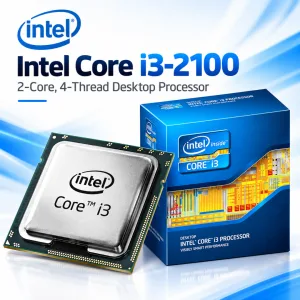
- 2 cores and 4 threads with Intel Hyper-Threading Technology
- 3.10 GHz base processor frequency
- 3 MB Intel Smart Cache
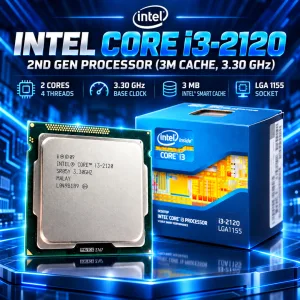
- 2 Cores and 4 Threads with Intel Hyper-Threading Technology
- 3.30 GHz Base Clock Frequency with 3 MB Intel Smart Cache
- Includes Intel HD Graphics 2000 integrated graphics
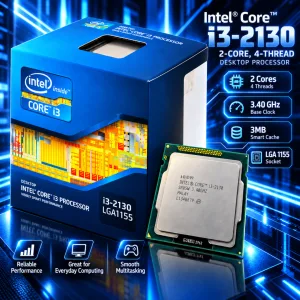
- 2 cores and 4 threads with Intel Hyper-Threading Technology
- 3.40 GHz processor base frequency with 3 MB Intel Smart Cache
- Integrated Intel HD Graphics 2000